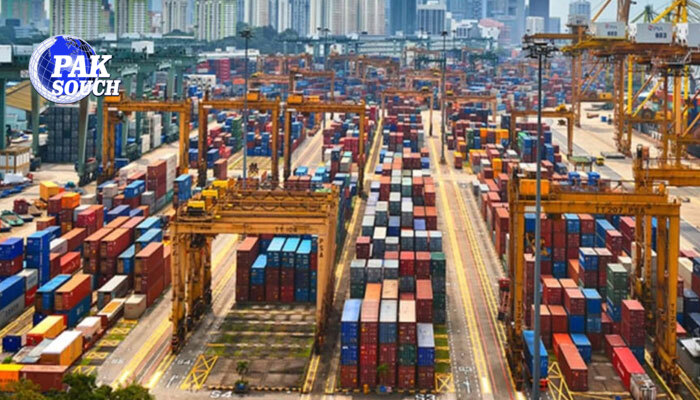
Pakistan’s trade deficit recorded a significant increase of over 20 percent during the first ten months (July to April) of the ongoing fiscal year 2025–26, reflecting mounting pressure on the country’s external sector amid declining exports and rising imports.
According to official data released from Islamabad, the trade deficit surged to $31.988 billion, compared to $24.594 billion during the same period last year. This marks a 20.28 percent increase, highlighting persistent imbalances in Pakistan’s trade structure.
The widening gap is primarily driven by a decline in exports coupled with a steady rise in imports. During the period under review, Pakistan’s exports fell by 6.25 percent, totaling around $25.21 billion. The drop in exports indicates challenges in maintaining competitiveness in global markets, despite efforts to boost industrial output and diversify export products.
On the other hand, imports increased by 6.94 percent, reaching approximately $57.198 billion. The rise in imports suggests continued dependence on foreign goods, including essential commodities, machinery, petroleum products, and raw materials needed for domestic industries.
The growing trade imbalance underscores structural weaknesses in Pakistan’s economy, where export growth has not kept pace with import demand. Economists often point out that a narrow export base, reliance on low-value-added goods, and vulnerability to global market fluctuations contribute to this persistent issue.
Interestingly, some official figures indicate that exports during this period stood at $26.892 billion, suggesting minor discrepancies in reporting or revisions in trade data. However, the broader trend remains unchanged: exports have struggled to show robust growth, while imports continue to expand.
A rising trade deficit has broader economic implications. It puts pressure on the country’s foreign exchange reserves, increases reliance on external financing, and can contribute to currency depreciation. For Pakistan, which has faced recurring balance-of-payments challenges, such trends are particularly concerning.
Experts suggest that addressing the trade deficit requires a multi-pronged strategy. This includes enhancing export competitiveness through technological upgrades, improving energy supply for industries, and exploring new international markets. At the same time, rationalizing imports—especially non-essential goods—could help ease pressure on the external account.
Government policymakers have repeatedly emphasized the need to shift towards an export-led growth model. However, achieving this goal remains a challenge due to global economic uncertainties, domestic production constraints, and policy inconsistencies.
The current data serves as a reminder that without structural reforms and sustained policy focus, Pakistan’s trade imbalance is likely to persist. Strengthening the industrial base, encouraging value-added exports, and maintaining a stable macroeconomic environment will be critical in narrowing the deficit in the coming years.