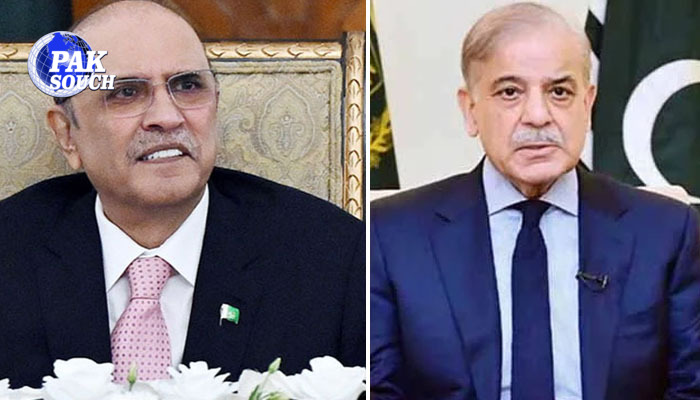
On the occasion of World Press Freedom Day, Pakistan’s President Asif Ali Zardari and Prime Minister Shehbaz Sharif emphasized the critical role of independent journalism in ensuring accountability, transparency, and the smooth functioning of a democratic society. In their separate messages, both leaders highlighted the growing challenges posed by misinformation, propaganda, and the rapid spread of unverified news in the digital age, urging journalists to uphold the highest standards of professionalism and responsibility.
Prime Minister Shehbaz Sharif, in his message, stressed that preventing the dissemination of fake news and unverified information is not just a professional obligation but a moral duty of every journalist. He noted that in today’s interconnected and fast-paced world, the consequences of misinformation can be far-reaching, potentially undermining public trust, fueling conflict, and destabilizing societies. According to him, responsible journalism and the dissemination of accurate, verified information play a decisive role in maintaining peace and order, both domestically and internationally.
The Prime Minister further observed that in the modern era, peace and stability cannot be achieved through diplomacy alone. Instead, credible information and responsible media practices serve as vital tools in shaping public opinion and fostering understanding among nations. He reiterated that Pakistan remains committed to dialogue and negotiation as a means to resolve differences and reduce tensions, particularly in a region often marked by geopolitical challenges. In this context, he acknowledged the positive role played by the country’s diplomatic efforts in promoting peace and stability.
Highlighting the contribution of the national media, Shehbaz Sharif praised journalists for their role during critical moments, including what he referred to as “Maarka-e-Haq” and Operation Bunyan Marsoos. He stated that during these times, the media demonstrated a strong sense of responsibility by presenting Pakistan’s stance with clarity, balance, and restraint. By doing so, the media not only informed the public but also helped counter misinformation and propaganda that could have otherwise distorted the narrative.
The Prime Minister appreciated how media organizations ensured that citizens remained well-informed, particularly during sensitive situations. He noted that by providing accurate updates and avoiding sensationalism, journalists contributed to national unity and helped maintain public confidence. He described the role of the journalist community during such times as commendable and deserving of recognition.
President Asif Ali Zardari also echoed similar sentiments, underlining that a free and independent press is indispensable for democratic accountability and transparency. He emphasized that journalism acts as a watchdog, holding institutions accountable and ensuring that governance remains aligned with the public interest. Without a free press, he noted, it becomes difficult to safeguard citizens’ rights and maintain checks and balances within the system.
Both leaders acknowledged the challenges faced by journalists, including safety concerns, economic pressures, and the evolving media landscape shaped by digital platforms and social media. They stressed the need for collective efforts to protect press freedom while also encouraging journalists to adhere to ethical standards and verify information before publication.
World Press Freedom Day, observed annually on May 3, serves as a reminder of the importance of a free press and the need to defend it from threats. The messages from Pakistan’s top leadership reflect a recognition of the media’s powerful role in shaping society and underscore the responsibility that comes with it.
In an age where information spreads rapidly and often without verification, the call for responsible journalism has never been more urgent. The statements by the President and Prime Minister highlight a shared understanding that while freedom of the press is essential, it must be accompanied by a commitment to truth, accuracy, and integrity. Together, these principles form the foundation of a media landscape that can effectively contribute to peace, stability, and democratic progress.