

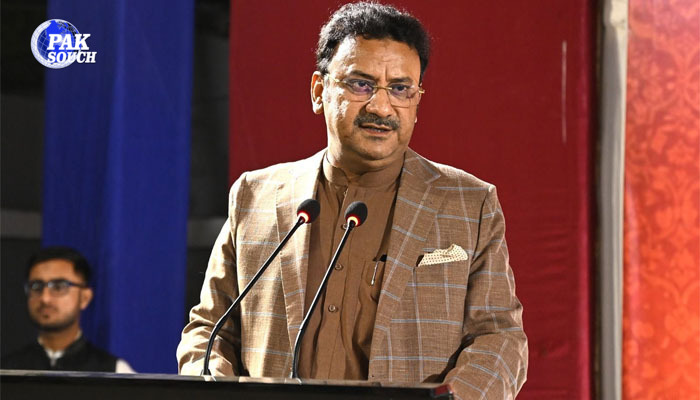
KARACHI: Sindh Home Minister Zia-ul-Hassan Lanjar has strongly rejected allegations made by Miftah Ismail against President Asif Ali Zardari regarding recruitment in the Sindh Police, stating that all government appointments in the province are carried out according to merit, rules, and the prescribed quota policy.
Reacting to Miftah Ismail’s statement, Lanjar said that government recruitments in Sindh, particularly in Karachi, are conducted through established legal procedures and transparent criteria. He described the Sindh Police as a professional and impartial institution based on merit.
The provincial home minister said the Sindh government does not believe in discrimination on the basis of language, ethnicity, region, or community, adding that recruitment processes are designed to provide equal opportunities to citizens.
Lanjar further stated that limiting President Asif Ali Zardari to any single province, language, or ethnic identity was contrary to facts and against the spirit of national unity. He said the President represents all federating units of Pakistan, while the Pakistan Peoples Party is a national political force with representation across the country.
He urged Miftah Ismail, as a responsible political leader, to avoid making what he called baseless allegations and statements that could promote divisions. Lanjar said that if Miftah Ismail had evidence regarding any specific recruitment issue, it should be presented before the relevant legal or administrative forums instead of making general accusations.
The Sindh home minister demanded that Miftah Ismail clarify and withdraw what he termed an irresponsible statement that was contrary to facts.
About The Author