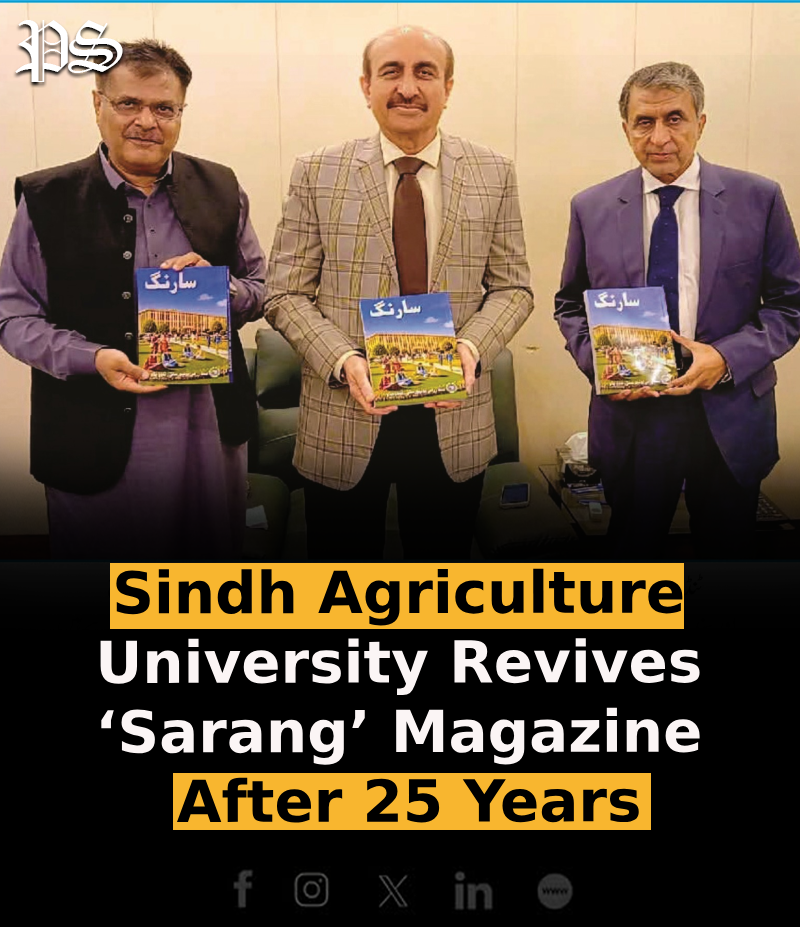
Sindh Agriculture University Tandojam has revived its historic student magazine, “Sarang,” after a gap of nearly 25 years. The magazine was jointly launched by Sindh Minister for Universities and Boards Muhammad Ismail Rahoo, Secretary Universities and Boards Ghulam Abbas Baloch and Vice Chancellor Sindh Agriculture University Engineer Professor Dr Altaf Ali Siyal. The relaunch was described as an important step toward restoring the university’s old academic, literary and student traditions. The magazine was last published in 2001 during the tenure of former Vice Chancellor Professor Dr Bashir Ahmed Chandio. After that, its publication remained suspended for almost 25 years. The current university administration has now brought the magazine back in a new format as part of its efforts to promote academic and creative activities among students. Speaking on the occasion, Vice Chancellor Engineer Professor Dr Altaf Ali Siyal said that the publication of “Sarang” had originally started during the tenure of the university’s first Vice Chancellor, Dr A.Q. Ansari. He said the magazine had remained an important part of the academic and literary history of Sindh Agriculture University. According to him, “Sarang” provides a platform where teachers, students and employees can share their ideas, research and creative work. The magazine includes articles on science, literature, agriculture and technology, along with reports about university activities and a collection of photographs. Dr Altaf Ali Siyal said the magazine would also serve as a valuable memory for students completing their degrees. For graduating students, a university magazine can preserve important moments from their educational journey and provide a record of the activities, achievements and experiences they shared during their time at the institution. He further said that “Sarang” would play an important role in preserving the history of the university. The magazine can serve as an institutional archive by recording major events, academic achievements, student activities and other developments taking place at the university. Such publications can help future students and researchers understand the university’s academic and cultural development over the years. The vice chancellor also spoke about the university administration’s efforts to improve facilities and support for students. He said the administration was taking steps to protect students’ rights, improve their welfare and provide better educational facilities. He added that promoting merit, transparency and a fair merit-based system was also among the administration’s priorities. The revival of “Sarang” is therefore being presented as part of a wider effort to strengthen the academic environment and encourage students to participate in creative and intellectual activities. Minister Muhammad Ismail Rahoo and Universities and Boards Secretary Ghulam Abbas Baloch welcomed the republication of the magazine and appreciated the efforts of Vice Chancellor Dr Altaf Ali Siyal. They praised the administration for taking steps to revive old university traditions and create more opportunities for students to take part in academic and creative activities. They said such initiatives could play a positive role in encouraging students to express their ideas and abilities. A student magazine can provide young people with an opportunity to write about subjects related to their education as well as their interests and experiences. For students of an agriculture university, the inclusion of articles related to agriculture, science and technology can also help promote knowledge beyond the classroom. The magazine can connect academic learning with practical ideas and provide students with a platform to discuss issues relevant to agriculture and society. The revival of “Sarang” after such a long break is also significant because it reconnects the current generation of students with the university’s past. Many students who are currently studying at the university may not have known about the magazine because it stopped being published before they joined the institution. Bringing it back allows them to become part of a tradition that existed decades ago. It also gives the university an opportunity to preserve its literary and academic identity. The publication can potentially become a regular platform for students, teachers and employees to contribute articles, research pieces, creative writing and reports. The involvement of different groups within the university can make the magazine a reflection of campus life and provide a record of the institution’s activities. The university administration’s decision to relaunch the magazine has therefore been welcomed by the provincial minister and secretary responsible for universities and boards. Their participation in the launch event also highlighted the importance given to academic and creative activities at the university. The officials appreciated the efforts being made to restore traditions that had previously played a role in student life. The university has indicated that improving students’ educational experience remains an important priority. Along with academic facilities, activities related to literature, creativity and communication can help students develop confidence and skills. A publication such as “Sarang” can encourage students to improve their writing abilities, share research and participate in discussions about important academic and social issues. It can also provide recognition to students whose work is selected for publication. The magazine’s role in preserving photographs and reports of university events is another important feature. Over time, these records can become a valuable source of information about the institution’s development. Events, achievements, student activities and important personalities can be remembered through the pages of the magazine. This can help maintain a connection between former students and the university as well. The relaunch of “Sarang” shows that old academic traditions can be revived with the efforts of a committed administration. After nearly 25 years, the magazine has returned with the aim of providing a platform for academic, literary, scientific and creative expression. The university leadership has expressed its commitment to supporting students and improving their educational environment, while the provincial leadership has welcomed the initiative. The revival of “Sarang” is expected to encourage greater student participation in academic and creative activities and help preserve the history and traditions of Sindh Agriculture University for future generations.
About The Author