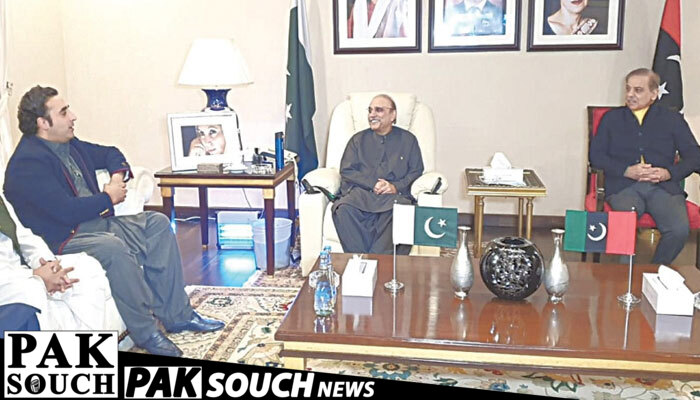
During the recent rounds of negotiations between the Pakistan Muslim League-Nawaz (PML-N) and the Pakistan Peoples Party (PPP) over the proposed 27th Constitutional Amendment, the PPP has formally presented two significant demands: lifetime immunity for the office of the President and the complete abolition of the National Accountability Bureau (NAB). These proposals have triggered political debate and raised questions about the future of accountability laws and power dynamics within Pakistan’s constitutional framework.
Under the existing Constitution, Article 248 already grants immunity to the President and provincial Governors from criminal proceedings during their term in office. The provision states that no criminal prosecution can be initiated or continued against the head of state while they are serving. However, the PPP is now seeking to extend this protection beyond the tenure of the office — meaning that once a person has served as President, they would continue to enjoy permanent exemption from criminal prosecution throughout their lifetime. If passed, this would effectively bar any court from initiating or reviving criminal cases against a former President, whether those allegations emerged before, during, or after their time in office.
The PPP argues that this immunity is necessary to protect the dignity and neutrality of the highest office in the country. Party leaders say that without such safeguards, former presidents could be targeted through politically motivated investigations, especially in a polarized political environment. They point to past instances in which Presidents, once out of office, faced legal harassment, pressure, or court cases driven more by political score-settling than genuine accountability.
However, critics argue that lifetime immunity risks placing the President above the law entirely, contradicting the principles of transparency and responsibility in a democratic system. Legal analysts caution that such a move could undermine public accountability and encourage misuse of power, knowing that officeholders would never be held legally answerable in the future.
Alongside the immunity proposal, the PPP has also revived its longstanding demand to abolish NAB, the country’s premier anti-corruption agency. The party contends that NAB has historically been used as a political tool rather than an impartial institution of accountability. Leaders from both PPP and PML-N have, on several occasions, accused NAB of conducting selective investigations that disproportionately targeted opposition figures. The PPP insists that accountability must be restructured under a new, non-political framework based on judicial oversight.
This demand is not new. The PPP and PML-N had agreed to dismantle NAB as far back as 2006 under the Charter of Democracy, a landmark political document signed by Benazir Bhutto and Nawaz Sharif. The Charter described NAB as an institution created under military rule with the primary purpose of pressuring political opponents. However, despite repeated political commitments, NAB has continued to function, often at the center of major corruption investigations involving top political leaders from across the spectrum.
Currently, PML-N is reviewing the PPP’s fresh proposals and has not yet taken a final stance. PML-N leaders acknowledge that discussions over the 27th Amendment are complex and require consensus building among multiple parties. Party officials have stated that any changes to the accountability framework must reinforce fairness and legal credibility rather than eliminate oversight entirely.
Political observers note that these developments come at a time when governing alliances and power-sharing negotiations are still evolving. Both PML-N and PPP have strategic interests in shaping the legal environment before future elections or leadership transitions. Analysts suggest that PPP’s demand for lifetime presidential immunity may also reflect forward-looking calculations regarding presidential office aspirants and political leadership protection.
Meanwhile, public reaction has been mixed. Many citizens, civil society members, and legal experts argue that corruption and accountability reforms are urgently necessary — but these must strengthen enforcement rather than reduce it. There is concern that abolishing NAB without a clear replacement system could leave a gap in institutional anti-corruption mechanisms. Others argue that accountability agencies should be restructured with transparent appointment processes, judicial oversight, and uniform jurisdiction across civil, political, and bureaucratic sectors.
As discussions continue, the debate over the 27th Amendment is expected to intensify. The proposed constitutional changes would reshape the legal powers of the presidency and redefine the country’s accountability system. Any alteration to immunity laws or the abolition of NAB will require extensive parliamentary support, including approval by two-thirds of both houses. Therefore, negotiations between coalition partners — and possibly the inclusion of opposition voices — will play a decisive role in determining whether these proposals advance or stall.