


GWADAR: Pakistan has achieved a landmark success in its maritime sector with the launch of marine bunkering services at Gwadar Port, enabling the country to provide internationally certified marine fuel to commercial vessels at all three of its major seaports for the first time in its history.
The development is being hailed as one of the most significant achievements in Pakistan’s maritime industry in nearly 40 years, strengthening the country’s position as an emerging regional shipping and logistics hub.
According to official details, Gwadar Port successfully completed Pakistan’s first-ever marine bunkering operation, marking the beginning of regular fuel supply services for international commercial ships calling at the strategically located deep-sea port in Balochistan.
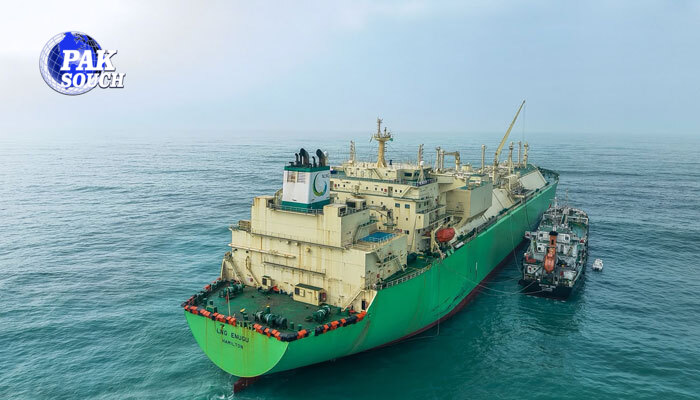
During the historic operation, the foreign-flagged liquefied natural gas (LNG) carrier LNG ENUGU was supplied with 2,500 metric tons of Very Low Sulphur Fuel Oil (VLSFO), a cleaner marine fuel that meets the environmental standards established by the International Maritime Organization (IMO).
The marine fuel was produced domestically by Cnergyico PK Limited, highlighting the capability of Pakistan’s refining sector to manufacture internationally compliant marine fuels.
The bunkering operation was carried out by global energy company Vitol using its bunkering barge Marine Ista, in collaboration with the National Logistics Corporation (NLC). The successful coordination among international and domestic partners demonstrated Pakistan’s growing capacity to deliver world-class maritime support services.
Marine bunkering refers to the process of supplying fuel to ships for use during their voyages. It is considered one of the most important commercial services at major international ports, enabling vessels to refuel efficiently without diverting to distant fueling hubs.
With the completion of the Gwadar operation, Pakistan has officially established a comprehensive marine bunkering network across its three principal commercial ports—Karachi Port, Port Qasim, and Gwadar Port.
Officials say this nationwide capability significantly enhances Pakistan’s maritime infrastructure and places the country in a stronger position to compete with established regional bunkering centers such as Fujairah in the United Arab Emirates and Singapore, both of which serve thousands of international vessels annually.
The availability of marine fuel at Gwadar is expected to encourage more international shipping companies to use the port for refueling, cargo operations, and logistics services, thereby increasing vessel traffic and generating additional economic activity.
Authorities noted that bunkering operations at all three Pakistani ports are now being managed through the Pakistan Single Window (PSW) digital platform in accordance with the Electronic Customs Marine Bunkering Rules.
The electronic customs framework provides a standardized and internationally recognized system for fuel supply operations, ensuring greater transparency, regulatory compliance, and efficient processing for shipping companies.
Pakistan’s national marine bunkering system operates through a coordinated partnership involving Vitol Bunkers, the National Logistics Corporation (NLC), and Cnergyico PK Limited. The collaboration combines international operational expertise with Pakistan’s domestic refining and logistics capabilities to deliver marine fuel that meets global quality standards.
The successful operation also represents a major milestone for Gwadar Port, as it marks the first time an ocean-going commercial vessel has received marine fuel at the port. Until now, Pakistan’s bunkering services had been limited to Karachi Port and Port Qasim.
By extending the service to Gwadar, Pakistan has expanded its marine fuel supply network along the country’s coastline, providing shipping companies with an additional strategic location for refueling while operating in the Arabian Sea.
Industry observers believe the development could improve Gwadar’s commercial attractiveness by reducing operational costs for shipping lines and positioning the port as a convenient stop for vessels traveling through one of the world’s busiest maritime trade routes.
The use of Very Low Sulphur Fuel Oil (VLSFO) is particularly significant because it complies with IMO regulations aimed at reducing sulphur emissions from ships. The adoption of cleaner marine fuels supports global environmental objectives while ensuring that vessels calling at Pakistani ports meet international maritime standards.
Officials also believe the introduction of marine bunkering at Gwadar will contribute to Pakistan’s broader economic objectives by increasing port revenues, creating employment opportunities in the maritime and energy sectors, and strengthening the country’s role in regional trade and logistics.
Gwadar Port’s strategic location near the entrance to the Persian Gulf gives it considerable importance in international shipping, as a large share of global energy trade passes through nearby sea lanes. The addition of bunkering services further enhances the port’s value as a comprehensive maritime service center.
The successful completion of Pakistan’s first marine bunkering operation at Gwadar demonstrates the country’s growing ability to provide internationally competitive port services and reflects continued investment in modernizing its maritime infrastructure.
With internationally compliant fuel now available at all three major commercial ports, Pakistan has taken a significant step toward becoming a more competitive destination for global shipping, reinforcing its ambitions to expand maritime trade, strengthen logistics capabilities, and establish itself as a key player in the regional marine services industry.
About The Author