STOCKHOLM: Donald Trump’s assault on science could threaten the United States’ position as the world’s leading research nation and have knock-on effects worldwide, Nobel Prize officials in Sweden said.
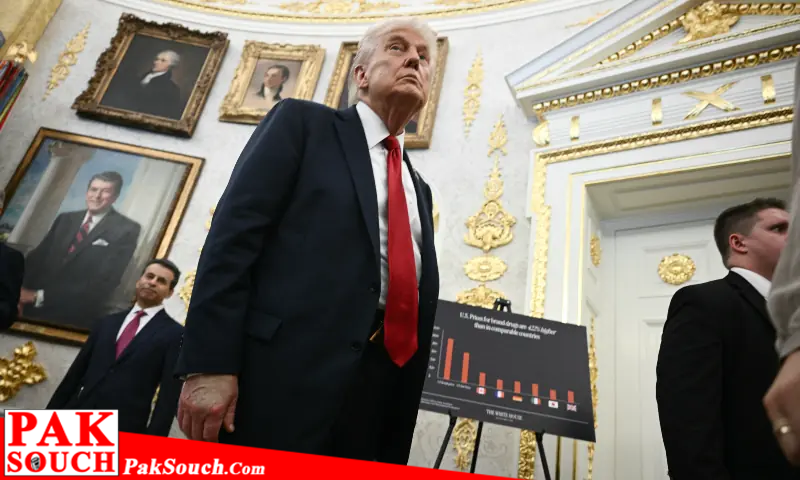
Since taking office in January, the US president has cut billions of dollars in funding, attacked universities’ academic freedoms and overseen mass layoffs of scientists across federal agencies.
Next week, the Nobel Prizes will be announced in Stockholm and Oslo, and chances are high that researchers working in the United States will take home some of the prestigious awards.
The United States is home to more Nobel science laureates than any other country, due largely to its longstanding investment in basic science and academic freedoms.
The United States has terminated 2,100 research grants totalling around $9.5bn
But that could change, said Hans Ellegren, secretary general of the Royal Swedish Academy of Sciences, which awards the Nobel prizes in physics, chemistry, and economics.
“In the post-war period, the US has taken over Germany’s role as the world’s leading scientific nation. When they now start cutting research funding, it threatens the country’s position,” he said.
Since January, the National Institutes of Health (NIH) have terminated 2,100 research grants totalling around $9.5 billion and $2.6bn in contracts, according to an independent database called Grant Watch.
Affected projects include studies on gender, the health effects of global warming, Alzheimer’s disease and cancer. Efforts are under way to restore some of the funding but uncertainty looms.
Other fields in Trump’s line of fire include vaccines, climate change and diversity, equity and inclusion. Thomas Perlmann, secretary general of the committee that awards the Nobel Prize for Medicine, said it was “no coincidence that the US has by far the most Nobel laureates”.
“But there is now a creeping sense of uncertainty about the US’ willingness to maintain their leading position in research,” he said. Perlmann called the United States “the very engine” of scientific research worldwide.
“There would be very serious consequences for research globally if it starts to falter,” he added. “It doesn’t take very many years of large cutbacks to cause irreversible harm.”
‘China on the rise’
Trump’s cuts could lead to a brain drain and ripple effects on research in other countries, Ellegren and Perlmann said. Scientists and researchers who have already lost their jobs or funding may not return to their fields even if budgets are restored, and younger would-be scientists may decide not to pursue a career in research, they said.
“There is a risk that a whole generation of young researchers will be lost,” Ellegren warned. While Trump’s policies primarily affect US research, international cooperation is already suffering as a result, he said.
Published in Dawn, October 3rd, 2025