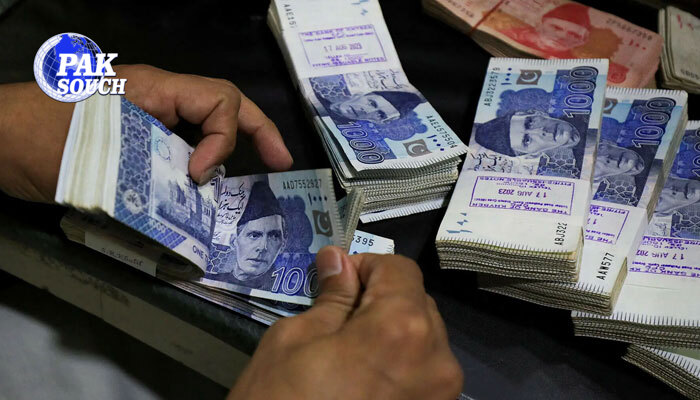
Islamabad: Pakistan’s strategy for transitioning to an interest-free financial system indicates that trillions of rupees in interest payments on existing public debt are expected to continue even after December 2027, despite a constitutional requirement to eliminate interest-based financing from January 1, 2028.
According to government officials, while the transition plan focuses on ensuring that new government borrowing gradually shifts to Shariah-compliant financing, loans obtained before the deadline will continue to be repaid under the terms of their original agreements, including interest obligations.
The issue has gained attention because the 26th Constitutional Amendment, passed in October 2024, amended Article 38(f) of the Constitution, making it a constitutional requirement for Pakistan to move towards a fully Shariah-compliant financial system and eliminate interest-based financing by January 1, 2028.
However, official sources say that this constitutional deadline does not automatically cancel or alter existing contractual obligations. Instead, the government’s strategy is to honor all agreements signed before the deadline while ensuring that future borrowing increasingly relies on Islamic financial instruments.
Nearly Half of the Federal Budget Goes to Interest Payments
Interest payments remain one of the largest components of Pakistan’s federal expenditure. According to official budget figures, nearly half of the federal budget is allocated to servicing public debt.
For the 2026–27 fiscal year, the government has earmarked more than Rs8 trillion solely for debt servicing, reflecting the significant financial burden imposed by existing domestic and external borrowings.
Government sources noted that over 70 percent of total interest payments are made to domestic banks, making local debt the largest contributor to the country’s debt-servicing costs.
Existing Loans to Continue Under Original Agreements
Officials explained that all conventional government loans outstanding as of December 31, 2027, will remain subject to their original contractual terms until they mature.
Under the government’s transition strategy, these conventional loans will only be replaced with Shariah-compliant financial instruments as they reach maturity. Until then, the government will continue making scheduled principal and interest payments in accordance with existing agreements.
The policy is intended to ensure financial stability and maintain Pakistan’s credibility with lenders while gradually transforming the country’s financial system.
Domestic and External Debt
Sources said the government’s flexibility differs between domestic and foreign debt.
With regard to external borrowing, Pakistan remains bound by international loan agreements, leaving little room for unilateral changes to repayment terms.
Domestically, although commercial banks are expected to complete their transition to Islamic banking after December 2027, they will continue receiving interest payments on government loans issued before the transition date until those obligations mature.
Legal and Constitutional Questions
The government’s position is that honoring contractual commitments remains a legal obligation, even after the constitutional deadline.
However, officials acknowledge that questions may arise regarding the compatibility of continued interest payments with the amended Constitution. Legal experts suggest that the issue could eventually require judicial interpretation, particularly concerning domestic debt obligations extending beyond January 2028.
Such litigation could ask the courts to determine how constitutional provisions should be reconciled with previously executed financial contracts.
Roadmap for an Interest-Free System
According to the official strategy, all new government financing after the transition will increasingly rely on Islamic financial products and Shariah-compliant instruments rather than conventional interest-based borrowing.
The government also plans for domestic banks to complete their conversion to Islamic banking, aligning the country’s financial institutions with the constitutional objective of establishing a Shariah-compliant economic system.
Nevertheless, the transition is expected to be gradual. Existing debt obligations will remain in place until maturity, after which they are intended to be replaced with Islamic financing mechanisms.
Officials maintain that this phased approach balances constitutional requirements with contractual responsibilities, while minimizing disruption to Pakistan’s financial system and maintaining confidence among domestic and international lenders.
About The Author