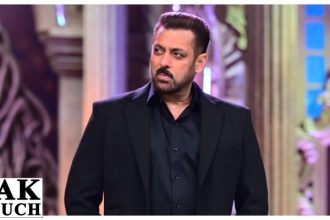
In a surprising twist, Indian actor and self-proclaimed film critic Kamaal R. Khan, widely known as KRK, has voiced his strong opinion on the newly signed defence agreement between Saudi Arabia and Pakistan. His commentary, made on social media platform X (formerly Twitter), has generated widespread discussion in political and media circles across South Asia and the Middle East. According to KRK, the agreement is not only a bold and strategic step by Saudi Crown Prince Mohammed bin Salman (MBS) but also an act that has effectively transformed Saudi Arabia into a “nuclear power overnight.”
The Background of the Defence Pact
Earlier this week, Saudi Crown Prince Mohammed bin Salman and Pakistan’s Prime Minister Shehbaz Sharif signed the Strategic Mutual Defence Agreement (SMDA), a milestone in bilateral relations. The agreement stipulates that any external armed attack against one of the two nations would be considered an attack on both. In essence, it establishes a security umbrella where Pakistan’s nuclear deterrent and advanced military capabilities are extended toward safeguarding Saudi Arabia.
This agreement comes at a time when geopolitical tensions in the Middle East remain high, with Israel’s actions in the region under intense scrutiny. Recently, Israeli Prime Minister Benjamin Netanyahu was accused of aggressive moves against Qatar. According to KRK, this incident and the lack of response from the United States under former President Donald Trump demonstrated to the Saudi leadership that Riyadh could no longer fully rely on Washington’s security guarantees.
KRK’s Controversial Take
KRK is known in India for his outspoken remarks on cinema and politics, often stirring controversy. However, his comments on this particular geopolitical development reflect an unusual but candid acknowledgment of Pakistan’s growing importance in regional security.
He praised Crown Prince Mohammed bin Salman, calling him a highly intelligent leader who recognized the limitations of depending on the United States or Israel. KRK argued that Saudi Arabia faced an imminent threat, given Israel’s nuclear status and military dominance in the region. Therefore, aligning with Pakistan—a declared nuclear weapons state—was the most rational choice to ensure Saudi security.
In his statement, KRK claimed:
“Now that Saudi Arabia has signed a mutual defence pact with Pakistan, the Kingdom has essentially become a nuclear power overnight. It is now 100 percent certain that neither Israel nor the United States will dare attack Saudi Arabia.”
He further emphasized that MBS did not choose to depend on global heavyweights like China, Russia, or even NATO-member Turkey. Instead, he placed his trust in Pakistan, a country with proven nuclear weapons, ballistic missile capabilities, and advanced fighter jets like the indigenously produced JF-17 Thunder. According to him, this aircraft alone is sufficient to carry out bombing operations and deter aggression from hostile states.
Symbolism of Pakistan-Saudi Alliance
The remarks highlight a broader perception that Pakistan’s role as a nuclear-armed state is not just about national defense but also about extending strategic influence to allies. For decades, Saudi Arabia and Pakistan have maintained close economic, cultural, and military ties. Riyadh has often provided crucial financial support to Islamabad, while Pakistan has historically contributed to Saudi defense through military personnel and advisory missions.
The SMDA cements this partnership in a formal framework, signaling that Riyadh sees Pakistan as a reliable partner in safeguarding its sovereignty in a volatile region. For Pakistan, the agreement elevates its strategic relevance on the global stage, particularly in the Middle East, where it competes for influence with India.
Reactions Across Media
While KRK’s comments are somewhat theatrical, they reflect broader concerns and optimism regarding the deal. Some media outlets in India have criticized his stance, suggesting that he exaggerated Saudi Arabia’s position. After all, the Kingdom has not officially acquired nuclear weapons, nor does the agreement transfer such technology. However, others point out that the pact does create a form of “nuclear umbrella,” whereby Pakistan’s deterrent capability indirectly shields Saudi Arabia from external threats.
In Pakistan, the news has been met with pride. Analysts and citizens view the pact as recognition of Pakistan’s importance as a nuclear power and as a diplomatic victory at a time when the country faces economic and political challenges. For Saudi Arabia, the pact projects strength and independence, especially as it navigates its delicate relationships with both the United States and its regional rivals.
The Strategic Message to the World
The defence agreement sends several strategic signals. First, it highlights Saudi Arabia’s shift toward diversifying its security partnerships. While the Kingdom has historically relied on the U.S. for military support and protection, Riyadh’s recent experiences may have created doubts about the reliability of that alliance. Turning to Pakistan shows Saudi Arabia’s desire to build an alternative layer of security based on trust, shared history, and strategic necessity.
Second, the pact underscores the growing role of nuclear powers outside the West in shaping regional security dynamics. Pakistan, often seen primarily through the lens of South Asian politics, is now being recognized as a pivotal player in Middle Eastern security.
Third, the pact could influence Israel’s calculations. For decades, Israel has maintained regional military superiority, underpinned by its undeclared but widely acknowledged nuclear arsenal. By aligning closely with Pakistan, Saudi Arabia signals that it has access to a form of nuclear-backed deterrence, thereby altering the strategic equation in the Middle East.
Looking Ahead
While KRK’s statement that Saudi Arabia has become a “nuclear power overnight” is technically inaccurate, it does capture the essence of what many analysts describe as a “nuclear shield arrangement.” The SMDA ensures that Saudi Arabia now enjoys a credible deterrent by virtue of its partnership with Pakistan.
The future of this pact will depend on how both nations operationalize it—whether through joint exercises, military exchanges, or technology transfers. Additionally, global powers will closely watch how this agreement affects the balance of power in the Middle East, particularly in relation to Iran, Israel, and the U.S.
In conclusion, what began as a routine diplomatic development has turned into a subject of dramatic commentary, thanks to KRK’s bold assertions. While his claim that Saudi Arabia is now a nuclear power may be an exaggeration, there is no denying that the Saudi-Pakistan defence pact is a major geopolitical shift. It enhances Saudi Arabia’s security posture, elevates Pakistan’s international stature, and sends a strong signal to adversaries that the two nations stand united against any external threat.