

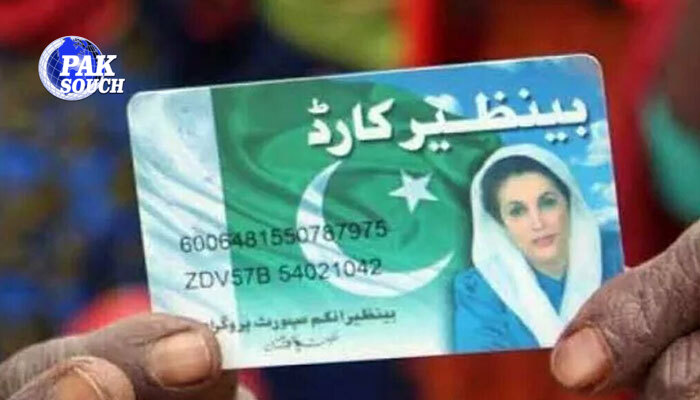
Islamabad: A government audit report for the fiscal year 2024–25, reviewed during the audit year 2025–26, has revealed major financial irregularities in the Benazir Income Support Programme (BISP), identifying more than Rs25 billion in questionable payments made due to weak profiling systems, inadequate controls, and flaws in beneficiary verification procedures.
According to the audit findings, over 600,000 ineligible individuals — including government employees, pensioners, vehicle owners, and people with duplicate registrations — received financial assistance through the programme despite not meeting eligibility criteria. The report raises serious concerns about the effectiveness of BISP’s management and monitoring mechanisms.
The audit specifically highlighted significant weaknesses in the BISP Management Information System (BISP-MIS), particularly in the profiling and verification of spouses’ data. Auditors found that deficiencies in the system allowed numerous ineligible beneficiaries to remain enrolled and continue receiving payments.
According to official audit documents obtained by The News, the review identified 601,850 cases involving financial issues totaling more than Rs25 billion. The report stated that many of these payments were made because of inadequate data validation and ineffective coordination between government databases.
One of the most notable findings concerns payments made to government employees, pensioners, and their spouses under the Unconditional Cash Transfer (UCT) Programme. During the fiscal year 2024–25, BISP reportedly paid Rs515.712 million to 12,078 beneficiaries who fell into these categories.
The audit noted that such payments violated a federal cabinet directive issued on December 24, 2019, which explicitly excluded serving government employees and their spouses from receiving benefits under the programme.
Breakdown of Irregular Payments
The report provided a detailed breakdown of the questionable disbursements:
1. Serving Government Employees
A total of 673 beneficiaries serving in government positions from Grade 1 to Grade 16 received Rs25.20 million under the programme.
Additionally, eight beneficiaries serving in Grade 17 positions received approximately Rs0.09 million.
2. Spouses of Serving Government Employees
The largest category involved spouses of serving government employees.
- 9,124 beneficiaries whose spouses were government employees in Grades 1–16 received Rs402.80 million.
- Another 87 beneficiaries whose spouses served in Grades 17–20 received Rs2.54 million.
3. Pensioners
The audit also found that:
- 218 pensioners from Grades 1–16 received Rs7.41 million.
- 22 pensioners from Grades 17–18 received Rs0.70 million.
4. Spouses of Pensioners
Payments were also made to spouses of retired government employees:
- 1,847 beneficiaries whose spouses were pensioners from Grades 1–16 received Rs74.16 million.
- 107 beneficiaries linked to pensioners from Grades 17–20 received Rs2.81 million.
Weak Verification System Identified
The audit concluded that deficiencies in the beneficiary verification process allowed these payments to continue despite clear eligibility restrictions. Auditors emphasized that the system failed to properly identify relationships between beneficiaries and government employees or pensioners, resulting in the inclusion of thousands of ineligible individuals.
The report also pointed to broader concerns involving duplicate registrations and beneficiaries whose financial circumstances should have disqualified them from receiving support under the poverty-targeted programme.
Recovery and Accountability Measures
Following the audit findings, the Departmental Accounts Committee (DAC) directed BISP authorities to immediately block the identified beneficiaries and initiate recovery proceedings for the improperly disbursed funds.
The committee instructed programme administrators to strengthen data verification procedures, improve integration with government records, and enhance monitoring mechanisms to prevent similar irregularities in the future.
Concerns Over Public Welfare Spending
The revelations have renewed concerns about transparency and accountability in Pakistan’s largest social welfare programme. BISP is designed to provide financial assistance to low-income households and vulnerable segments of society. Payments made to ineligible individuals not only undermine public confidence but may also reduce resources available for genuinely deserving beneficiaries.
Financial experts argue that stronger digital verification systems, regular audits, and improved coordination among government departments are essential to ensure that welfare funds reach the intended recipients.
The audit findings are expected to be reviewed by parliamentary oversight bodies and accountability institutions, with pressure likely to increase on BISP management to address the identified weaknesses and recover public funds distributed in violation of programme rules.
About The Author