

WASHINGTON: The United States has seized cryptocurrency assets linked to Iran worth nearly $1 billion, according to US Treasury Secretary Scott Bessent, in what officials describe as part of Washington’s broader economic pressure campaign against Tehran.
The announcement comes amid ongoing tensions between the United States and Iran, renewed sanctions measures, and continued debate over the future of Iran’s nuclear program.
Treasury Secretary Announces Seizure
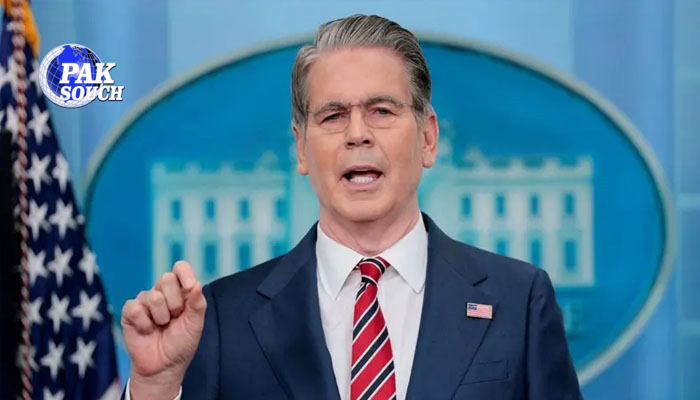
Speaking at the Reagan National Economic Forum, Treasury Secretary Scott Bessent said that US authorities had confiscated approximately $1 billion in cryptocurrency assets associated with Iran.
While specific details regarding the assets, the method of seizure, or the entities involved were not immediately disclosed, Bessent described the action as part of economic measures initiated during President Donald Trump’s administration to restrict Iran’s access to financial resources.
The seizure highlights the growing role of digital assets in international sanctions enforcement and financial regulation.
Part of Broader Economic Pressure Strategy
According to Bessent, the action forms part of a broader effort aimed at limiting Iran’s ability to generate or move funds through international financial channels.
Over the years, the United States has imposed a wide range of sanctions on Iran targeting sectors such as:
- Energy exports
- Banking and finance
- Shipping
- Defense industries
- Technology and digital transactions
US officials have increasingly focused on cryptocurrency networks, arguing that digital assets can sometimes be used to circumvent traditional financial restrictions.
Comments on the Strait of Hormuz
During the forum, Bessent was asked about the possibility of ending restrictions or tensions related to the Strait of Hormuz, one of the world’s most strategically important maritime routes.
In response, he said that any measures that might be removed would be lifted gradually.
The Strait of Hormuz remains a critical passageway for global energy supplies, with a significant portion of the world’s oil and gas shipments passing through the narrow waterway.
Developments affecting the strait are closely monitored by governments, energy markets, and international investors due to their potential impact on global trade and energy prices.
Nuclear Talks and Potential Agreement
Bessent was also asked whether Washington and Tehran were approaching a possible agreement regarding Iran’s nuclear program.
He replied that, for the first time, Iran had shown willingness to discuss nuclear-related issues.
His remarks suggest that diplomatic contacts may be continuing despite ongoing disagreements between the two countries.
However, no official announcement has been made regarding a comprehensive agreement, and significant differences remain between Washington and Tehran on several key issues.
Oman Mentioned in Regional Discussions
The Treasury Secretary further stated that Oman had provided assurances regarding the issue of imposing taxes or restrictions related to the Strait of Hormuz.
He also indicated that any country found assisting Iran in ways that violate US sanctions could face punitive measures.
Oman has historically played an important diplomatic role in facilitating communication between Iran, the United States, and other regional actors, often serving as a mediator during periods of heightened tension.
New US Counterterrorism Sanctions
Separately, the United States announced a new round of counterterrorism-related sanctions concerning Iran.
According to the US Treasury Department, the measures target a number of Iranian individuals and entities.
While details of all designated parties were not immediately available, the sanctions are intended to restrict access to international financial systems and limit activities that US authorities believe support prohibited operations.
The latest sanctions add to an extensive framework of restrictions already imposed on Iran by Washington.
Trump Reiterates Conditions for Any Deal
President Donald Trump has also recently commented on the possibility of an agreement with Iran.
According to previous statements, Trump said that any future deal would require Iran to commit to never acquiring a nuclear weapon or nuclear bomb.
He also indicated that his administration was moving toward a final decision regarding broader policy toward Iran.
The issue of Iran’s nuclear activities remains one of the central points of disagreement between the two countries and has been a major topic in international diplomacy for years.
Iran Rejects Claims of Agreement
Meanwhile, Iran has publicly denied that any agreement has been reached with the United States.
Iranian Foreign Ministry spokesman Esmaeil Baghaei stated that no deal currently exists between Tehran and Washington.
He also said that Iran is not engaged in negotiations concerning its nuclear program, contradicting suggestions that a breakthrough may be imminent.
The differing statements from American and Iranian officials underscore the uncertainty surrounding the current state of diplomatic contacts.
Continued Uncertainty in US-Iran Relations
The seizure of nearly $1 billion in cryptocurrency assets, the announcement of new sanctions, and the conflicting messages regarding nuclear negotiations illustrate the complex and often contentious nature of US-Iran relations.
While some officials have pointed to possible diplomatic openings, significant disagreements remain over sanctions, regional security, nuclear activities, and economic restrictions.
For now, both countries continue to pursue their respective positions, with developments in financial enforcement, diplomacy, and regional security likely to remain closely watched by the international community in the months ahead.
About The Author