


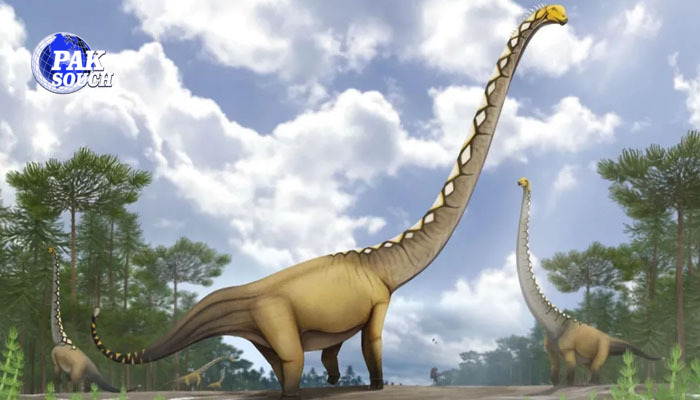
BANGKOK: Paleontologists have identified a new and exceptionally rare species of dinosaur from fossil remains discovered in Thailand’s Kalasin Province, offering fresh insights into prehistoric life in Southeast Asia.
According to international media reports, the fossil remains were unearthed in northeastern Thailand, where researchers identified the dinosaur as a previously unknown species of long-necked, plant-eating sauropod.
The newly identified dinosaur has been named Uragasaurus kalasinensis.
Scientists believe the species lived approximately 150 million years ago, during the Late Jurassic Period. It is described as a herbivorous dinosaur that fed primarily on leaves from tall trees.
Researchers say the dinosaur possessed several distinctive anatomical features that have not been observed in previously identified dinosaur species, making it an important addition to the fossil record.
According to the research team, the animal had an exceptionally long neck, and its overall body length is estimated to have reached around 20 meters—roughly comparable to the length of a cricket pitch.
Dr. Apirot Nilpanapan of Mahasarakham University said the fossils were discovered at the same site where dinosaur remains were first identified in 2008.
He explained that the discovery began after a local resident found a fragment believed to belong to a dinosaur, prompting researchers to conduct a more extensive excavation of the area.
The excavation site, known as Phu Noi, contains an extensive collection of Late Jurassic fossils and is regarded as one of Thailand’s most significant paleontological locations.
Researchers reported that approximately 90 percent of the fossils recovered from the site belong to dinosaurs.
During field surveys, scientists uncovered numerous fossilized remains, including teeth, bones, and other skeletal fragments, which ultimately led to the identification of the new species.
According to media reports, the findings were published this week in the scientific journal Nature.
The discovery follows another significant announcement made in May, when researchers revealed the identification of Nagasatititan, another long-necked herbivorous dinosaur discovered in Thailand.
Scientists describe Nagasatititan as the largest dinosaur yet identified in Southeast Asia, estimating that it weighed approximately 27 tonnes and measured about 27 meters in length.
Experts say the latest discovery further highlights Thailand’s growing importance in dinosaur research and contributes to a better understanding of sauropod evolution and biodiversity during the Jurassic period.
About The Author