


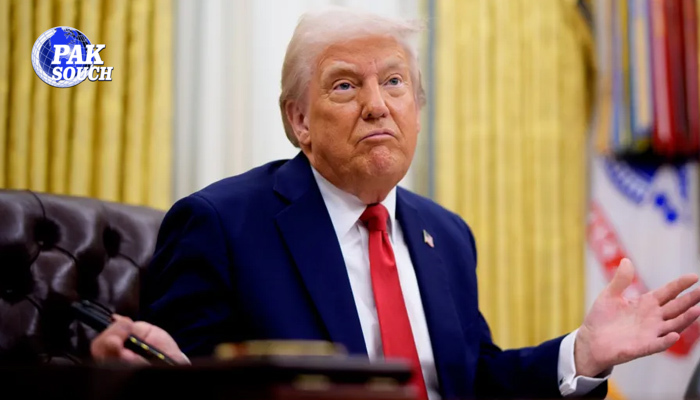
WASHINGTON: U.S. President Donald Trump has withdrawn his proposal to impose a 20 percent transit fee on cargo passing through the Strait of Hormuz, saying the plan will instead be replaced by expanded investment agreements with Gulf countries.
Speaking from the Oval Office, President Trump said he changed his decision after discussions with leaders from the Gulf region.
According to Trump, he received calls from several international figures, including kings, emirs, and other leaders with whom he has close relations.
“I was contacted by many different people from different countries, including kings and emirs,” Trump said, adding that they urged him to pursue an alternative approach rather than implementing the proposed transit charge.
Trump explained that the original proposal was intended to compensate the United States for the security it provides in safeguarding maritime traffic through the strategically important waterway.
However, he said he now believes that greater investment by Gulf countries in the United States would be a better alternative than imposing fees on vessels using the Strait of Hormuz.
Under the revised approach, the proposed transit tax will be replaced by investment arrangements that Trump described as highly beneficial for Gulf states as well as for the U.S. economy.
The announcement marks a significant reversal from Trump’s statement a day earlier, when he had proposed introducing a 20 percent fee on all cargo transiting the Strait of Hormuz.
At the time, Trump said the United States should be recognized as the “guardian” of the Strait and argued that ships using the route should contribute financially toward the cost of maintaining its security.
The Strait of Hormuz is one of the world’s most strategically important maritime chokepoints, with a significant share of global oil and liquefied natural gas shipments passing through the narrow waterway each day.
Trump’s latest remarks indicate that the administration now intends to prioritize economic cooperation and investment with Gulf partners rather than introducing a transit fee for commercial shipping.
About The Author