

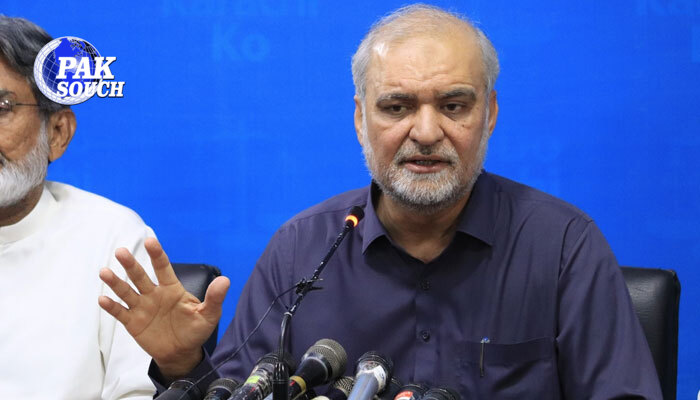
KARACHI: Jamaat-e-Islami Pakistan chief Hafiz Naeem ur Rehman has sharply criticized major political parties while calling for significant economic relief measures, including a proposal to freeze petrol prices at Rs250 per litre for the next three years.
Speaking at a press conference at Idara Noor-e-Haq in Karachi, the Jamaat-e-Islami leader commented on local governance, fuel prices, and the country’s economic challenges, urging policymakers to adopt measures that would ease the burden on ordinary citizens.
Criticism of PPP and MQM
During the press conference, Hafiz Naeem ur Rehman criticized the Pakistan Peoples Party (PPP), describing it as the “A-plus team of the establishment.”
He also targeted the Muttahida Qaumi Movement (MQM), claiming that the party has remained part of governments during different political periods.
The remarks reflect the continuing political rivalry among parties in Sindh, particularly in Karachi, where issues related to governance, public services, and local administration remain central topics of political debate.
Concerns Over Eid Cleanliness Arrangements
The Jamaat-e-Islami chief also expressed dissatisfaction with sanitation arrangements in Karachi during the Eid-ul-Adha holidays.
He stated that the city experienced poor cleanliness conditions during the festive period and argued that local governments require greater authority and resources to effectively address municipal issues.
According to Hafiz Naeem, empowering local governments is essential for improving public services, waste management, and urban administration in large cities such as Karachi.
Municipal performance during Eid-ul-Adha, particularly the disposal of animal waste and maintenance of cleanliness, has frequently been a subject of public discussion and political criticism.
Demand for Greater Reduction in Fuel Prices
Commenting on petroleum prices, Hafiz Naeem argued that the government should have provided a much larger reduction in fuel costs.
He claimed that petrol prices should have been reduced by Rs122 per litre, suggesting that the public had not received the full benefit of changes in global oil prices and economic conditions.
The Jamaat-e-Islami leader linked high fuel prices to broader inflationary pressures affecting households, businesses, and transportation costs across the country.
Proposal to Freeze Petrol Prices for Three Years
One of the key proposals presented during the press conference was a call to fix petrol prices at Rs250 per litre for three years.
According to Hafiz Naeem, a long-term fuel price stabilization policy would help businesses plan ahead, reduce economic uncertainty, and provide relief to consumers struggling with rising living costs.
He argued that predictable fuel prices could support economic activity by lowering transportation and production costs, thereby contributing to broader economic stability.
However, economists generally note that fuel pricing is influenced by international oil markets, exchange rates, taxation policies, and domestic fiscal considerations, making long-term price freezes a complex policy issue.
Call for Reduction in Government Expenditures
Hafiz Naeem also urged government leaders to reduce what he described as unnecessary luxuries and expenditures by those in power.
He argued that public officials should demonstrate financial discipline and prioritize measures that directly benefit citizens facing economic hardship.
The Jamaat-e-Islami chief maintained that reducing non-essential government spending could create additional fiscal space for public welfare initiatives and economic relief measures.
Warning About Economic Challenges
Speaking about the broader state of the economy, Hafiz Naeem stressed the need for policies that stimulate economic activity and growth.
He warned that Pakistan must take steps to strengthen its economy, encourage productive investment, and support businesses in order to avoid deeper financial difficulties.
“The economic wheel must continue moving; otherwise the country could face serious economic consequences,” he said.
His comments come as policymakers continue to focus on inflation control, revenue generation, investment promotion, and economic reforms aimed at stabilizing the national economy.
Continuing Debate on Economic Relief
The Jamaat-e-Islami leader’s proposals are likely to contribute to the ongoing national debate over fuel prices, inflation, taxation, and economic management.
Rising living costs remain a major concern for many Pakistanis, and political parties have increasingly focused on economic relief measures as they seek to address public concerns.
Whether through fuel price adjustments, subsidies, tax reforms, or broader economic policies, the issue of reducing the financial burden on citizens continues to be a key topic in Pakistan’s political and economic discourse.
As discussions over economic policy continue, Hafiz Naeem ur Rehman has called for stronger local governance, lower fuel prices, and measures aimed at supporting growth and improving the living standards of ordinary citizens.
About The Author