


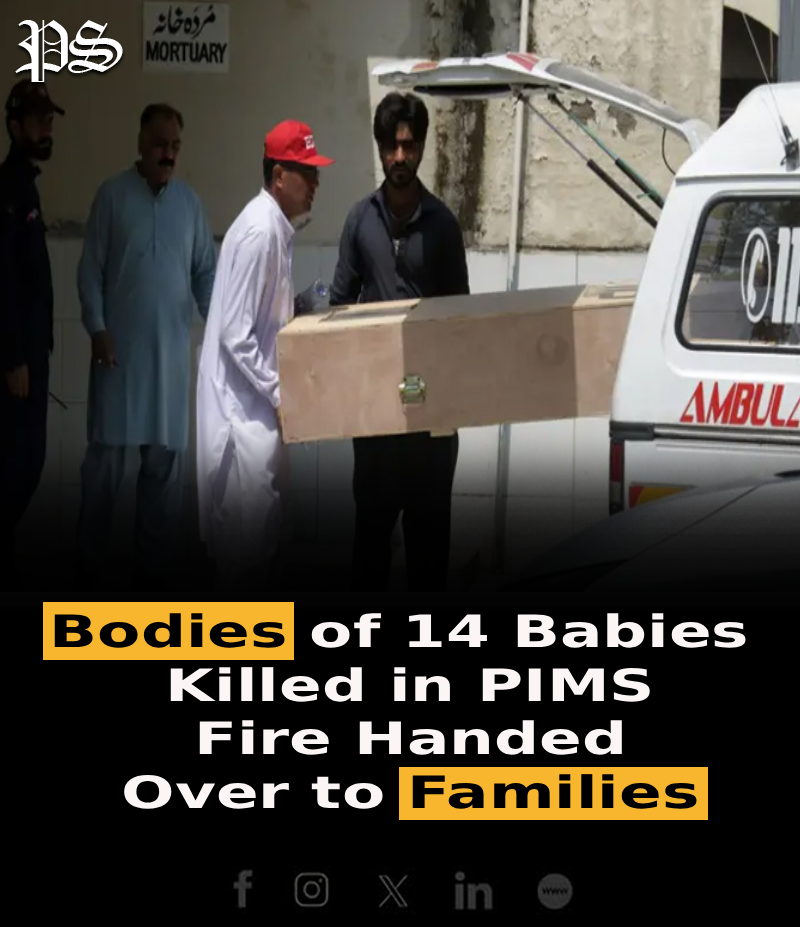
ISLAMABAD — The bodies of 14 newborn babies who died in a fire at PIMS Hospital in Islamabad have been handed over to their families, while some relatives have protested and demanded DNA testing to confirm the identities of the deceased infants.
The tragedy occurred on Wednesday morning when a fire broke out in the nursery of the gynecology ward at Pakistan Institute of Medical Sciences (PIMS). The incident resulted in the deaths of 14 newborn babies and has raised serious concerns about fire safety and emergency arrangements at the hospital.
According to rescue sources, the fire started at around 6:45 a.m. after an air-conditioning compressor reportedly exploded inside the nursery. The sudden fire created a dangerous situation in an area where newborn babies were being cared for.
Hospital authorities said that 15 babies were present in the nursery when the fire broke out. A female doctor was reportedly able to rescue one baby, while the other 14 newborns died in the incident.
Following the tragedy, the bodies of the deceased babies were taken into custody for the necessary procedures. The remains were later handed over to the grieving families.
However, the handover led to further concerns among some relatives. A number of family members protested and demanded DNA tests to establish the identities of the babies before the bodies were handed over.
The relatives claimed that the bodies were given to them without proper identification. They expressed concern that the identities of the infants had not been conclusively established and called for DNA testing to remove any doubts.
The demand has added another serious dimension to the tragedy. For parents and families who have lost newborn children, accurate identification is particularly important because of the emotional and legal consequences involved in such cases.
The families have called on hospital authorities to provide clear information about the identification process and explain how the bodies were matched with the respective families.
The incident has already generated widespread concern over fire safety arrangements at PIMS. Questions have been raised about the condition of fire prevention systems, emergency response procedures and the ability of hospital staff to evacuate vulnerable patients during an emergency.
Newborn babies are among the most vulnerable patients in any hospital because they cannot move independently and require constant assistance from medical staff. In the event of a fire, their evacuation depends entirely on doctors, nurses and other hospital personnel.
The reported circumstances of the fire have therefore prompted calls for a detailed investigation into how the incident began, how quickly hospital staff responded and whether all required safety measures were operational at the time.
The fact that 15 babies were inside the nursery when the fire started also highlights the importance of having sufficient trained staff available in neonatal areas. During an emergency, several employees may be needed simultaneously to rescue babies, operate firefighting equipment and guide other people out of the affected area.
The reported explosion of an air-conditioning compressor has also raised questions about equipment maintenance. Electrical and cooling systems in hospitals need regular inspection because equipment failures can create serious fire hazards, particularly in enclosed medical wards.
The families’ demand for DNA testing reflects the depth of their concerns following the incident. Relatives have maintained that the bodies were handed over without adequate identification and want authorities to establish the identities through scientific testing.
A transparent identification process could help address the concerns of grieving families and provide greater clarity about the circumstances surrounding the deaths.
The tragedy has also placed pressure on health authorities to review fire safety arrangements not only at PIMS but at other major hospitals. A wider inspection could identify problems involving fire alarms, extinguishers, emergency exits, electrical systems, evacuation plans and staff training.
Hospital fire safety requires constant monitoring rather than occasional checks. Equipment must remain functional, staff must receive regular training and emergency procedures must be tested through drills.
The deaths of 14 newborn babies have made these requirements even more urgent. While authorities continue to deal with the immediate consequences of the PIMS tragedy, families are seeking answers about the deaths and the identification of their children.
The handover of the bodies has brought some families closer to completing funeral arrangements, but the concerns raised by relatives show that questions remain unresolved.
Authorities will now face the difficult task of addressing both the families’ concerns about identification and the wider questions surrounding the fire.
A thorough investigation should establish the exact cause of the fire, determine whether safety systems were working and identify any administrative or technical failures. If negligence is found, appropriate action will be necessary.
For the affected families, however, the tragedy is ultimately about the loss of their newborn children. Their demand for DNA testing reflects their need for certainty and assurance at an extremely painful time.
The PIMS fire has become a major reminder of the need for stronger safety standards in hospitals. Ensuring accurate identification of victims, maintaining effective emergency systems and providing proper training to hospital staff are all essential to protecting patients.
As the investigation continues, families and the public are likely to expect transparency from the authorities. Clear answers about what happened inside the nursery and how the deceased babies were identified will be important in restoring confidence in the hospital’s management and emergency procedures.
About The Author