

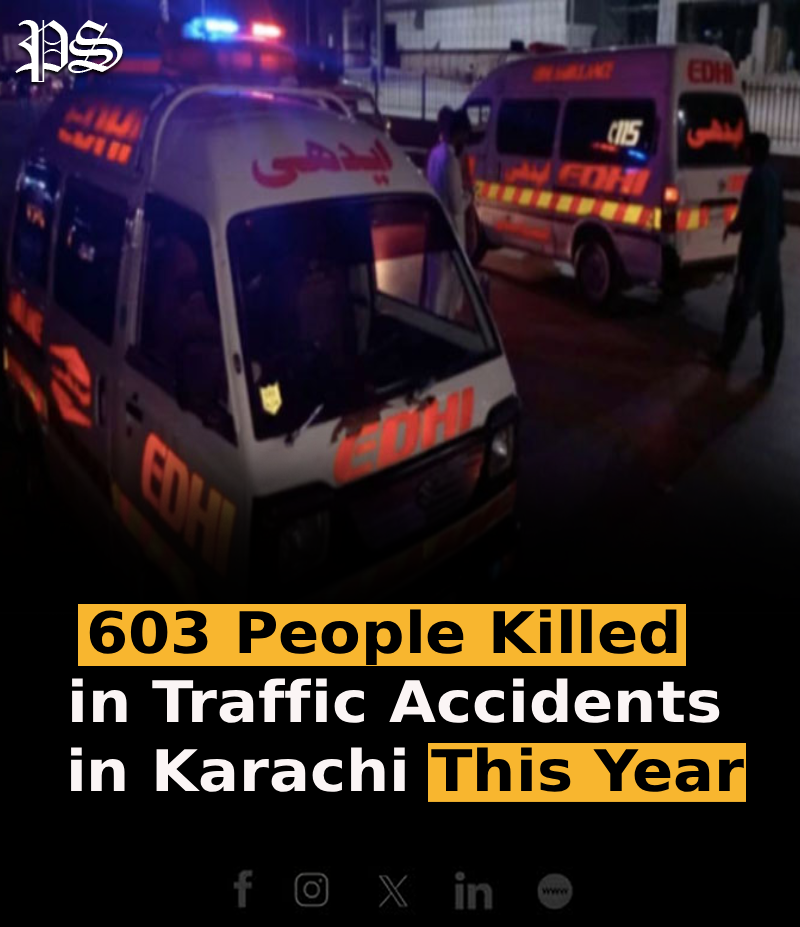
KARACHI: A total of 603 people have lost their lives in various traffic accidents in Karachi during the current year, according to figures released by rescue authorities.
The data highlights the continuing severity of road safety challenges in the country’s largest city, where thousands of people have also suffered injuries in road crashes.
According to rescue officials, 7,467 people were injured in different traffic accidents across Karachi during the year. Among those killed, 463 were men, 73 were women and 67 were children.
The figures show that men accounted for the largest proportion of fatalities. However, the deaths of women and children also underline the serious risks faced by vulnerable road users on Karachi’s busy roads.
Among those injured in traffic accidents, 5,649 were men, 1,322 were women and 496 were children, according to rescue authorities.
The data also provides a breakdown of fatalities involving heavy vehicles. A total of 184 people were killed in accidents involving heavy vehicles during the year.
Dumpers were involved in accidents that resulted in the deaths of 12 people, while trailer collisions claimed the lives of 84 people. Water tanker accidents resulted in 46 fatalities.
Rescue officials further reported that 18 people were killed in accidents involving mini-trucks, while 24 people lost their lives in accidents involving buses.
The figures demonstrate the significant human cost of traffic accidents in Karachi. With hundreds of fatalities and thousands of injuries reported in a single year, road safety remains a major public concern.
Heavy vehicles, in particular, continue to pose serious risks because of their size and weight. Accidents involving trailers, water tankers, dumpers and other large commercial vehicles can result in severe injuries and fatalities, particularly when they collide with motorcycles, cars or pedestrians.
The high number of casualties also highlights the importance of effective traffic enforcement, responsible driving and improved road infrastructure. Authorities face the challenge of ensuring that traffic regulations are followed and that dangerous driving practices are addressed.
The presence of children and women among both the deceased and injured further emphasizes the need for stronger measures to protect passengers, pedestrians and other vulnerable road users.
Motorcycle riders and pedestrians are particularly exposed to traffic risks in densely populated urban areas. Better enforcement of speed limits, lane discipline and vehicle safety requirements could help reduce the likelihood and severity of accidents.
The data from rescue authorities also provides an indication of the scale of emergency response required in Karachi. Thousands of injured people have required medical assistance following road crashes, placing additional demands on emergency and healthcare services.
The authorities’ figures cover different categories of vehicles and demonstrate that road accidents are not limited to one type of transport. Heavy vehicles, buses, mini-trucks and other vehicles have all contributed to the overall number of casualties.
The deaths caused by trailers represent the largest figure among the specific heavy-vehicle categories mentioned in the data, with 84 fatalities. Water tankers accounted for another 46 deaths, while dumpers were linked to 12 fatalities.
These statistics are likely to renew calls for stricter enforcement of traffic rules and closer monitoring of heavy commercial vehicles operating within the city.
Improving road safety will require cooperation between traffic police, transport authorities, vehicle owners, drivers and the public. Regular vehicle inspections, enforcement against reckless driving and greater awareness of traffic regulations could help reduce preventable crashes.
The latest figures serve as a reminder that traffic accidents remain a serious public-safety issue in Karachi. The loss of 603 lives and injuries to more than 7,400 people demonstrate the need for sustained efforts to make the city’s roads safer for all users.
About The Author