

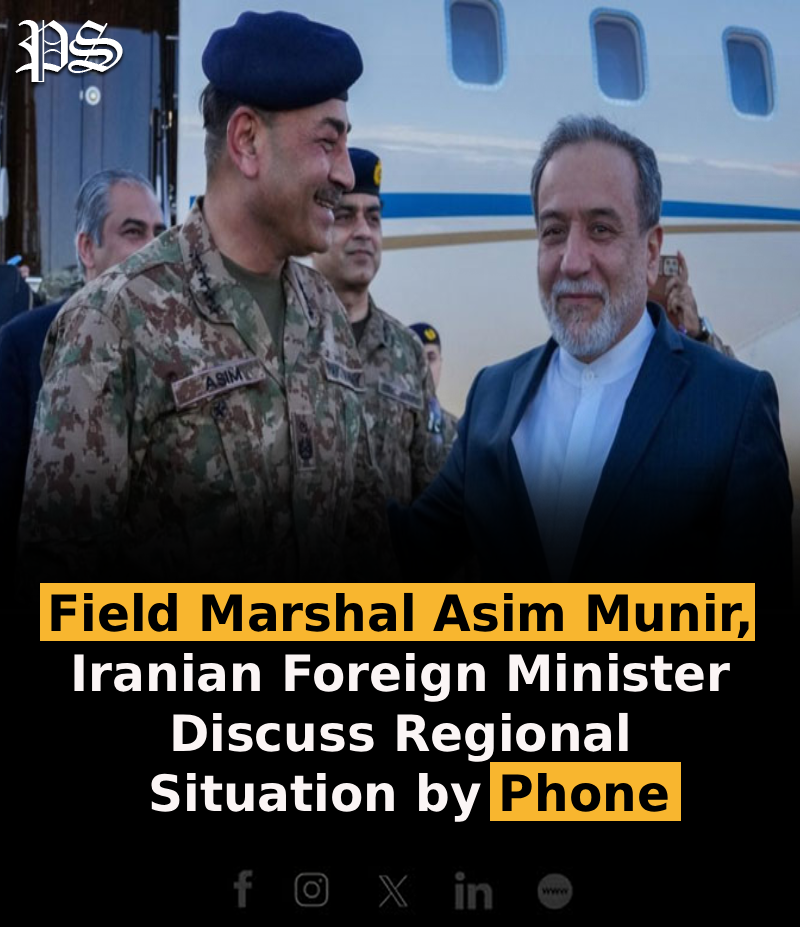
Pakistan’s Chief of Defence Forces, Field Marshal Asim Munir, and Iranian Foreign Minister Abbas Araghchi held a telephone conversation to discuss the situation in the region, according to an Iranian news agency.
The report said the telephone contact between Field Marshal Asim Munir and Abbas Araghchi took place a day earlier. During the conversation, the two officials exchanged views on developments in the region and matters of mutual interest.
The telephone conversation comes ahead of Field Marshal Asim Munir’s reported visit to Iran. Iranian Foreign Ministry spokesperson Esmaeil Baghaei said that Pakistan’s army chief would visit Iran on Monday.
According to Baghaei, the visit is part of Pakistan’s continuing efforts to promote peace and stability in the region. He said the visit would also provide an opportunity to further strengthen relations between Pakistan and Iran.
The Iranian spokesperson said Field Marshal Asim Munir would hold meetings with senior Iranian officials during his visit. The discussions are expected to cover bilateral relations as well as regional developments.
Pakistan and Iran share a long border and have longstanding political, economic and security ties. Developments along their shared border, regional security and efforts to maintain stability have remained important areas of engagement between the two countries.
The planned visit comes at a time when regional developments have increased the importance of diplomatic and security consultations among neighboring countries. Islamabad and Tehran have frequently emphasized the need for dialogue and closer coordination to address challenges affecting regional peace and stability.
The telephone conversation between Asim Munir and Araghchi is therefore being viewed as part of broader engagement between the two countries. Direct communication between senior military and diplomatic officials can help both sides exchange assessments of regional developments and coordinate their positions on matters of mutual concern.
Iranian officials have described the upcoming visit as a continuation of Pakistan’s efforts to contribute to regional peace and stability. The visit is also expected to provide an opportunity for discussions on strengthening bilateral cooperation.
During his stay in Iran, Field Marshal Asim Munir is expected to meet senior Iranian leadership and other high-ranking officials. These meetings could cover security cooperation, bilateral relations and regional issues.
The two countries have a mutual interest in maintaining stability along their border and preventing security challenges from affecting bilateral relations. Both governments have previously stressed the importance of cooperation and communication in dealing with security-related concerns.
The planned visit could also contribute to strengthening institutional links between Pakistan and Iran. Regular high-level contacts allow both sides to address emerging issues directly and explore opportunities for greater cooperation.
While the exact agenda of the upcoming meetings has not been publicly detailed, the Iranian Foreign Ministry’s statement indicates that regional peace and the strengthening of Pakistan-Iran relations will be among the key themes.
The latest telephone contact and planned visit demonstrate continued high-level engagement between Islamabad and Tehran. Further discussions during Field Marshal Asim Munir’s visit are expected to provide an opportunity for both sides to exchange views on the evolving regional situation and explore ways to enhance cooperation.
The visit also underscores Pakistan’s stated interest in supporting regional stability through diplomatic engagement and dialogue with neighboring countries.
About The Author