

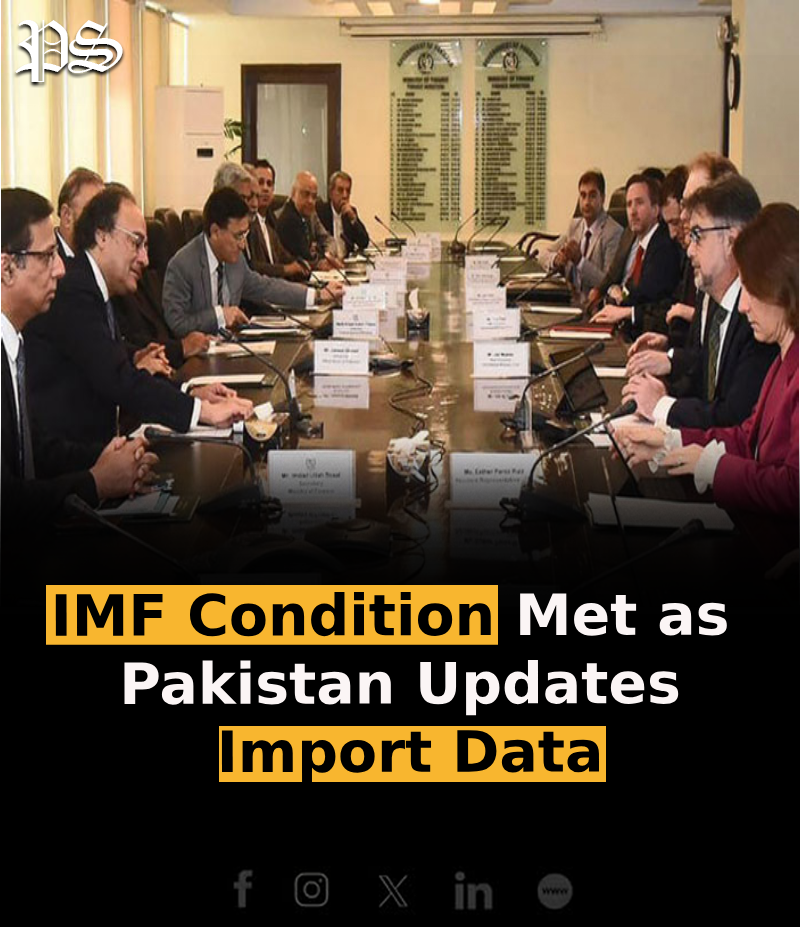
Pakistan has fulfilled an important condition of the International Monetary Fund (IMF) by reviewing and updating its import data. The Pakistan Bureau of Statistics (PBS) has corrected major differences in import figures and updated the data on both monthly and yearly bases. The changes are important because the revised figures may involve up to $30 billion over a specific period. Since import data is used in calculating the country’s economic performance, the changes have also affected Pakistan’s Gross Domestic Product (GDP) figures. The main purpose of the update is to make Pakistan’s economic statistics more accurate and reliable. The PBS found differences in trade and import records and worked to remove these irregularities. Import data is very important for measuring the economic position of a country because it shows the value of goods purchased from other countries. Pakistan imports many important products, including fuel, machinery, raw materials, food items and medicines. Any major change in the value of imports can affect the country’s trade balance and other economic indicators. The updated data will now be included in the country’s official economic calculations. The revision was also important for meeting the requirements of the IMF. The international lender has asked Pakistan to improve the quality and accuracy of its economic data as part of its reform programme. Accurate data helps the IMF understand Pakistan’s economic situation and monitor the progress of different reforms. It also helps the government make better decisions about the economy. The revision of import data does not mean that Pakistan suddenly imported goods worth billions of dollars. Instead, it means that earlier records have been reviewed and corrected using updated information. When better data becomes available, statistical agencies can revise previous figures. Such revisions are common in many countries. However, a change of up to $30 billion is significant because it can affect several important economic calculations. The updated figures can change the reported size of imports, the trade deficit and GDP-related estimates. The changes may also provide a clearer picture of Pakistan’s external trade position. Accurate trade data is important for the government because it helps officials understand how much the country is buying from and selling to other countries. It can also help authorities plan policies related to imports, exports, foreign exchange and economic growth. Businesses and investors also depend on reliable economic data when making decisions. If official figures contain large differences, it can make it difficult for businesses and investors to understand the real condition of the economy. The latest revision by the PBS can therefore improve confidence in Pakistan’s economic statistics. The update also shows the importance of cooperation between different government departments. Import figures are based on trade and customs records, while the PBS uses such information to prepare national economic statistics. If information from different sources does not match, it can create differences in official data. Correcting these differences can make the country’s economic reporting system stronger. Pakistan is currently focused on improving its economy, controlling financial pressures and meeting the conditions of its IMF programme. In this situation, accurate and timely data is especially important. The IMF and other international institutions use official statistics to assess economic performance and financial conditions. Better data can help Pakistan present a clearer picture of its economy and support its discussions with international financial institutions. The revised import figures can also help improve the calculation of GDP. GDP measures the total value of goods and services produced in the country. Imports are an important part of national accounting because they are included in calculations related to consumption, investment and trade. Therefore, changes in import data can have an effect on GDP estimates. The latest update by the PBS is expected to make these calculations more accurate. It is important to understand that economic statistics can change when new information becomes available. Governments regularly revise figures to include better records and more complete information. The goal is to ensure that official data reflects economic activity as closely as possible. For Pakistan, removing major differences from import data is an important step in improving the quality of national statistics. The updated figures will give policymakers, businesses, investors and international organizations better information about the country’s economic position. The government can use this information to make better decisions about trade and economic policies. Investors can also use reliable figures when assessing Pakistan’s economic opportunities and risks. The latest development is therefore not only about correcting old numbers but also about improving the country’s overall statistical system. Pakistan needs strong and reliable economic data to manage its economy effectively. Accurate statistics can help identify problems, measure progress and develop better policies. Meeting the IMF’s data-related condition can also support Pakistan’s efforts to maintain international financial support and improve economic confidence. Overall, the PBS has reviewed and updated Pakistan’s import data and removed major irregularities from the figures. The revision, which may involve up to $30 billion, has had a significant impact on economic calculations, including GDP. The move is aimed at improving the accuracy of Pakistan’s trade and national economic statistics. It also represents an important step toward fulfilling IMF requirements and strengthening the country’s economic reporting system.
About The Author