


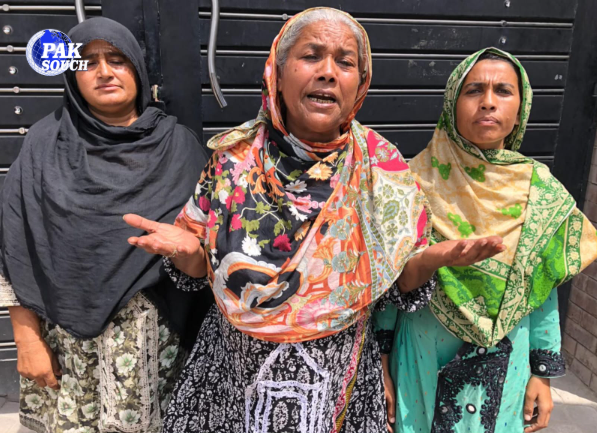
SUKKUR (Bureau Report): Women belonging to the Makrani community from Khairpur staged a protest outside the Sukkur Press Club against Shoaib Makrani, an operator at the Khairpur SSP House, accusing him of allegedly using his influence to harass their family and have what they described as false cases registered against their relatives.
The protesters, identified as Zakia Makrani, Sultana Makrani and Aroosa Makrani, spoke to the media during the demonstration and expressed serious concern over what they claimed was a continued campaign of pressure and harassment against their family.
The women alleged that various cases were being registered repeatedly against their sons, Sikandar Abid, Khalid Asad, Ameer and Sadar. They said the repeated legal proceedings had caused severe mental distress, fear and anxiety among family members.
According to the protesters, Shoaib Makrani was allegedly taking advantage of his position and influence to involve their family members in different cases. They claimed that the repeated registration of cases had created serious difficulties for the family and left them feeling insecure.
The women said they had approached the relevant authorities seeking relief, but claimed that their complaints had not received an adequate response. They said they were therefore compelled to take their grievances to the media and stage a peaceful protest outside the Sukkur Press Club.
The protesters clarified that they did not support any unlawful activity and were not seeking to prevent legitimate legal proceedings. However, they demanded that any cases registered against their family members be investigated fairly and transparently so that the actual facts could be established.
They appealed to senior police officials and other relevant authorities to take immediate notice of the matter and order an impartial inquiry into their allegations. They also demanded that the legal status and available evidence relating to the cases registered against their family members be thoroughly reviewed.
The women said that if an investigation established that any cases had been registered falsely or without sufficient grounds, those responsible should face action according to the law.
The protesters further called for protection for their family and demanded that the alleged harassment be stopped immediately. They said they would continue their struggle for justice through peaceful and legal means.
The women also warned that if their demands were not addressed promptly and they were not provided justice, they would consider expanding their protest through further peaceful demonstrations.
They appealed to senior police authorities to intervene in the matter, ensure an impartial investigation and provide them with an opportunity to present their grievances before the relevant legal and administrative forums.
No independent confirmation of the allegations made by the protesters was provided in the report. The position of Shoaib Makrani or the relevant police authorities regarding the allegations was also not immediately available.
The protesters said they hoped that senior officials would take notice of the situation and ensure that the matter was resolved through a transparent legal process.
About The Author