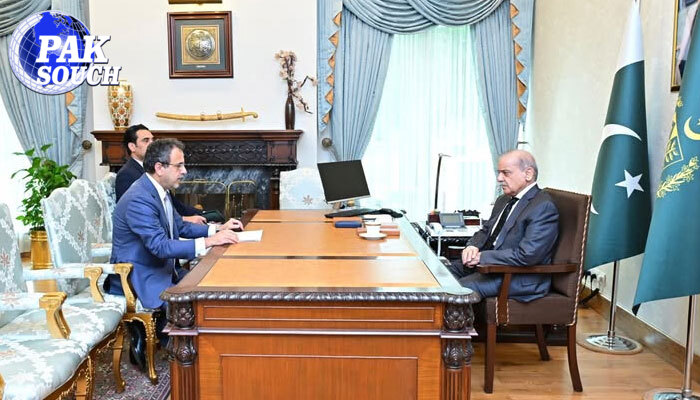
–Islamabad: The federal government led by Prime Minister Shahbaz Sharif has decided to provide another round of relief to electricity consumers, following the imposition of a Captive Power Levy under conditions agreed with the International Monetary Fund (IMF). The new policy is aimed at reducing electricity tariffs by channeling revenues collected from captive power plants directly toward consumer relief on a monthly basis.
According to official sources, the government has finalized a plan to use the amount generated through the captive power levy to offer electricity tariff relief to consumers across the country. This initiative is part of broader energy sector reforms intended to stabilize the power sector, reduce inefficiencies, and provide much-needed financial relief to households and businesses struggling with high electricity costs.
Government sources say that as the rate of the captive power levy increases in phases, there is a strong expectation that the amount of relief provided to electricity consumers will also rise accordingly. The federal cabinet has already approved the transfer of benefits generated from the captive power levy directly to electricity consumers, signaling political backing for the measure at the highest level.
Under the proposed mechanism, the levy collected on a monthly basis will not be passed on immediately but will instead be adjusted and provided to consumers after a gap of two months. Officials say this approach will allow the government to accurately calculate collections and ensure transparent and equitable distribution of relief across different consumer categories.
The federal government has enacted legislation to impose a captive power levy of up to 20 percent in a phased manner on captive power plants. In the first phase, a levy of 5 percent has been implemented with immediate effect. This initial phase marks the beginning of a gradual transition aimed at discouraging industries from relying on self-generated power using gas or LNG, and encouraging them instead to shift to the national electricity grid.
In the second phase, the levy on captive power plants will be increased to 10 percent. This will be followed by a further increase to 15 percent in February 2026. By August 2026, the levy will reach its final level of 20 percent. The gradual increase is designed to give industries sufficient time to adjust their operations, energy planning, and cost structures, while ensuring a steady flow of revenue to support power sector reforms.
Officials clarified that the funds collected through the captive power levy will be used to reduce electricity tariffs for all categories of power consumers. This includes domestic, commercial, industrial, and agricultural users, ensuring that the benefits are spread broadly across the economy rather than being limited to a specific group.
The government believes that discouraging captive power generation will have multiple long-term benefits. Captive power plants, which often operate on gas or LNG, place additional pressure on limited fuel resources and contribute to inefficiencies in the energy system. By shifting more consumers to grid electricity, authorities hope to improve overall demand management, reduce capacity payments, and make better use of existing power generation infrastructure.
Strict enforcement measures have also been outlined to ensure compliance. In case of non-payment of the levy, action will be taken against defaulting captive power plants. For persistent defaulters, the ultimate penalty will be the disconnection of gas supply to the concerned captive power plant. The government has made it mandatory for every captive power plant using gas or LNG to pay the levy to the federal government.
Energy experts say the move aligns with IMF-backed structural reforms aimed at reducing circular debt and improving financial discipline in Pakistan’s power sector. High electricity tariffs have been a major source of public concern, contributing to inflationary pressures and affecting industrial competitiveness. The government hopes that targeted relief measures like this will help ease the burden on consumers while keeping reform commitments on track.
While industry representatives have expressed concerns about rising operational costs due to the levy, government officials maintain that the phased approach and the broader benefits to the economy justify the decision. They argue that a more efficient and financially stable power sector will ultimately benefit both consumers and producers.
In the coming months, the effectiveness of this policy will depend on transparent implementation, accurate calculation of levy collections, and timely transfer of relief to electricity bills. If executed as planned, the captive power levy mechanism could become a key tool in balancing fiscal responsibility with public relief in Pakistan’s challenging energy landscape.