

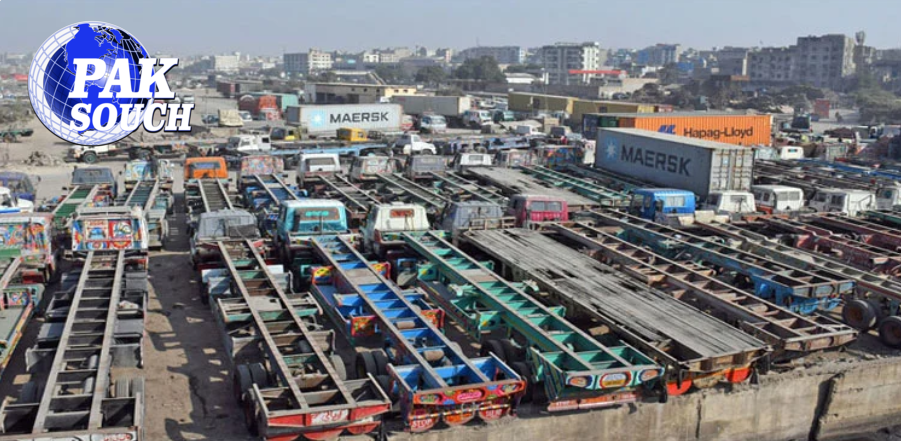
KARACHI: Negotiations between the All Pakistan Goods Transport Ittehad (APGTI) and the Sindh government regarding the cancellation of the nationwide strike scheduled for tomorrow, August 8, have officially failed.
APGTI President Malik Shahzad Awan confirmed the breakdown in discussions, stating that the association’s decision to move forward with the strike remains unchanged.
Indefinite Nationwide Strike to Proceed
“We are going on an indefinite strike across the country starting tomorrow, August 8,” Malik Shahzad announced following the failed session.
The transport leadership stated that a comprehensive charter of demands was presented to the provincial authorities, but accused the Sindh government of showing a lack of seriousness in addressing their grievances.
The association has urged the government to fulfill all of its outlined demands.
Earlier Malik Shehzad Awan, President of the Goods Transport Association, had strongly rejected the government’s decision to revise petroleum product prices on a daily basis, calling the move unacceptable and damaging to the transport industry.
In a statement, he condemned the proposed daily fuel pricing mechanism, stating that frequent changes in petroleum prices would create serious uncertainty for transport operators and increase operational costs.
Awan warned that the government’s “flawed policies,” particularly the continued increase in diesel prices, could bring the country’s goods transport sector to a standstill. He urged transporters across Pakistan to remain prepared, saying a nationwide strike could be announced at any time if their concerns are not addressed.
Asserting the importance of diesel to the national economy, he called on the government to immediately reduce diesel prices, arguing that the country’s economic activity largely depends on road freight transportation.
He also demanded the withdrawal of recent increases in toll tax and withholding tax, describing them as an additional financial burden on transport operators.
Criticizing the government’s policies as “anti-transporter,” Awan urged chambers of commerce and business federations to play an active role in protecting the interests of the transport sector.
He further stated that neither the federal nor the provincial governments have provided any meaningful relief to goods transporters. He called for concessions in motorway charges, traffic fines, toll taxes, and withholding taxes to help ease the industry’s financial pressures.
Awan warned that the government’s current policies are leaving transporters with no option but to consider a nationwide strike. He said that if the government fails to review and revise its policies, the goods transport sector will launch countrywide protest action.
About The Author