Islamabad: A group of former Pakistan Tehreek-e-Insaf (PTI) leaders, who recently formed the National Dialogue Committee (NDC) to promote political reconciliation, has formally reached out to Prime Minister Shehbaz Sharif, urging the government to release senior PTI leaders on parole, including Shah Mehmood Qureshi. Notably, the letter makes no mention of PTI founder Imran Khan, instead emphasizing the role of senior party leaders outside Adiala Jail in initiating and sustaining a meaningful dialogue process.
According to details, the former PTI leaders sent the letter to the Prime Minister on December 23, welcoming the government’s offer to hold talks with the opposition, particularly PTI. The committee described the proposed dialogue as a “golden opportunity” in view of Pakistan’s deepening political polarization, worsening economic challenges, and institutional instability. The signatories stressed that the country urgently needs political reconciliation to move beyond recurring crises and restore governance stability.
The letter underscores that successful negotiations require credible leadership and continuity, which, according to the committee, can only be ensured if experienced senior PTI figures are available outside prison to lead and represent the party effectively. The writers argue that dialogue conducted in the absence of senior leadership would lack seriousness, legitimacy, and the capacity to deliver tangible outcomes.
A striking aspect of the letter is the complete omission of Imran Khan’s name. Instead of focusing on the incarcerated former prime minister, the former PTI leaders highlight the importance of senior party leadership currently imprisoned in Kot Lakhpat Jail and those already outside Adiala Jail. The letter suggests that these leaders are better positioned to initiate talks and maintain momentum in negotiations with the government and other political stakeholders.
The central demand of the letter is the parole release of high-profile PTI leaders currently in custody. These include former Foreign Minister Shah Mehmood Qureshi, former Punjab Health Minister Dr. Yasmin Rashid, former Punjab Governor Umar Sarfaraz Cheema, former Provincial Minister Mian Mahmood ur Rashid, and former Senator Ejaz Chaudhry. The committee argues that granting parole to these leaders would allow them to actively participate in and lead the negotiation process.
According to the NDC, confidence-building measures are essential for any meaningful political dialogue. The release of senior PTI leaders on parole is described as a crucial step toward creating a positive and trust-based environment. The letter states that such a move would send a strong signal of goodwill from the government and help rebuild trust among political parties that has been severely eroded over time.
The former PTI leaders maintain that prolonged incarceration of senior opposition figures undermines prospects for reconciliation and dialogue. They argue that while legal processes must take their course, temporary parole for political engagement would serve the broader national interest at a time when Pakistan faces mounting economic pressures, public dissatisfaction, and governance challenges.
Beyond the immediate demand for parole, the letter also calls upon all political parties to rise above narrow political interests and work collectively toward consensus on a Charter of Democracy and a Charter of Economy. The committee emphasizes that such frameworks are vital for long-term political stability, democratic continuity, and economic recovery. Without cross-party agreement on fundamental principles, the letter warns, Pakistan will continue to cycle through instability and crisis.
The National Dialogue Committee positions itself as a facilitative platform rather than a political faction. According to the letter, its purpose is to bridge gaps between the government and PTI, reduce political hostility, and create space for constructive engagement. The committee believes that dialogue, rather than confrontation, is the only viable path forward for addressing Pakistan’s systemic challenges.
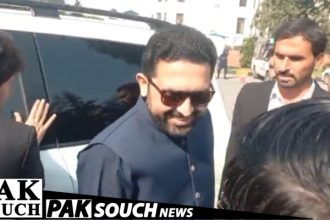
The letter is signed by former PTI leaders Mahmood Molvi, Imran Ismail, and Fawad Chaudhry, all of whom have played prominent roles in the party in the past. These leaders have publicly advocated for political reconciliation and have taken the initiative to form the NDC with the stated aim of paving the way for negotiations between the ruling coalition and PTI. Fawad Chaudhry has confirmed that he shared a copy of the letter with The News.
Political observers note that the letter reflects growing divisions within PTI regarding strategy and leadership, particularly concerning engagement with the government. The exclusion of Imran Khan from the letter has fueled speculation about internal differences over how negotiations should proceed and who should represent the party in any future talks.
So far, there has been no official response from the Prime Minister’s Office regarding the letter or the demands made by the former PTI leaders. However, the development adds a new dimension to ongoing discussions about political dialogue and reconciliation at a time when Pakistan’s political climate remains tense and uncertain.
As the country grapples with economic hardship and political deadlock, the former PTI leaders argue that inclusive dialogue supported by practical confidence-building steps could help steer Pakistan toward stability. Whether the government responds positively to the parole demand remains to be seen, but the letter has already sparked debate over the future direction of PTI and the broader prospects for political compromise.