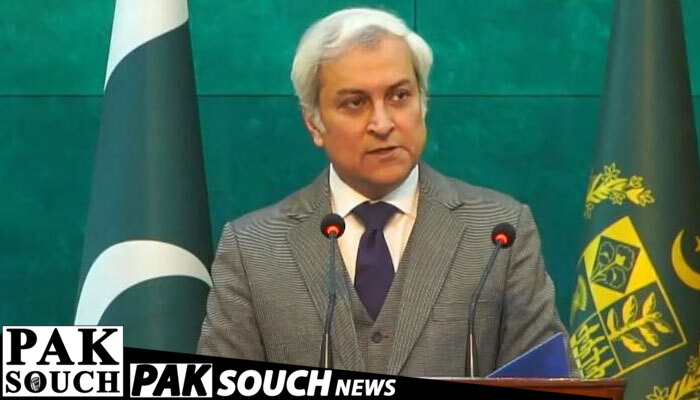
Pakistan has once again urged the Afghan interim administration to take decisive and verifiable action against terrorist groups operating from its soil, stressing that the presence of such elements continues to pose a grave threat to regional peace and Pakistan’s internal security. During the weekly media briefing held in Islamabad, Foreign Office Spokesperson Tahir Andarabi addressed a number of pressing issues related to Pakistan-Afghanistan relations, cross-border terrorism, and the ongoing situation along the Durand Line.
Speaking to reporters, the spokesperson emphasized that “terrorist groups active inside Pakistan are predominantly composed of Afghan nationals.” He reiterated that Pakistan has repeatedly shared concrete intelligence, evidence, and actionable information with the Afghan authorities regarding the presence, movements, and operational bases of these militants. Despite these efforts, he noted that Kabul has not yet taken the level of action Pakistan expects. “We have provided complete dossiers and evidence. It is now the responsibility of the Afghan regime to ensure that their territory is not used for terrorism,” Andarabi said.
He expressed hope that the Afghan Taliban leadership would eventually take firm steps against the outlawed Tehreek-e-Taliban Pakistan (TTP), which has been responsible for numerous attacks across Pakistan in recent years. Referring to Taliban narratives that attempt to portray counter-terrorism operations as humanitarian concerns, the spokesperson clarified that the presence of terrorist sanctuaries in Afghanistan “is not a humanitarian issue but a clear security threat.” He also accused the Afghan Taliban of deliberately fueling ethnic rhetoric by invoking Pashtun nationalism. “The Afghan Taliban are trying to stir up Pashtun ethnic sentiment, but it must be remembered that Pakistan hosts a far larger Pashtun population than Afghanistan,” he asserted.
He further highlighted that certain elements within the Taliban structure have issued religious decrees legitimizing violence, which Pakistan finds both alarming and unacceptable. “There are strong indications that a particular lobby within the Taliban receives funding from external actors and uses it to promote anti-Pakistan activities,” Andarabi added. Pakistan, he insisted, remains firmly committed to eradicating terrorism “in all its forms and manifestations” and expects reciprocity from Kabul.
Addressing the question of the reported ceasefire along the Pakistan-Afghanistan border, the spokesperson clarified that the situation remained fluid. “Our security forces are monitoring the ceasefire on the Afghan border. At this stage, we cannot confirm whether the ceasefire is officially ongoing or has lapsed,” he said. The uncertainty reflects recent tensions, including clashes in certain border areas and Pakistan’s renewed demand for action against TTP hideouts.
On the issue of Afghan refugees, the spokesperson stated that there is currently no specific timeline regarding their complete repatriation. He explained that Pakistan is reviewing Afghan nationals under three categories: those with legal status, those requiring documentation, and those living without authorization. He reiterated that Pakistan’s approach is anchored in both humanitarian considerations and national security needs.
Responding to a question about diplomatic mediation efforts, Andarabi welcomed Iran’s initiatives to help reduce tensions between Pakistan and Afghanistan. “We appreciate Iran’s efforts and believe they can play an important role in facilitating dialogue,” he said. He added that Pakistan would also welcome any constructive role from Russia in promoting stability and preventing escalation in the region.
The spokesperson’s remarks come at a time when Pakistan has intensified its diplomatic messaging to counter the growing influence of TTP and other allied groups operating from Afghan soil. Pakistan has repeatedly warned that if the Afghan authorities fail to act, the responsibility for any future escalation will lie squarely with Kabul. Meanwhile, Afghanistan continues to deny that its territory is being used against Pakistan and maintains that it is doing what it can under difficult internal conditions.
Security experts note that relations between the two neighbors have remained strained, particularly since the spike in cross-border attacks against Pakistani security forces over the past year. Diplomatic engagement has continued, but without major breakthroughs. Analysts believe Pakistan’s latest press briefing reflects a strategic attempt to increase international pressure on the Afghan Taliban, especially as global patience with their governance and counter-terrorism performance appears to be wearing thin.