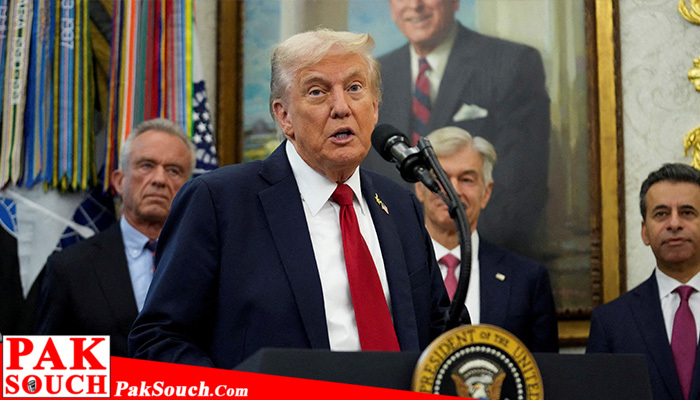
Washington / Gaza / Islamabad / Doha — U.S. President Donald Trump has given Hamas a strict deadline to accept the Gaza ceasefire agreement, warning that failure to do so will lead to severe consequences. Speaking at the White House, Trump declared that Hamas must sign the 20-point Gaza Peace Agreement by Sunday, 6 p.m., or risk escalation.
Ultimatum from Washington
“This is Hamas’s last chance,” Trump stated, noting that several other countries have already signed the agreement. He argued that by agreeing to the ceasefire, Hamas fighters would also save their own lives, suggesting that resistance to the plan would invite harsher military repercussions.
Trump further urged ordinary Palestinians to evacuate Gaza City and move to “safe zones,” adding a controversial warning that civilians who remain may face grave danger as the conflict continues.
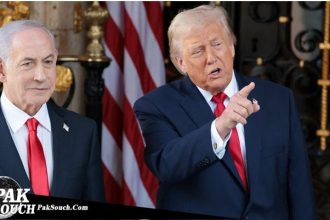
The ultimatum comes just days after Trump and Israeli Prime Minister Benjamin Netanyahu jointly announced the U.S.-drafted 20-point Gaza Peace Agreement. Trump claimed that the initiative had broad support from Arab and Muslim nations, presenting it as a unified international framework to end the bloodshed in Gaza.
Skepticism from Arab Mediators
However, not all regional actors agree with Washington’s framing of events. Qatar’s Prime Minister Sheikh Mohammed bin Abdulrahman Al-Thani expressed caution, saying that while the agreement is a step toward peace, “several points require clarification and negotiation.”
He specifically highlighted the question of Israeli troop withdrawal from Gaza, arguing that this key issue cannot be left ambiguous. “Any peace plan must include guarantees of Israeli withdrawal,” Sheikh Mohammed stressed, signaling that Doha and its allies expect further talks before any binding agreement.
Pakistan Voices Concerns
In Islamabad, Pakistan’s Deputy Prime Minister and Foreign Minister, Ishaq Dar, voiced strong reservations in the National Assembly. He revealed that the 20-point document Trump announced was not identical to the draft initially prepared by a coalition of eight Muslim nations.
“Let me be clear: the plan presented by President Trump is not the draft we submitted,” Dar emphasized. “There have been changes made without consultation. Our version focused on a single-point agenda — an immediate ceasefire in Gaza. What came out of Washington was not the same.”
Dar went on to highlight the dire humanitarian situation in Gaza, where civilians are dying from starvation and lack of medical aid. “The United Nations, the European Union, and other global institutions have failed to stop the bloodshed,” he lamented. Pakistan, he affirmed, would continue to support the collective position of the eight Muslim countries that had originally proposed the ceasefire framework.
The 20-Point Agreement: What’s at Stake
While the full details of the 20-point U.S. proposal have not been made public, officials say it includes:
- A phased cessation of hostilities between Israel and Hamas.
- A temporary withdrawal of Israeli forces from specific areas.
- Humanitarian corridors for food, medical aid, and evacuation of civilians.
- Restrictions on Hamas’s military capabilities, including its rocket arsenal.
- International monitoring mechanisms involving the U.S., Egypt, and possibly NATO forces.
Critics, however, argue that the document leans heavily in Israel’s favor, particularly by delaying full troop withdrawal and imposing strict conditions on Hamas while offering vague assurances to Palestinians.
International Reactions
The ultimatum has triggered mixed responses globally. The European Union cautiously welcomed Washington’s initiative but urged both parties to show “maximum restraint” in order to prevent further civilian deaths.
Meanwhile, Turkey, Iran, and Lebanon condemned Trump’s deadline as “coercive diplomacy,” warning that such ultimatums may derail rather than advance peace efforts.
The United Nations called for “genuine negotiations,” with Secretary-General António Guterres reiterating that any ceasefire must prioritize civilian protection and guarantee humanitarian access.
Hamas’s Dilemma
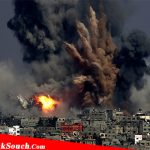
For Hamas, the deadline presents a difficult choice. On one hand, rejecting the plan risks massive escalation by Israeli forces, who have already stepped up airstrikes on Gaza despite ongoing ceasefire discussions. On the other, accepting an agreement perceived as biased may weaken Hamas’s legitimacy among Palestinians and broader Arab publics.
Political analysts note that Hamas may attempt to use the coming days to negotiate adjustments to the 20 points, particularly regarding Israeli withdrawal and long-term sovereignty issues. “Hamas will not want to appear as capitulating under pressure, especially with so many Palestinians skeptical of U.S.-brokered plans,” said a Middle East analyst based in Amman.
Pakistan and the Muslim Bloc
Pakistan’s insistence on sticking to the original Muslim-bloc draft signals a potential split in the mediation process. Ishaq Dar’s statement suggests that Islamabad and its allies will push back against Washington’s unilateral framing of the peace plan.