Gaza City / Ramallah / Doha — Hopes for a ceasefire in Gaza suffered a devastating blow as Israeli military operations intensified despite Hamas formally submitting a response to international ceasefire proposals. According to Arab media reports, at least 72 Palestinians were killed in the last 24 hours, with Israel targeting residential buildings, refugee camps, and even hospitals in Gaza City.
New Wave of Attacks Despite Ceasefire Efforts
The escalation came just days after Hamas delivered its official response to the U.S.-backed ceasefire initiative, which had been welcomed by mediators Qatar, Egypt, and the United Nations. Palestinians had cautiously hoped the move would bring respite from months of relentless bombardment. Instead, Gaza has witnessed one of the deadliest waves of violence in recent weeks.
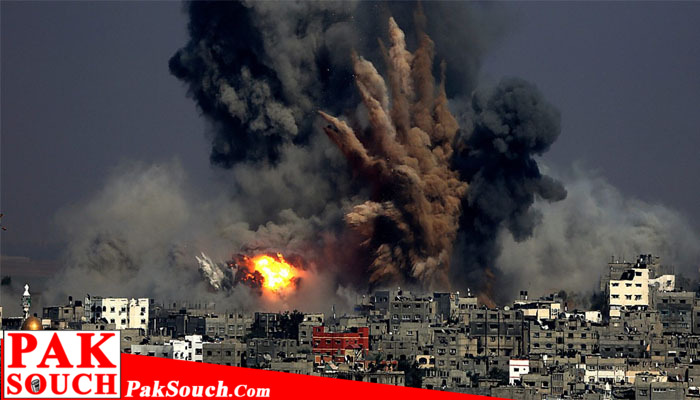
Witnesses in Gaza City described entire apartment blocks reduced to rubble overnight. Rescue workers, already stretched thin, scrambled to pull survivors from the debris as Israeli fighter jets launched fresh strikes on densely populated neighborhoods. Among the dead were dozens of women and children, many of them caught in their homes during late-night bombardments.
Refugee Camps and Civilian Areas Targeted
Arab media outlets reported that Israeli strikes concentrated on refugee camps, which are home to some of Gaza’s most vulnerable populations. In particular, the Shati and Jabalia camps were struck repeatedly, killing scores of civilians who had little to no access to bomb shelters.
Residents told reporters that they were given conflicting evacuation orders by the Israeli Defense Forces (IDF), forcing them into confusion and despair. Some were told to flee south, only to find those areas also under heavy bombardment. “There is no safe place in Gaza,” said one displaced father who lost three of his children in the airstrikes.
New Tactics: Remote-Control Explosives
In a troubling development, reports indicated that Israeli forces have begun deploying remote-controlled vehicles packed with explosives inside Gaza neighborhoods. According to Arab media, these unmanned vehicles are being used to destroy housing blocks and civilian infrastructure after airstrikes. Analysts noted that this represents a new phase of warfare, further endangering civilians trapped in urban areas.
Military experts warned that such tactics blur the line between conventional operations and collective punishment, raising grave concerns under international humanitarian law. Human rights organizations are expected to investigate these reports in the coming days.
Humanitarian Catastrophe in Gaza Hospitals
The humanitarian toll continues to mount in Gaza’s fragile healthcare system. Al Jazeera reported that at Al-Helou International Hospital in Gaza City, a newborn baby died after life-saving equipment failed due to repeated power outages and bombardment-related disruptions.
Doctors said the hospital is facing impossible conditions: shortages of electricity, medicine, and fuel for generators have left medical staff struggling to keep patients alive. In the neonatal ward, three premature babies were evacuated to other facilities, while 10 more remain in urgent need of transfer to safer locations.
“Every day we fear losing more children,” said a pediatric doctor at the hospital. “We are trying to save lives, but the bombs and siege are killing faster than we can respond.”
Palestinians Trapped Despite Evacuation Orders
The IDF had earlier given residents of parts of Gaza City a so-called “final warning” to evacuate. Yet hundreds of thousands remain trapped, unable to leave because of destroyed roads, lack of fuel, or fear of being targeted while fleeing.
International organizations say the ongoing Israeli operations make humanitarian corridors nearly impossible to establish. The United Nations Relief and Works Agency (UNRWA) estimates that more than a million Palestinians remain displaced within Gaza, many living in overcrowded shelters that are themselves vulnerable to attack.
International Reactions
The escalation has sparked renewed outrage across the Arab world. Qatar’s Ministry of Foreign Affairs condemned Israel’s latest attacks, calling them “a blatant violation of international law and an assault on the ceasefire momentum.” Egypt also criticized the operations, warning that such actions undermine ongoing diplomatic efforts.
UN Secretary-General António Guterres expressed “deep alarm” at reports of mass civilian casualties. “The continued bombardment of Gaza despite ceasefire discussions is unacceptable,” he said. “The killing of newborns and the targeting of hospitals are indefensible violations of humanitarian law.”
In Washington, the U.S. State Department reiterated its call for restraint, though critics argue that American arms supplies to Israel make such statements ring hollow. European leaders, including French President Emmanuel Macron and German Chancellor Olaf Scholz, urged both sides to adhere to ceasefire commitments, though they placed the greater onus on Hamas to halt rocket fire.
Mounting Pressure for Ceasefire
Despite Israel’s ongoing military operations, mediators insist they will continue pushing for a ceasefire. Qatar confirmed that discussions with Egypt and the United States remain ongoing. Diplomats say Hamas’s formal response to the Trump peace plan, which included willingness to release hostages under certain conditions, should not be ignored.
Analysts argue that Israel’s escalation may be aimed at pressuring Hamas to concede further in negotiations, but the humanitarian cost risks triggering regional instability. Large-scale protests in Yemen, Jordan, and Turkey over the weekend highlighted the deep anger in the wider Muslim world.
Conclusion
For Gaza’s civilians, however, the latest developments bring only despair. The deaths of 72 Palestinians in a single day, coupled with new military tactics and the collapse of healthcare facilities, underscore the catastrophic impact of a conflict that shows little sign of abating.
As international mediators scramble to salvage the possibility of a ceasefire, the humanitarian crisis in Gaza deepens. With newborn babies dying in hospitals, families trapped in bombed-out neighborhoods, and civilians facing new threats from remote-controlled explosives, the world is confronted once again with the stark urgency of ending the violence.