

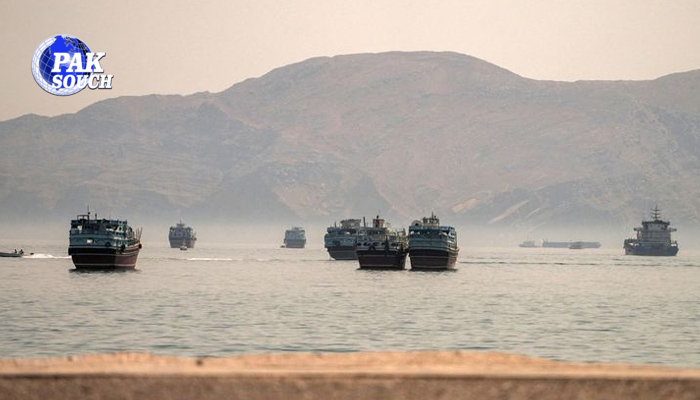
Muscat: Oman has indicated that it may introduce charges for certain services provided to vessels transiting the Strait of Hormuz, despite opposition from the United States and several Gulf Cooperation Council (GCC) member states.
According to a report by Bloomberg, Omani officials told European counterparts that ships using the strategic waterway could be required to pay fees for services related to environmental protection and navigational assistance.
The officials said the proposed charges would not be for the right to pass through the strait itself, but rather for efforts aimed at keeping the waterway free from pollution and providing assistance to vessels navigating one of the world’s busiest maritime routes.
Omani authorities stated that the Strait of Hormuz cannot simply return to the conditions that existed before the recent regional conflict, arguing that new security and environmental realities require additional measures and resources.
They emphasized that Oman remains committed to complying with international maritime law and would continue to respect the principle of freedom of navigation. However, they said that charging for specific maritime services—such as environmental protection initiatives and navigational support—could be justified under international legal frameworks.
The proposal has generated mixed reactions across the Gulf region.
Qatar has expressed a nuanced position on the issue. Earlier, Doha had indicated that it would discuss the costs associated with maritime routes in coordination with Iran, suggesting a willingness to explore mechanisms for addressing expenses related to shipping in the region.
At the same time, both Oman and Qatar had previously signed a Gulf Cooperation Council (GCC) statement opposing the imposition of tolls on vessels passing through the Strait of Hormuz, highlighting the complexity of the current debate.
The United States has firmly rejected the idea of transit fees for ships using the strait. U.S. Secretary of State Marco Rubio recently stated that no country has the authority to impose taxes or transit charges on passage through the Strait of Hormuz, reaffirming Washington’s position that international shipping should remain free from such levies.
The Strait of Hormuz is one of the world’s most strategically important maritime chokepoints, connecting the Persian Gulf with the Gulf of Oman and the Arabian Sea. A significant share of global oil and liquefied natural gas exports passes through the narrow waterway each day, making any proposed changes to its administration or cost structure a matter of international concern.
Maritime and energy analysts say that any new fees—if formally introduced—could affect shipping costs and regional trade. However, no official policy has yet been announced by Oman, and discussions on the matter are expected to continue among regional governments and international stakeholders.
About The Author