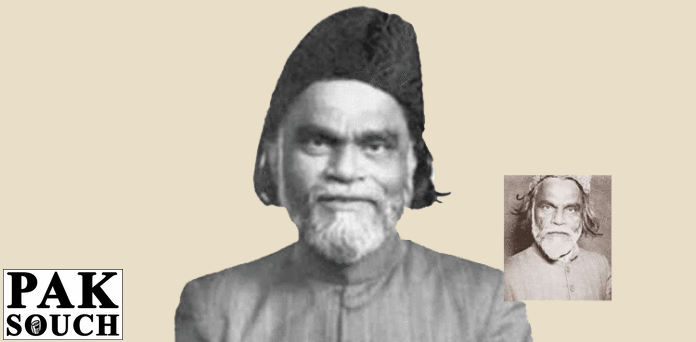
Jigar Moradabadi, famously known as the Rais al-Mutaghazzilin (chief among ghazalists), holds a lasting place in Urdu poetry. Renowned for his love of beauty and wine, Jigar’s name continues to resonate among poetry enthusiasts, celebrated as one of the most popular poets of his era.
Two of his memorable couplets reflect his poetic brilliance:
“Dil mein kisi ke raah kiye ja raha hoon main,
Kitna haseen gunaah kiye ja raha hoon main.”
“Ishq jab tak na kar chuke ruswa,
Aadmi kaam ka nahi hota.”
These verses exemplify the flow, rhythm, and charm that define Jigar’s ghazals. His poetry not only carries elegance and tradition but also conveys the personal essence of his free-spirited and aesthetic nature. Jigar enjoyed immense fame in his lifetime, with his unique style and melodic rhythm setting him apart from contemporaries, many of whom attempted to emulate him but could not reach his stature.
Born Ali Sikandar on 6 April 1890 in Moradabad, India, Jigar received his early education at home and local maktabs, learning Urdu, Persian, and Arabic. His formal education remained incomplete, but poetry ran in his blood, with both his father and uncle being poets. Jigar honed his craft under the guidance of Asghar Gondvi, eventually establishing his name in the literary world.
Following the Partition of India, Jigar remained in India until his death on 9 September 1960. Known as a Rind-e-Bila Nosh (a carefree lover of wine), he maintained a spirited, generous, and empathetic persona. Even after giving up alcohol later in life, his health did not improve, and he faced financial difficulties. Despite these challenges, his presence was highly sought after in mushairas (poetic gatherings), where his recitations drew thunderous applause. Audiences would often request their favorite couplets, which became widely popular and part of everyday literary conversation.
Jigar Moradabadi’s melodious recitation and poetic cadence were admired both by contemporaries and listeners. Recognizing his contributions, the Indian government awarded him the Padma Bhushan, and Aligarh Muslim University conferred upon him an honorary doctorate.
In essence, Jigar Moradabadi remains a symbol of Urdu poetry’s timeless beauty, celebrated for his lyrical mastery, aesthetic sensibilities, and enduring legacy in the hearts of literary enthusiasts across the subcontinent.