


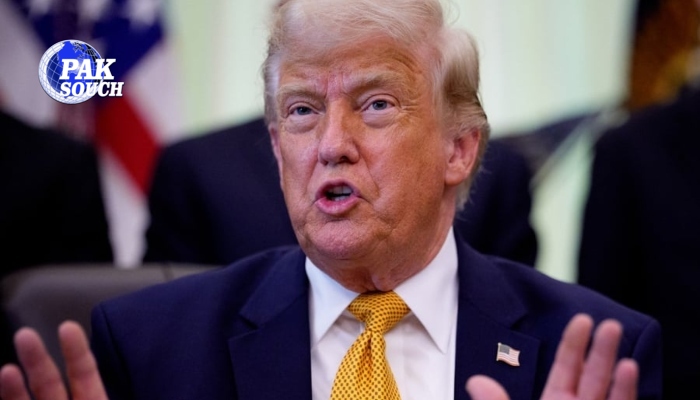
Washington: U.S. President Donald Trump has strongly criticized a congressional resolution calling for an end to military action against Iran, describing the measure as “untimely” and “meaningless” while defending his administration’s approach toward Tehran.
Speaking about the resolution, Trump argued that pressure on Iran had been highly effective and claimed that the country was facing severe difficulties as a result of U.S. policies.
“I brought Iran to its knees,” Trump said. “It was on the verge of collapse.”
The U.S. president maintained that congressional efforts to restrict or halt military action would complicate his administration’s strategy and make it more difficult to achieve its objectives.
Criticism of Congress
Trump said that lawmakers had made his task more challenging by advancing the resolution.
“The senators have made my job more difficult,” he stated. “But I will complete the job one way or another. I always finish the job.”
His comments reflect continuing tensions between the executive branch and Congress over U.S. policy toward Iran and the scope of presidential authority in matters of military action.
Senate Approves Resolution
The remarks came after the U.S. Senate voted in favor of a joint resolution aimed at limiting military action against Iran.
According to reports, the resolution was approved by a vote of 50 to 48, with supporters arguing that Congress should play a greater role in decisions involving the use of military force.
The measure seeks to prevent further military action against Iran without explicit authorization from Congress, reinforcing the legislature’s constitutional role in matters of war and armed conflict.
Earlier House Approval
The resolution had already been approved earlier this month by the House of Representatives, indicating significant congressional support for increased oversight of U.S. military engagement with Iran.
Supporters of the measure contend that any escalation of military operations should require congressional debate and approval, while opponents argue that restricting presidential authority could limit the United States’ ability to respond quickly to security threats.
Ongoing Debate Over Iran Policy
The vote highlights the broader debate in Washington regarding the future of U.S.-Iran relations, military strategy in the Middle East, and the balance of power between Congress and the presidency.
Trump has consistently defended a hardline approach toward Iran, arguing that economic and political pressure is necessary to influence Tehran’s policies. Critics, however, have warned that excessive pressure or military escalation could increase regional instability and lead to a wider conflict.
The Senate’s approval of the resolution marks another chapter in the ongoing struggle between Congress and the White House over foreign policy and military decision-making. Whether the measure ultimately takes effect will depend on subsequent legislative and executive actions, but it has already intensified debate over America’s approach toward Iran and the limits of presidential war powers.
About The Author