

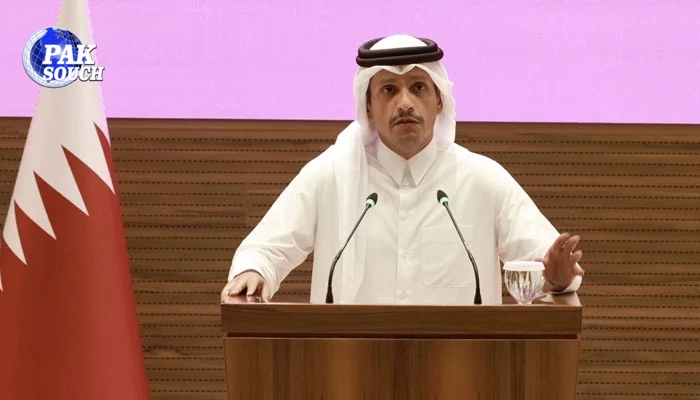
Doha: Qatari Prime Minister and Foreign Minister Sheikh Mohammed bin Abdulrahman Al Thani has said that Qatar would not support any Iranian proposal to impose fees on vessels passing through the Strait of Hormuz, emphasizing that unrestricted access to the vital waterway is essential for regional and global trade.
In an interview with a British newspaper, the Qatari premier discussed developments related to maritime security, regional diplomacy, and ongoing efforts to maintain stability in the Gulf.
Sheikh Mohammed stated that the recently established U.S.-Iran hotline is playing a crucial role in restoring confidence and ensuring the safe movement of ships through the Strait of Hormuz. According to him, direct communication between Washington and Tehran is important for preventing misunderstandings and avoiding unnecessary escalation.
“The hotline is extremely important for the restoration of maritime traffic in the Strait of Hormuz,” he said. “Its purpose is to prevent misinformation and avoid any potential provocation that could threaten stability in the region.”
Opposition to Transit Fees
The Qatari Prime Minister made it clear that Doha would not endorse any plan that would require ships to pay fees for using the strategic waterway.
He stressed that Qatar depends heavily on free access to international sea routes and would not accept any arrangement that places control of those routes in the hands of another country.
“Our access to the world depends on this route,” he said, adding that any attempt by another state to exercise control over such a critical passage would be unacceptable from Qatar’s perspective.
The Strait of Hormuz is one of the world’s most important maritime chokepoints, connecting the Persian Gulf to international waters. A significant portion of global oil and liquefied natural gas exports passes through the narrow waterway each day, making freedom of navigation a key concern for energy-importing and exporting nations alike.
Concerns Over Potential Sabotage
Sheikh Mohammed also warned that certain actors may attempt to undermine recent diplomatic understandings and agreements in the region.
He noted that there is a possibility that some groups or individuals could seek to sabotage progress made through dialogue and confidence-building measures.
“Some elements may try to derail the agreement,” he said, emphasizing the need for vigilance and continued communication among regional stakeholders.
Verification of Maritime Threats
The Qatari Prime Minister further stressed the importance of verifying any threats made against commercial shipping.
According to him, any warning or allegation involving vessels operating in or around the Strait of Hormuz should be confirmed through appropriate channels, including direct communication with Iran when relevant.
He said such verification mechanisms are necessary to prevent false reports, reduce tensions, and ensure that maritime security decisions are based on accurate information rather than speculation.
Importance of Regional Stability
Qatar has consistently advocated diplomatic engagement and dialogue as the preferred means of resolving regional disputes. Sheikh Mohammed reiterated that maintaining stability in the Gulf remains a priority, particularly given the strategic significance of the Strait of Hormuz for global energy markets and international commerce.
Analysts note that any restrictions, additional charges, or disruptions affecting traffic through the waterway could have far-reaching economic consequences, potentially impacting energy prices, shipping costs, and international trade flows.
The Qatari Prime Minister’s comments highlight Doha’s support for freedom of navigation and its preference for cooperative regional security arrangements rather than unilateral measures affecting one of the world’s most important maritime routes.
As diplomatic efforts continue between regional and international actors, the future management and security of the Strait of Hormuz is expected to remain a central issue in Gulf politics and global economic discussions.
About The Author