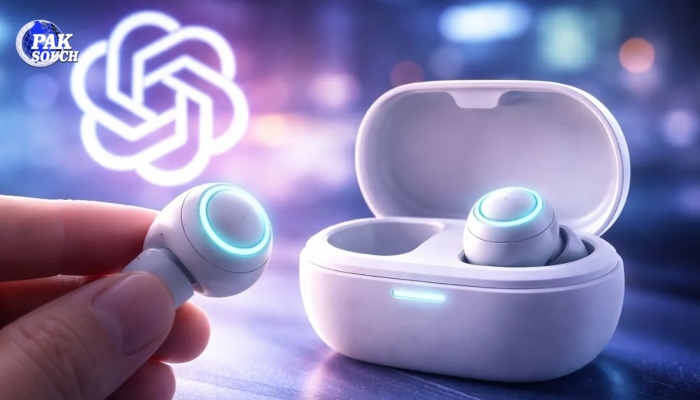
OpenAI, known for its cutting-edge artificial intelligence systems, is reportedly accelerating plans to release its first hardware device, marking a shift from purely software-based AI solutions to consumer-facing audio hardware. According to recent reports, the device—codenamed “DiEM”—will primarily take the form of AI-enabled smart earbuds.
Sources indicate that OpenAI aims to prioritize simplicity and accessibility with its first hardware product, focusing on an audio wearable rather than a more complex device such as a smartphone or augmented reality headset. By adopting this approach, the company intends to introduce users to its AI ecosystem in an intuitive and cost-effective manner.
While official details remain limited, industry insiders suggest that the DiEM earbuds are planned for release by the end of 2026, with consumer availability expected in early 2027. The device’s existence became public following the appearance of a patent in China, which hinted at an audio-based wearable designed to interact with AI models.
The earbuds will reportedly allow users to interact with OpenAI’s models via voice and audio commands, enabling features such as real-time AI assistance, voice-activated queries, and other AI-driven functionalities. Analysts speculate that the integration of these features could make the earbuds a portable, always-on AI companion, capable of handling tasks that currently require smartphones or desktop applications.
One of the key reasons behind choosing earbuds as the first hardware product is the device’s affordability and speed to market. By keeping the design simple, OpenAI can make the technology more accessible to a wider audience while avoiding the logistical and technical challenges associated with launching a full-fledged AI smartphone or high-end device.
Reports also note that OpenAI has encountered delays in developing a phone-like AI device due to shortages of memory chips, a challenge affecting the broader consumer electronics industry. In contrast, earbuds require fewer components and less processing power, allowing the company to release a practical, functional AI wearable sooner.
The planned earbuds are expected to include voice command capabilities, audio-based interactions, and access to OpenAI’s suite of AI features. This may encompass real-time transcription, contextual assistance, reminders, and integration with other devices and services within the OpenAI ecosystem.
Experts suggest that OpenAI’s move into hardware represents a strategic expansion of its AI offerings. Traditionally focused on software products and API access, including tools like ChatGPT and DALL·E, the company is now aiming to provide direct, personal access to AI via wearable devices, opening new avenues for user engagement and monetization.
The market for AI-powered wearables has been gaining traction, with companies exploring voice assistants, smart earbuds, and AR/VR devices. OpenAI’s entry into this space could provide a competitive advantage by leveraging its brand recognition and existing AI infrastructure to deliver features that go beyond conventional voice assistants.
While OpenAI has not officially confirmed details about the DiEM earbuds, the reports suggest the company is emphasizing user-friendly design, cost efficiency, and integration with its AI models as core priorities. Observers expect that, if successful, this product could establish a new category of AI-powered audio devices that serve as both entertainment and productivity tools.
Industry analysts are also monitoring the potential impact on competitors, including tech giants already offering smart earbuds with voice assistants, such as Apple, Google, and Amazon. OpenAI’s offering could differentiate itself through advanced natural language processing and real-time AI assistance, leveraging the company’s expertise in generative AI models.
In conclusion, the launch of AI-enabled earbuds represents a significant step for OpenAI, signaling its first foray into consumer hardware. By providing users with a wearable interface to interact with AI, the company aims to expand the accessibility of its technology while preparing the groundwork for future, more complex AI hardware offerings. With the projected release window of late 2026 to early 2027, the tech world will be watching closely to see how OpenAI’s first hardware device performs in the increasingly competitive AI and wearable markets.