

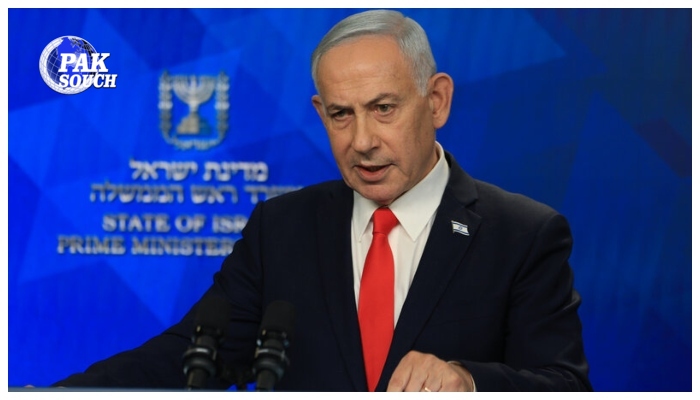
Jerusalem: Israel has announced that it will continue military operations in southern Lebanon in order to maintain what it describes as a security zone, reaffirming that the safety of Israeli citizens and military personnel will remain a top national priority.
The announcement came in a joint statement issued by Israeli Prime Minister, the Defense Minister, and the Chief of Staff of the Israeli military, signaling a unified position among the country’s political and military leadership on security developments along the Lebanese border.
The statement was released as diplomatic efforts aimed at reducing tensions between Israel and Hezbollah continue, with another round of negotiations scheduled to take place in Washington.
Commitment to Maintaining a Security Zone
According to the joint statement, the Israeli military will continue conducting operations in southern Lebanon to preserve a security buffer intended to prevent threats from reaching Israeli territory.
Israeli officials argued that maintaining security arrangements along the northern border is necessary to protect communities near the frontier and to address potential security risks.
The leadership emphasized that military actions would continue as long as they are considered necessary for safeguarding Israel’s security interests.
While the statement did not provide specific operational details, it reaffirmed the government’s commitment to maintaining a strong security posture in the region.
Security of Citizens and Troops Declared Top Priority
Israeli leaders stated that the protection of Israeli civilians and military personnel would remain a fundamental principle guiding government policy.
“The security of Israeli citizens and soldiers will remain a basic principle, and no compromise will be made on this issue,” the statement said.
The declaration reflects Israel’s longstanding position that national security considerations take precedence in decisions regarding border operations and regional military activity.
Officials stressed that any measures undertaken by the Israeli military would be aimed at ensuring the safety of residents living in areas near the Lebanese border.
Ongoing Tensions Along the Border
The announcement comes amid continuing tensions in the Israel-Lebanon border region, which has experienced periodic exchanges of fire and security incidents in recent years.
Southern Lebanon has long been a focal point of regional security concerns due to the presence of Hezbollah, the powerful Lebanese armed and political movement.
The area has witnessed repeated confrontations and military activity, contributing to concerns about the potential for broader escalation.
Regional and international actors have repeatedly called for restraint and adherence to ceasefire understandings in order to prevent instability from spreading.
Diplomatic Efforts Continue
At the same time, diplomatic initiatives aimed at reducing tensions remain underway.
According to reports, another round of Lebanon-Israel negotiations is scheduled to take place in Washington today. The talks are part of broader efforts to maintain stability and advance discussions related to security arrangements between the two sides.
The negotiations are reportedly focused on supporting and preserving a ceasefire framework between Israel and Hezbollah while exploring mechanisms to prevent future clashes.
International mediators have been working to encourage dialogue and confidence-building measures that could reduce the likelihood of renewed conflict.
Importance of the Washington Talks
Observers view the Washington discussions as an important opportunity to address security concerns through diplomatic channels.
The talks are expected to include discussions on border security, implementation of ceasefire commitments, mechanisms for de-escalation, and broader regional stability issues.
Diplomatic sources have indicated that maintaining open lines of communication remains essential for avoiding misunderstandings and preventing incidents from escalating into larger confrontations.
While significant differences remain between the parties, international stakeholders continue to support efforts aimed at reaching practical arrangements that can contribute to long-term stability.
Regional and International Concerns
Developments in southern Lebanon are being closely monitored by regional governments and the international community due to the potential impact on Middle Eastern security.
Any escalation in hostilities between Israel and Hezbollah could have wider consequences for neighboring countries and regional stability.
As a result, international organizations and foreign governments have repeatedly emphasized the importance of dialogue, restraint, and adherence to existing agreements.
Security analysts note that balancing military considerations with diplomatic efforts will be crucial in preventing further deterioration of the situation.
Looking Ahead
Israel’s latest announcement underscores its determination to continue military operations it considers necessary for maintaining security along its northern frontier.
At the same time, ongoing negotiations in Washington highlight parallel diplomatic efforts aimed at reducing tensions and supporting a durable ceasefire between Israel and Hezbollah.
Whether the combination of military measures and diplomatic engagement can lead to lasting stability remains uncertain. However, both developments illustrate the continued importance of southern Lebanon as a key focal point in regional security discussions.
As talks proceed and security conditions evolve, governments and international mediators will continue to watch closely for signs of progress toward reducing tensions and preventing renewed conflict in the region.
About The Author