

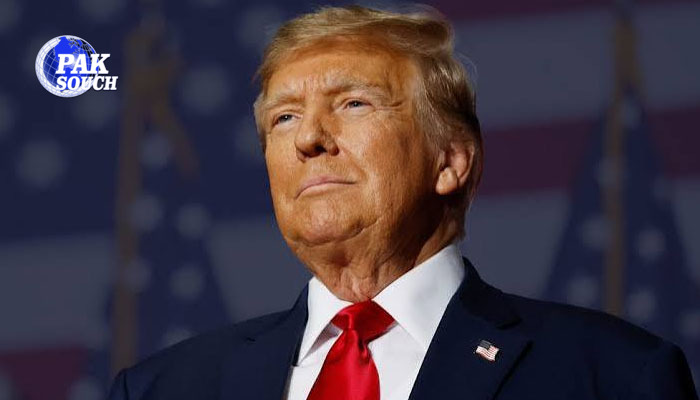
Maryland: Former U.S. President Donald Trump has said that China played an important role in developments related to Iran, while also announcing plans for mutual high-level visits between Washington and Beijing later this year.
Addressing a public event in the U.S. state of Maryland, Trump stated that although China imports around 50 percent of its oil from Iran, it still played a significant role in addressing issues related to Tehran.
He did not provide specific details about China’s involvement but emphasized that Beijing’s role in the Iran-related situation was “important.”
Trump also announced upcoming diplomatic engagements between the two countries, saying that Chinese President Xi Jinping is scheduled to visit the United States in September, while he himself plans to visit China again later this year.
The remarks come amid ongoing global attention on U.S.-China relations, which have been marked by both competition and cooperation across trade, security, and geopolitical issues.
In the same address, Trump highlighted what he described as strong bilateral relations between the United States and Israel, stating that Washington maintains “excellent ties” with Tel Aviv. He did not elaborate further but reaffirmed continued strategic cooperation between the two allies.
Separately, in an interview with an American news website, Trump commented on broader foreign policy matters, including Cuba and Venezuela. He suggested that a Venezuela-style approach toward Cuba could be considered, stating that such an action is “certainly possible,” although he stressed that there is no fixed timeline for any potential decision.
The comments reflect Trump’s broader focus on assertive foreign policy positions, particularly regarding Latin America and geopolitical rivals of the United States.
Analysts note that Trump’s remarks on China and Iran underscore the complex interplay between major global powers in Middle Eastern affairs, where economic interests, particularly energy trade, often intersect with diplomatic and security considerations.
China remains one of Iran’s largest trading partners, especially in the energy sector, while also maintaining strategic relations with Western countries, including the United States. Trump’s comments highlight how these overlapping relationships influence international diplomacy.
His reference to planned visits between U.S. and Chinese leadership suggests continued efforts to maintain dialogue despite ongoing tensions over trade policies, technology competition, and regional security issues.
The statements have not yet been officially responded to by the Chinese government. However, such remarks are likely to attract attention in diplomatic and policy circles, given the sensitivity of U.S.-China relations.
Trump’s comments on Cuba and Venezuela also indicate a continued focus on Latin American policy, where the United States has historically maintained strong political and economic interests.
Further developments are expected as international reactions emerge to his statements, particularly regarding the evolving roles of China and the United States in Middle Eastern diplomacy and global strategic affairs.
About The Author