


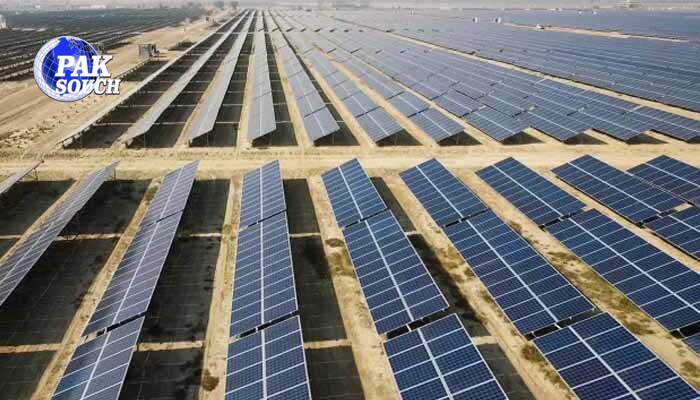
Islamabad: The federal government has decided to launch a 100-megawatt solar energy project in Gilgit-Baltistan, aiming to improve energy availability, reduce electricity costs, and promote the use of renewable energy in the region.
The decision was reviewed during a meeting chaired by Prime Minister Shehbaz Sharif, where officials briefed him on the project’s progress and implementation plans.
Prime Minister Reviews Solar Project
During the meeting, relevant authorities presented details of the federal government’s solar energy initiative for Gilgit-Baltistan.
The project is divided into two major components designed to benefit both public institutions and residential consumers across the region.
18MW Solar Project for Government Buildings
Officials informed the prime minister that an 18-megawatt solar power project is being developed for government buildings in Gilgit-Baltistan.
The project is expected to be completed by December 2026 and aims to reduce electricity expenses for public institutions while increasing reliance on clean energy sources.
82MW Solar System for Households
In addition to government facilities, work is also underway on an 82-megawatt solar energy project for residential consumers.
The household-focused initiative will cover major urban centers, including:
- Gilgit
- Skardu
- Chilas
- Khaplu
The project is expected to help residents access more affordable and sustainable electricity while reducing pressure on conventional power infrastructure.
Prime Minister Directs Faster Implementation
Prime Minister Shehbaz Sharif instructed officials to accelerate the pace of work and ensure the project is completed as quickly as possible.
He emphasized the importance of efficient implementation so that the people of Gilgit-Baltistan can benefit from the project at the earliest opportunity.
Transparency Measures Ordered
The prime minister also directed authorities to ensure complete transparency throughout all stages of the project.
To achieve this, he ordered the use of independent third-party validation to monitor implementation, verify progress, and maintain accountability.
Officials said the measure would help ensure that project standards, costs, and timelines remain transparent and credible.
Federal Government to Bear Entire Cost
During the meeting, the prime minister announced that the federal government will bear the full cost of the 100MW solar project.
The decision is intended to support the socio-economic development of Gilgit-Baltistan and improve access to reliable energy without imposing additional financial burdens on local residents.
Renewable Energy and Regional Development
The project forms part of broader efforts to expand renewable energy generation in Pakistan and reduce dependence on expensive imported fuels.
Experts believe that solar power projects in Gilgit-Baltistan are particularly suitable due to the region’s favorable climatic conditions and significant solar energy potential.
The initiative is also expected to contribute to environmental sustainability while supporting economic activity and public welfare.
Conclusion
The federal government’s decision to launch a 100-megawatt solar energy project in Gilgit-Baltistan represents a major investment in renewable energy and regional development. With 18MW dedicated to government buildings and 82MW aimed at households, the project is expected to improve energy access, lower electricity costs, and promote sustainable growth across the region, with the federal government covering all associated expenses.
About The Author