

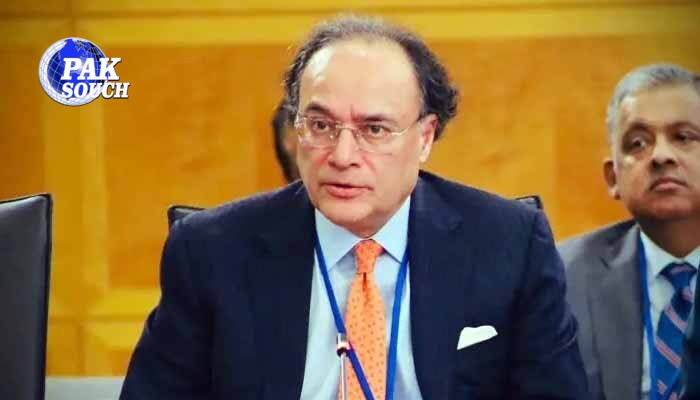
ISLAMABAD: Federal Finance Minister Senator Muhammad Aurangzeb has said that inflation in Pakistan is expected to decline once geopolitical tensions in the Middle East ease.
Speaking in the National Assembly during the presentation of the federal budget, the finance minister noted that recent inflationary pressures were influenced by developments in the Middle East, particularly regional conflict and instability.
Inflation Trends and Economic Outlook
Muhammad Aurangzeb stated that despite global uncertainties, Pakistan’s average inflation for the current year is expected to remain around 7 percent, slightly lower than the revised estimate of 7.5 percent for the fiscal year.
He said that while inflation has increased in recent months, the overall trend remains manageable under current economic conditions.
Impact of Global Conflicts on Prices
The finance minister linked recent inflationary pressures to geopolitical tensions in the Middle East, arguing that global instability has had a direct impact on energy prices, supply chains, and commodity markets.
He said that fluctuations in international markets have contributed to rising costs domestically, affecting consumers and businesses alike.
Hope for Stability in Prices
Expressing optimism, Muhammad Aurangzeb said that once “the clouds of war” in the Middle East clear, inflationary pressures are expected to ease, leading to greater price stability in Pakistan.
He suggested that improvements in global peace and security would have a positive impact on economic conditions worldwide, including Pakistan.
Budget Framed as Relief-Oriented
The finance minister reiterated that the federal budget is designed as a relief-oriented package aimed at reducing the burden on the salaried class and improving public welfare.
He said the government is committed to ensuring that the benefits of macroeconomic stability reach ordinary citizens.
Focus on Economic Stability
Muhammad Aurangzeb emphasized that the government’s priority remains maintaining economic stability while gradually steering the country toward sustainable growth.
He added that inflation control, fiscal discipline, and structural reforms are key pillars of the government’s economic strategy.
Conclusion
The finance minister’s remarks reflect the government’s broader assessment that external geopolitical factors continue to influence domestic inflation trends.
Authorities remain hopeful that easing global tensions will contribute to improved economic conditions and price stability in the coming months.
About The Author