

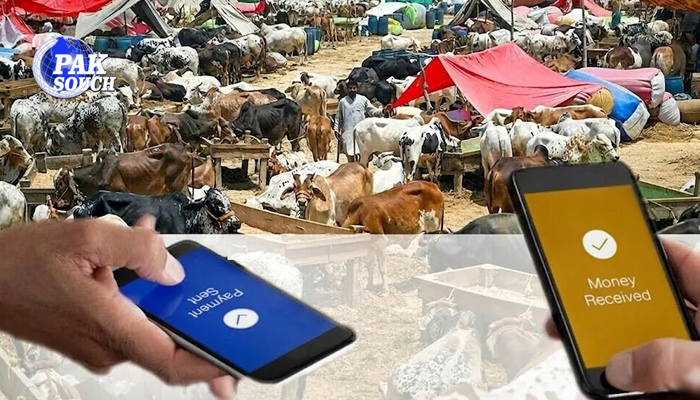
Karachi: The State Bank of Pakistan (SBP) has announced the successful outcome of its “Go Cashless” campaign during Eid-ul-Adha, revealing a significant increase in digital financial activity across livestock markets and related commercial transactions nationwide.
According to the central bank, digital transactions worth approximately Rs34 billion were carried out during the campaign, reflecting growing public acceptance of electronic payment methods and digital banking services.
Digital Transactions Reach Record Levels
The State Bank reported that more than 480,000 digital transactions were completed under the initiative during the Eid-ul-Adha season.
The campaign was designed to encourage buyers and sellers in livestock markets to use digital payment channels instead of relying solely on cash transactions. The effort aimed to promote financial inclusion, improve transparency, and strengthen Pakistan’s transition toward a digital economy.
Officials noted that the volume and value of transactions recorded during the campaign exceeded expectations and demonstrated increasing confidence among citizens in digital payment systems.
Campaign Extended to 123 Livestock Markets
According to the SBP, the “Go Cashless” initiative was actively promoted in 123 livestock markets across Pakistan.
These markets experience intense commercial activity during Eid-ul-Adha, as millions of people purchase sacrificial animals. Traditionally, most transactions in these markets have been conducted in cash.
To facilitate the shift toward digital payments, banks and financial institutions worked alongside the State Bank to provide technological support and payment infrastructure at market locations.
The initiative enabled customers and traders to conduct transactions through mobile banking applications, digital wallets, bank transfers, and QR-code-based payment systems.
Mobile Banking Vehicles Deployed
To support the campaign, specialized mobile banking vehicles were stationed at livestock markets throughout the country.
According to the central bank, these vehicles were equipped with essential banking facilities, including:
Automated Teller Machines (ATMs)
Cash deposit machines
Digital banking support services
QR-code registration facilities
Customer assistance for opening bank accounts
The mobile units were intended to ensure that buyers and sellers had convenient access to banking services, even in temporary livestock markets where traditional banking infrastructure may not be readily available.
Officials stated that the presence of these vehicles played an important role in encouraging digital transactions and helping users become familiar with electronic payment methods.
Seven-Fold Increase Compared to Last Year
One of the most notable achievements highlighted by the State Bank was the substantial increase in transaction volume compared with the previous year.
According to SBP data, digital transactions during the latest Eid-ul-Adha campaign reached Rs34 billion, compared with approximately Rs4.6 billion during the corresponding period last year.
This represents an increase of more than seven times in transaction value, indicating rapid growth in the adoption of digital financial services.
The dramatic rise suggests that both livestock traders and consumers are becoming increasingly comfortable with electronic payment solutions.
Thousands of New Bank Accounts Opened
The campaign also contributed to expanding financial inclusion.
The State Bank reported that approximately 12,500 new bank accounts were opened during the initiative.
Officials described this development as an encouraging sign that more citizens are entering the formal banking system and gaining access to digital financial services.
Expanding access to bank accounts remains a key objective of Pakistan’s broader financial inclusion strategy, which seeks to reduce reliance on cash and increase participation in the formal economy.
Growing Confidence in Digital Banking
According to the central bank, the success of the campaign demonstrates increasing public trust in digital banking platforms.
The widespread use of QR-code payments, mobile banking applications, and electronic transfer systems during one of the country’s busiest commercial periods reflects changing consumer behavior and greater acceptance of technology-driven financial services.
Financial experts note that digital transactions offer several advantages, including enhanced security, improved transaction records, reduced cash-handling risks, and greater convenience for consumers and businesses alike.
The growing adoption of digital payments also supports government efforts to improve economic documentation and strengthen transparency in commercial activities.
Part of Pakistan’s Digital Transformation
The “Go Cashless” campaign forms part of broader efforts by the State Bank and financial institutions to promote digital payments and accelerate Pakistan’s transition toward a modern digital economy.
Over the past several years, authorities have introduced various initiatives aimed at increasing the use of electronic payment systems, expanding mobile banking services, and encouraging merchants to adopt digital payment acceptance methods.
The success of the Eid-ul-Adha campaign is being viewed as evidence that these efforts are producing tangible results and helping reshape how financial transactions are conducted in Pakistan.
Looking Ahead
Following the positive outcome of this year’s campaign, policymakers and banking officials are expected to explore additional ways to expand digital payment adoption during major commercial events and throughout everyday economic activity.
With Rs34 billion in digital transactions, nearly half a million electronic payments, and 12,500 new bank accounts opened, the State Bank considers the initiative a major milestone in Pakistan’s journey toward a more digitally connected financial system.
The results suggest that digital banking is becoming an increasingly trusted and practical option for consumers, traders, and businesses across the country, paving the way for further growth in electronic financial services in the years ahead.
About The Author