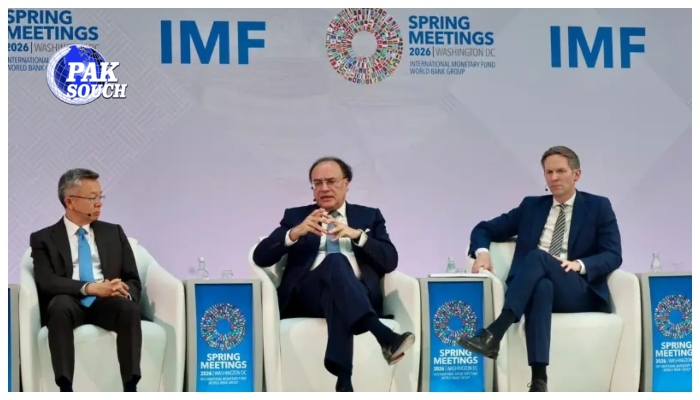
Islamabad: The International Monetary Fund (IMF) has reportedly proposed that Pakistan increase the standard General Sales Tax (GST) rate from 18 percent to 19 percent in the federal budget for fiscal year 2026-27, a move that could lead to higher prices for a wide range of goods, including solar panels and electric vehicles.
According to sources, Pakistani authorities have so far resisted the proposal, arguing that an increase in the GST rate would add to inflationary pressures and place a greater burden on consumers already facing rising living costs.
IMF Seeking Additional Revenue
The proposal is said to be linked to efforts to help the Federal Board of Revenue (FBR) achieve an ambitious tax collection target of more than Rs 15 trillion in the next fiscal year and to address revenue shortfalls experienced during the current fiscal year.
Officials estimate that a one-percentage-point increase in the GST rate could generate between Rs 250 billion and Rs 300 billion in additional tax revenue annually.
The IMF has reportedly recommended the measure after reviewing Pakistan’s revenue performance and concluding that existing tax collection efforts may not be sufficient to meet future fiscal targets.
Possible Impact on Solar Panels
One of the most significant concerns surrounding the proposal is its potential impact on the renewable energy sector.
Sources indicate that the government is considering increasing the GST on solar panels from 10 percent to 18 percent. If implemented, the move would raise the cost of solar energy systems for households and businesses at a time when demand for alternative energy sources has been increasing due to high electricity prices and power shortages.
Industry stakeholders fear that higher taxes could slow the adoption of solar technology and make renewable energy less affordable for consumers.
Electric and Hybrid Vehicles May Face Higher Taxes
The proposed tax changes could also affect the rapidly growing market for electric vehicles (EVs) and hybrid vehicles.
According to reports:
- GST on hybrid vehicles could increase from 8 percent to 18 percent.
- GST on electric vehicles could rise from 1 percent to 18 percent.
If approved, these changes would significantly increase the prices of electric cars, motorcycles, rickshaws, buses, trucks, pickup vehicles, tractors, and other environmentally friendly transport options.
Supporters of the EV sector argue that such tax increases could undermine efforts to promote cleaner transportation and reduce dependence on imported fuel.
Government Yet to Make Final Decision
Officials from the Ministry of Industries and Production have confirmed that proposals related to GST on electric vehicles, hybrid vehicles, and solar panels are under consideration. However, they emphasized that no final decision has yet been made.
Government representatives are reportedly continuing discussions with the IMF while seeking alternatives that would allow Pakistan to meet revenue targets without triggering a substantial rise in inflation.
Revenue Collection Challenges
The IMF’s recommendation comes amid concerns about tax collection performance.
According to available figures, the FBR collected approximately Rs 11.232 trillion during the first eleven months of the fiscal year. To achieve the official target of Rs 13.979 trillion by the end of June 2026, the tax authority would need to collect nearly Rs 2.747 trillion in a single month—a challenging task by historical standards.
Even reaching a lower collection level of around Rs 13 trillion would require the FBR to gather approximately Rs 1.668 trillion during June.
Because of these challenges, the IMF has suggested additional revenue-generating measures, including a higher GST rate and changes to sector-specific tax incentives.
Inflation Concerns
Pakistani policymakers remain concerned that increasing GST could contribute to higher inflation across the economy.
GST is an indirect tax applied to many goods and services, meaning that increases are often passed on to consumers through higher prices. Officials fear that raising the rate could make essential and non-essential products more expensive, reducing purchasing power and increasing financial pressure on households.
Sources indicate that the IMF projects average inflation of approximately 8.4 percent during the next fiscal year, making price stability a key issue in ongoing negotiations.
Retail Tax Scheme Also Discussed
In addition to GST proposals, the IMF has reportedly endorsed a fixed tax scheme for retailers. Under the proposed framework, retailers with annual sales of up to Rs 200 million would pay a fixed tax of Rs 25,000 and would be exempt from routine tax audits.
The measure is intended to simplify taxation for small businesses while encouraging greater compliance within the retail sector.
Ongoing Negotiations
Discussions between Pakistan and the IMF on the upcoming budget are continuing, and many of the proposed measures remain under review. Any final decision regarding GST increases, taxes on solar panels, or changes to electric and hybrid vehicle taxation will be reflected in the federal budget once it is formally presented.
For now, the proposed tax changes remain part of ongoing negotiations, with the government seeking to balance revenue requirements, economic growth, inflation concerns, and consumer affordability.
About The Author