

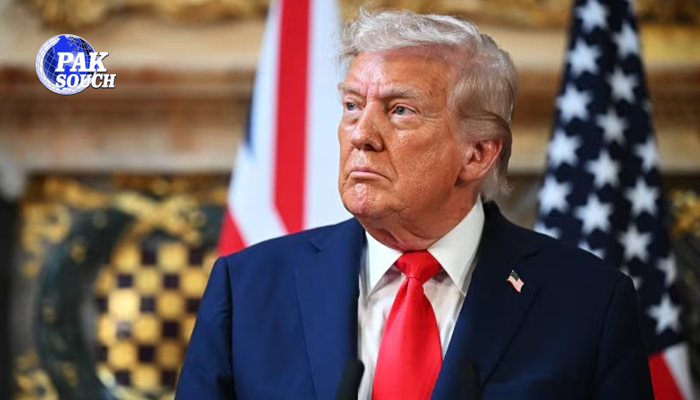
WASHINGTON: Israeli journalist Barak Ravid has claimed that Gulf countries, including Saudi Arabia, Qatar, and the United Arab Emirates, played a key role in persuading former US President Donald Trump to postpone a planned military strike against Iran.
According to media reports, Ravid, who is associated with a major American broadcaster, cited US sources as saying that the Gulf leadership warned Washington that any attack on Iran could trigger severe regional consequences, the cost of which would largely be borne by Gulf states themselves.
The Israeli journalist claimed that President Trump held discussions over the past 24 hours with Emir of Qatar Sheikh Tamim bin Hamad Al Thani, Saudi Crown Prince Mohammed bin Salman, and UAE President Sheikh Mohamed bin Zayed Al Nahyan.
According to the reports, Doha, Riyadh, and Abu Dhabi reportedly conveyed a joint message urging Trump to give diplomacy and negotiations more time instead of proceeding with military action.
Ravid stated that the Gulf leaders warned that if Iran were attacked, their countries could face retaliatory strikes targeting oil and energy infrastructure, potentially destabilizing the entire region.
He further claimed that Trump briefed members of his administration who favored military action and informed them about the concerns raised by Gulf allies.
According to the journalist, Trump acknowledged that Gulf countries feared the destruction of their oil and energy facilities in the event of Iranian retaliation.
The development follows Trump’s public announcement on Monday night that the planned military strike against Iran had been postponed at the request of Saudi Arabia, Qatar, and the UAE.
In a statement posted on Truth Social, Trump said he had received requests from the leaders of the three Gulf states to delay the planned military operation, which had reportedly been scheduled for the following day.
Trump stated that serious negotiations were currently underway and that Gulf leaders believed a potential agreement could be reached that would be acceptable not only to the United States but also to countries across the Middle East and beyond.
He added that the primary objective of any such agreement would be to ensure that Iran does not acquire nuclear weapons.
The former US president also said that out of respect for the Gulf leaders and key regional allies, he instructed Secretary of Defense Pete Hegseth, Chairman of the Joint Chiefs of Staff General Daniel Caine, and the US military to halt preparations for the planned strike.
The reports come amid heightened tensions in the Middle East and growing international concern over the possibility of a wider regional conflict involving Iran, Israel, and the United States.
Analysts say Gulf countries remain particularly vulnerable to regional instability because of their strategic energy infrastructure and economic dependence on oil exports.
Energy experts have repeatedly warned that any military escalation involving Iran could disrupt global oil markets, threaten shipping routes in the Persian Gulf, and trigger sharp increases in energy prices worldwide.
Diplomatic observers believe the intervention by Gulf states reflects growing regional preference for de-escalation and negotiated solutions rather than military confrontation.
While the reports regarding the behind-the-scenes discussions have not been independently verified officially, they have intensified debate over the role of Gulf diplomacy in shaping US policy toward Iran during the ongoing crisis.
About The Author