A senior American researcher has warned that the threat of another devastating war between Pakistan and India remains very real, cautioning that even a minor incident could escalate into a major conflict between the two nuclear-armed neighbors.
Elizabeth Threlkeld, a senior fellow at the U.S.-based Stimson Center and Director of its South Asia Program, expressed these concerns in a detailed article published in the renowned journal Foreign Affairs. She argued that the security environment in South Asia has entered a more dangerous phase, where the possibility of rapid escalation is significantly higher than before.
According to Threlkeld, tensions between Pakistan and India are no longer limited to traditional patterns of confrontation. Instead, a combination of evolving military strategies, advanced weapons systems, and increasing strategic confidence on both sides is pushing the region toward a potentially dangerous tipping point. She emphasized that even a small spark—such as a border skirmish, a militant incident, or a miscalculation—could quickly spiral into a large-scale military confrontation.
The article highlights that the four-day intense military clash between India and Pakistan in May 2025 was not merely a temporary crisis. Rather, it marked a turning point in regional security dynamics. Threlkeld noted that both countries appear to be preparing for future conflicts that would remain below the nuclear threshold but involve broader, faster, and more destructive conventional operations.
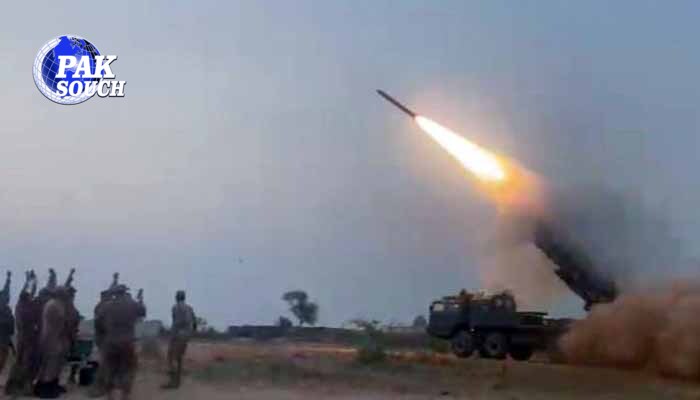
She further explained that modern warfare capabilities are significantly raising the stakes. The increasing use of drones, precision-guided missiles, cyber operations, and naval deployments has expanded the battlefield across multiple domains. In addition, the role of misinformation and social media could accelerate escalation by shaping public opinion, spreading panic, and limiting the space for diplomatic intervention.
Another major concern raised in the article is the potential involvement of global powers such as the United States and China. Given their strategic interests in the region, any future conflict between Pakistan and India could draw in external actors, making the situation even more complex and difficult to control. Threlkeld warned that under such circumstances, even Washington might struggle to de-escalate a rapidly unfolding crisis.
The researcher also pointed to the growing willingness on both sides to take risks, which could further increase instability. This heightened confidence, combined with military readiness, raises the likelihood that a limited conflict could quickly expand beyond initial expectations. In such a volatile environment, miscalculations or misinterpretations of actions could have severe consequences.
Importantly, Threlkeld cautioned that while both countries may aim to keep any future conflict within conventional limits, the speed and intensity of modern warfare could inadvertently push the situation toward the nuclear threshold. The risk of unintended escalation remains a critical concern, especially in the absence of strong crisis management mechanisms.
The article also mentions unconventional factors that could influence future conflicts, including the potential use of water resources as a strategic tool. Such measures could further complicate already tense relations and add new dimensions to the conflict.
In conclusion, the analysis underscores a sobering reality: South Asia remains one of the most volatile regions in the world. With evolving military technologies, fragile diplomatic channels, and rising geopolitical competition, the risk of a Pakistan-India conflict is not only persistent but potentially more dangerous than ever before. Preventing such a scenario will require sustained diplomatic engagement, effective communication channels, and a renewed commitment to conflict management from both regional and global stakeholders.