

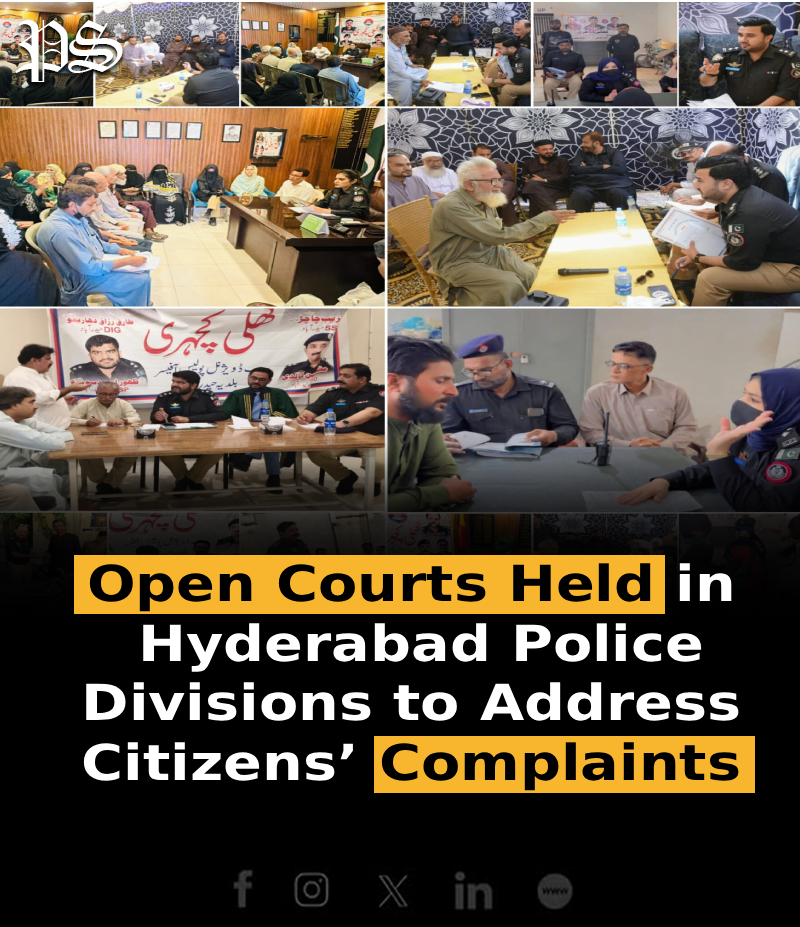
HYDERABAD, September 12, 2026: On the directives of Hyderabad Senior Superintendent of Police (SSP) Shahzaib Chachar, open courts were held in the City, Cantt, Baldia and Hali Road police divisions to hear the complaints and problems of citizens and provide them with timely legal relief.
The open courts were conducted by SP Headquarters Zain Raza Baloch, SDPO Cantt Paras Bukhari, SDPO Baldia Zahoor Ahmed Soomro and SDPO Hali Road Shafaq Anwar in their respective subdivisions.
Police officials listened carefully to applications and complaints submitted by citizens and complainants and issued necessary instructions to the relevant officers for their prompt resolution.
SP Headquarters Zain Raza Baloch conducted an open court at City Police Station in Sub-Division City. SHO City Tahir Mughal and other police officers were also present.
During the open court, Baloch listened to citizens’ complaints and applications and directed the concerned officers to take immediate steps for their resolution. On the occasion, stolen motorcycles belonging to citizens were also recovered and handed back to their owners.
SDPO Cantt Paras Bukhari held an open court at Cantt Police Station, where SHO Cantt Inspector Sikandar Mustafa Qambar and other police officials were present. He listened to the complaints and applications of citizens and issued necessary directions to the relevant officers to address their concerns.
Similarly, SDPO Baldia Zahoor Ahmed Soomro conducted an open court within the jurisdiction of Baldia Police Station. SHO Baldia Sub-Inspector Muzaffar Khalid and other police officials attended the session.
Soormo listened to complaints and applications submitted by residents from different areas and instructed the relevant officers to take immediate measures to resolve their genuine issues.
SDPO Hali Road Shafaq Anwar also held an open court at Hali Road Police Station. Other police officers were present during the session. The SDPO heard the applications and complaints of citizens and issued instructions to the concerned officers for necessary action.
SSP Hyderabad Shahzaib Chachar said the purpose of holding open courts was to provide citizens with prompt and legitimate legal relief at their doorstep and to further strengthen effective communication between the police and the public.
He urged citizens to present their problems and complaints to police officers without hesitation, assuring them that every possible step would be taken to resolve genuine grievances.
The SSP further said timely resolution of public complaints and maintaining citizens’ trust are among the top priorities of Hyderabad Police.
Citizens who attended the open courts appreciated the police officers for listening to their concerns and taking immediate action. They thanked SSP Hyderabad Shahzaib Chachar for the initiative and expressed their confidence in Hyderabad Police.
The open courts are part of the department’s efforts to improve public access to police officers, strengthen accountability and ensure that citizens’ legitimate complaints are addressed promptly.
Spokesperson, District Police Hyderabad
About The Author