

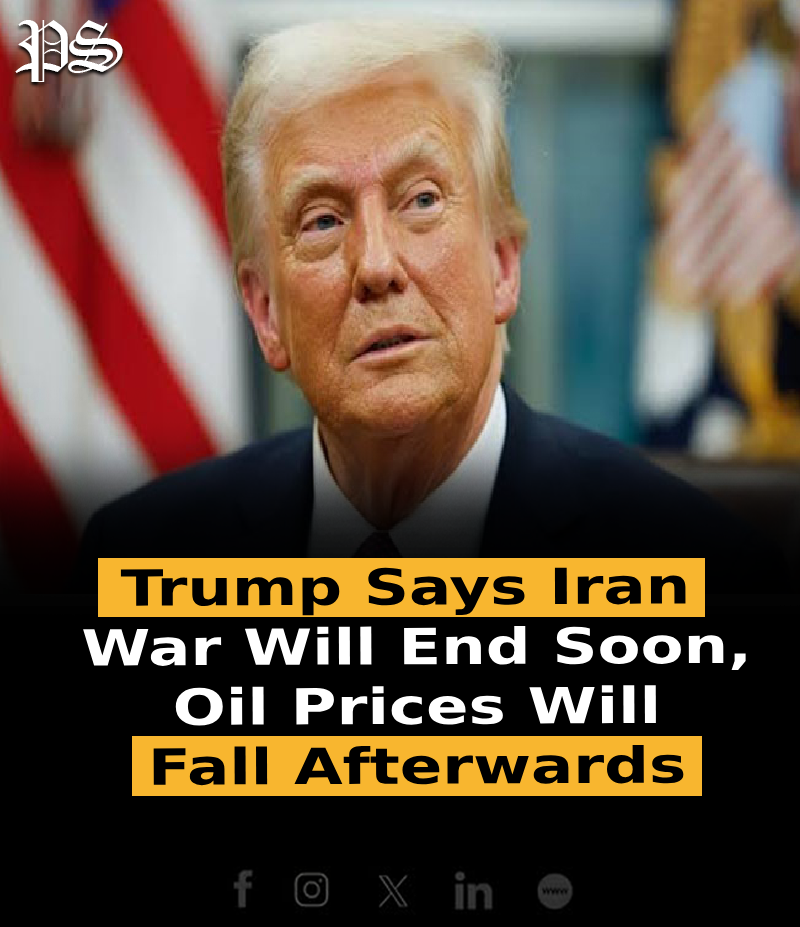
DUBLIN: US President Donald Trump has said that the war involving Iran will end very soon and that oil prices will decline once the conflict comes to an end.
Trump made the remarks during his visit to Ireland, where he met with the Irish president and discussed trade and relations between the two countries.
Speaking to the media, Trump said the United States and Ireland were working together very well. He expressed confidence that the Iran war would end soon and predicted that the conclusion of the conflict would lead to lower oil prices.
During the interaction, a journalist asked Trump whether the United States could help restore shipping through the Strait of Hormuz amid fresh concerns involving Saudi Arabia.
Trump responded by saying that Saudi Crown Prince Mohammed bin Salman was a good friend of his and expressed confidence that the situation would eventually be resolved.
He also said that Iran was likely responsible for an attack on a Saudi pipeline, while adding that the Houthis did not want to fight the United States.
Trump’s comments came amid heightened regional tensions and concerns over disruptions to energy supplies and international shipping. The Strait of Hormuz is a strategically important route for global oil and gas shipments, meaning prolonged disruption in the area can put upward pressure on international energy prices.
The US president’s prediction that oil prices would fall after the Iran conflict ends reflects the expectation that reduced geopolitical risk and improved energy transportation could ease pressure on global markets.
However, the timing and extent of any decline in oil prices would depend on several factors, including the duration of the conflict, the restoration of shipping through the Strait of Hormuz, global oil supply and demand, and the extent of any damage to regional energy infrastructure.
Trump also maintained a positive tone regarding relations with Saudi Arabia, describing the Saudi crown prince as a friend and suggesting that the situation would be resolved.
His remarks highlight the interconnected nature of the ongoing regional tensions, energy markets and international trade routes. Any sustained improvement in security around the Gulf could have implications not only for Middle Eastern countries but also for global oil markets than a confirmed timeline. The impact on oil prices will ultimately depend on developments on the ground and whether and consumers.
For now, Trump’s prediction that the conflict will end soon remains a political assessment rather than a confirmed timeline. The impact on oil prices will ultimately depend on developments on the ground and whether energy supplies and shipping routes return to normal.
About The Author