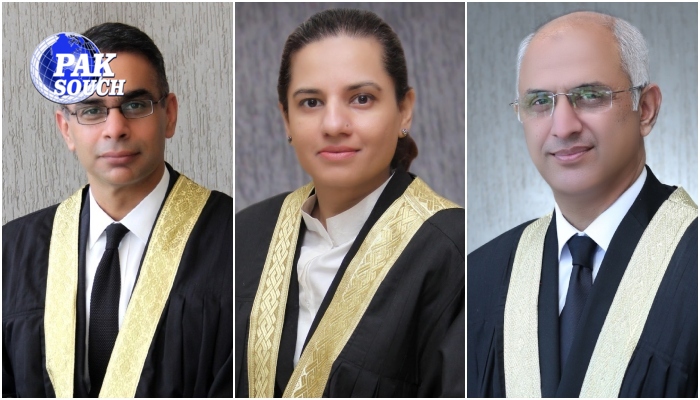
ISLAMABAD: The Judicial Commission of Pakistan has approved the transfer of three judges of the Islamabad High Court (IHC)—Justice Mohsin Akhtar Kayani, Justice Babar Sattar, and Justice Saman Rafat Imtiaz—through decisions taken by majority vote during a meeting chaired by Chief Justice of Pakistan Yahya Afridi.
According to an official statement, the commission deliberated on the proposed transfers and reached its decisions with a clear majority among members. In the case of Justice Mohsin Akhtar Kayani, nine members of the commission voted in favor of his transfer to the Lahore High Court, signaling strong support within the body.
Similarly, the commission approved the transfer of Justice Babar Sattar to the Peshawar High Court. His transfer was also endorsed through a majority decision, reflecting consensus among most commission members on the move.
Justice Saman Rafat Imtiaz’s transfer to the Sindh High Court was likewise approved, completing the reshuffling of three IHC judges across different provincial high courts.
The meeting, held under the leadership of the chief justice, is part of the constitutional process governing judicial appointments and transfers in Pakistan. Such decisions typically involve consultation and voting by members of the Judicial Commission, which includes senior judges, legal experts, and representatives from the government and bar councils.
In a related development, the Chief Justice of the Islamabad High Court withdrew earlier recommendations for the transfer of Justice Arbab Muhammad Tahir and Justice Khadim Hussain Soomro. This move effectively removed their names from consideration, aligning with recent reports that their transfers had been temporarily put on hold.
The commission further clarified that vacancies created as a result of these transfers will be filled through the reassignment of judges rather than through fresh appointments. This means that no new judicial appointments will be made to fill the positions arising from these transfers, maintaining the current strength through internal adjustments.
Judicial transfers often generate significant attention in legal and political circles, as they can influence the functioning and composition of high courts. Proponents argue that such moves help balance workloads, enhance efficiency, and strengthen institutional capacity across provinces. Critics, however, sometimes question the transparency and motivations behind these decisions, particularly when they involve high-profile judges.
Legal experts note that the transfer of judges between high courts is permitted under the Constitution, but it remains a sensitive matter due to its potential implications for judicial independence and administrative dynamics within the judiciary.