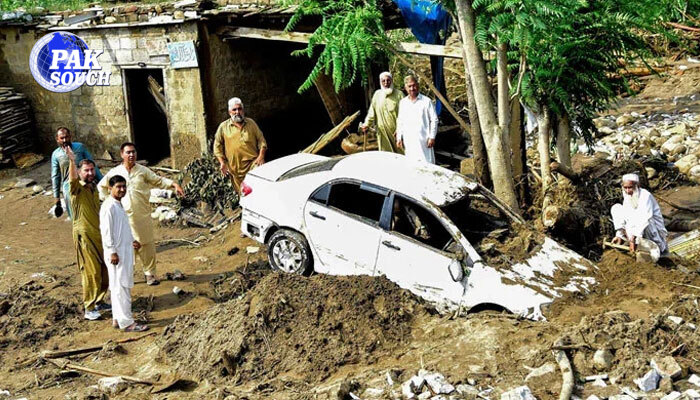
ORAKZAI: Heavy torrential rains have caused widespread destruction in Khyber Pakhtunkhwa’s Orakzai district, where flash floods triggered by intense downpours swept away dozens of houses and shops, leaving residents struggling to cope with the aftermath.
According to local sources, the worst-hit area was Mushti Mela, where powerful floodwaters surged through الأسواق and residential zones, washing away structures in their path. Entire rows of small businesses and homes were reduced to debris within hours, highlighting the vulnerability of infrastructure in the region to extreme weather events.
Eyewitnesses described scenes of chaos as residents attempted to salvage belongings while fast-moving water currents engulfed their properties. Many families were forced to flee to safer areas, often with little more than the clothes they were wearing. Fortunately, there have been no immediate confirmed reports of large-scale casualties, but concerns remain about possible injuries and unaccounted individuals.
In addition to homes and shops, several vehicles—including cars and motorcycles—were also swept away by the raging floodwaters. The loss of transportation has further complicated rescue and relief efforts, as access to some affected areas remains difficult.
Authorities have initiated preliminary relief operations, though the scale of the destruction has posed challenges. Emergency teams and local administration officials are working to assess the damage and provide assistance to displaced families. There are calls for urgent support, including food, shelter, and medical aid, as many residents have been left homeless.
The devastating situation in Orakzai comes amid a broader pattern of unstable weather across parts of Pakistan. Rainfall was also reported in Peshawar, Malakand, and various areas of Azad Kashmir, indicating a widespread weather system affecting the northern and northwestern regions.
In Punjab, several cities experienced changing weather conditions as well. Lahore witnessed strong winds followed by rain, which led to power outages in multiple localities. The sudden disruption of electricity added to the difficulties faced by residents, particularly in densely populated urban areas.
Similarly, rainfall was recorded in Bahawalnagar, Gujrat, and other parts of the province, offering some relief from heat but also raising concerns about infrastructure readiness and urban drainage systems.
Meteorological experts have been warning about increased frequency and intensity of extreme weather events, attributing such patterns to climate change. Flash floods, in particular, have become more common in hilly and semi-urban regions where drainage systems are inadequate or poorly maintained.
Local authorities have urged residents in vulnerable areas to remain cautious and avoid unnecessary travel, especially near streams and low-lying zones prone to flooding. Disaster management agencies are also on alert, monitoring the situation and preparing for further rainfall in the coming days.