


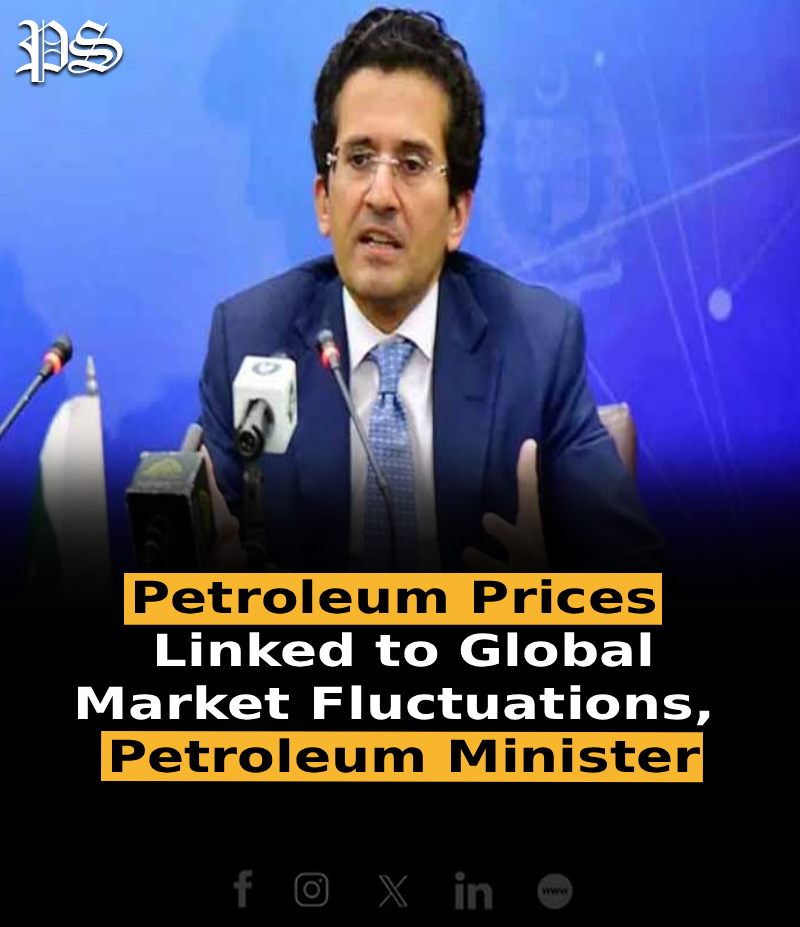
ISLAMABAD: Federal Minister for Petroleum Ali Pervez Malik has said that fluctuations in the prices of petroleum products in Pakistan are directly linked to developments in the international oil market, as consumers continue to face the impact of rising fuel costs.
Speaking to Geo News, the petroleum minister explained that the government’s pricing mechanism is influenced significantly by movements in global energy markets. He said international crude oil prices, along with other external factors affecting the energy sector, play an important role in determining domestic petroleum prices.
The minister’s remarks come at a time when international energy markets remain under significant pressure because of geopolitical tensions and disruptions to energy supplies. Brent crude has recently traded above the $100-per-barrel mark, adding to concerns over the cost of petroleum products in oil-importing countries such as Pakistan. BBusiness Recorder+1
Pakistan relies heavily on imported crude oil and petroleum products to meet its domestic energy requirements. Consequently, a sustained increase in international oil prices can raise the country’s import bill and eventually put pressure on local fuel prices.
Ali Pervez Malik also spoke about the country’s liquefied natural gas, or LNG, supplies. He said that an LNG cargo from Qatar was expected to arrive in Karachi, providing some relief amid concerns over energy supplies.
According to the minister, Qatar has assured Pakistan that it will extend its full cooperation in maintaining LNG supplies as the situation improves. The assurance is particularly important because Qatar is one of Pakistan’s key LNG suppliers and disruptions in the international gas market have created additional challenges for countries dependent on imported LNG.
The global LNG market has faced considerable pressure in recent months. Disruptions in Middle Eastern energy exports, particularly those involving routes through the Strait of Hormuz, have tightened supplies and increased competition among LNG-importing countries. Reuters reported recently that LNG exports from the Gulf had fallen sharply compared with the previous year, while European and Asian buyers continued competing for available cargoes. RReuters
For Pakistan, the availability of LNG is crucial because the fuel is used in power generation, industry and other parts of the economy. Any prolonged shortage can increase reliance on alternative and potentially more expensive fuels, putting further pressure on electricity generation costs and the broader economy.
The arrival of the Qatar cargo is therefore being viewed as an important development for Pakistan’s energy supply position. Earlier reports have also highlighted efforts by Pakistani authorities and gas companies to secure LNG cargoes at comparatively lower costs, amid volatile international prices. TThe Express Tribune+1
The petroleum minister’s comments also underline the difficulty faced by the government in insulating domestic consumers from international energy shocks. When global crude prices rise, Pakistan must spend more foreign exchange on energy imports. This can increase pressure on the country’s external account and, depending on the government’s pricing policy, result in higher prices for consumers.
Higher petrol and diesel prices have wider economic consequences. Petrol is widely used for private transportation, while diesel is essential for freight, agriculture, construction and other commercial activities. An increase in fuel prices can therefore raise transportation costs and contribute to higher prices for goods and services.
The situation is particularly challenging because international oil markets are currently being influenced not only by supply and demand but also by geopolitical developments. The ongoing instability in the Middle East has increased concerns about the security of oil and LNG transportation routes. Since a significant share of global energy shipments passes through strategically important waterways, disruptions can quickly affect prices around the world.
Recent market developments demonstrate the scale of the challenge. Brent crude has remained above $100 a barrel amid heightened concerns about supply disruptions, while international natural gas markets have also experienced significant volatility. BBusiness Recorder+1
Against this backdrop, Pakistan’s government faces the difficult task of balancing the need to protect consumers with the financial realities of importing energy at elevated international prices.
Ali Pervez Malik’s statement suggests that domestic petroleum prices cannot be considered independently of international developments. If global crude prices remain elevated, Pakistan could continue to face pressure to adjust fuel prices. Conversely, any meaningful decline in international oil prices could provide some relief to domestic consumers, subject to the government’s pricing formula, taxes and other costs.
The minister’s comments regarding Qatar’s LNG commitment also indicate that Islamabad is seeking to ensure uninterrupted energy supplies while international markets remain uncertain.
For consumers, however, the immediate concern remains the impact of higher fuel prices on household budgets and transportation costs. Businesses are similarly watching global energy prices closely, as expensive fuel and gas can increase operating costs and affect overall inflation.
With international oil and gas markets still vulnerable to geopolitical developments, Pakistan’s energy outlook will continue to depend heavily on global supply conditions, crude oil prices and the availability and cost of LNG cargoes.
The government’s ability to secure reliable energy supplies, diversify import sources and manage the impact of international price fluctuations will therefore remain central to Pakistan’s economic stability in the months ahead.
About The Author