

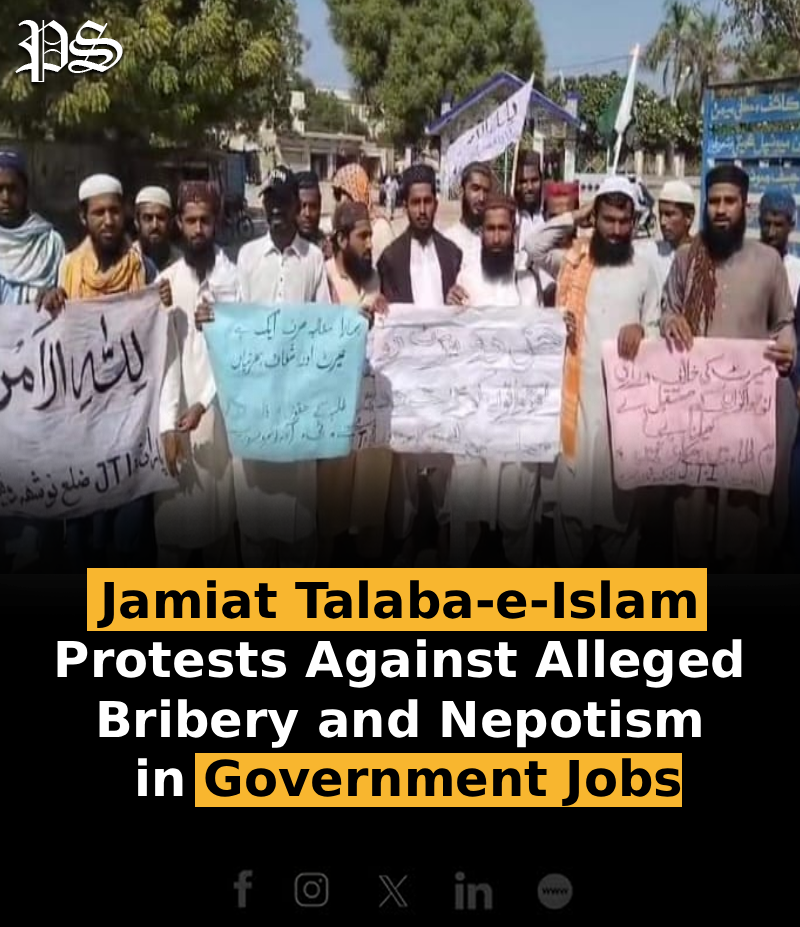
NAUSHAHRO FEROZE: The Jamiat Talaba-e-Islam and local activists staged a peaceful protest outside the Naushahro Feroze Press Club against what they alleged was the allocation of government jobs through bribery, favoritism and recommendations instead of merit.
The demonstration was led by Maulana Hussain Korai, Sajid Rehman Khoso and other activists. The protesters raised slogans in support of the rights of educated youth and demanded transparency and merit-based recruitment in government departments.
Speaking to the media during the demonstration, the protest leaders alleged that students and young people across Pakistan, particularly in Sindh, work hard to obtain higher education but are often denied employment opportunities despite possessing the required qualifications.
They claimed that instead of recruiting qualified candidates purely on merit, government jobs were allegedly being awarded on the basis of personal recommendations, political influence and bribery.
The protesters expressed serious concern over the difficulties faced by educated youth in finding employment. They said many young people spend years pursuing education and acquiring professional qualifications, only to find that their chances of securing government employment are allegedly affected by factors other than merit.
The leaders particularly criticized what they described as unfair treatment of the youth of Sindh. They said hardworking and educated young people should be provided equal opportunities to compete for government positions through a transparent and impartial recruitment process.
They described the alleged practice of favoritism and bribery as an injustice to qualified candidates and said it could create frustration among young people who depend on their education and skills to build their future.
The demonstrators said their protest was peaceful and was intended to draw the attention of the government, relevant authorities and the public toward the issue of recruitment in government institutions.
They demanded that all government vacancies be advertised transparently and that appointments be made strictly according to merit, qualifications and clearly defined recruitment criteria.
The protest leaders also called for effective monitoring of recruitment procedures to ensure that deserving candidates were not deprived of employment opportunities because of political connections or financial considerations.
They said merit-based recruitment was essential not only for protecting the rights of educated youth but also for improving the performance and credibility of government institutions.
According to the protesters, appointments based on merit would ensure that qualified and capable individuals entered public service and contributed effectively to the administration and development of the country.
The activists further argued that unemployment among educated young people was already a major social and economic concern. They said denying qualified candidates opportunities through alleged favoritism could increase frustration and weaken public confidence in government institutions.
The leaders appealed to the authorities to take notice of their concerns and introduce stronger mechanisms to ensure transparency in government recruitment.
They also urged the government to investigate complaints regarding alleged irregularities in the hiring process and take action wherever violations of recruitment rules were established.
The protesters emphasized that they were not against the recruitment process itself but wanted appointments to be based on qualifications and merit. They said every educated young person should have an equal opportunity to compete for a government position.
They maintained that the future of Sindh depended heavily on its young population and that providing educated youth with fair employment opportunities was necessary for the province’s social and economic development.
The demonstrators called upon political leaders and government officials to address the concerns of unemployed graduates and create an environment in which young people could obtain jobs through hard work and merit rather than personal influence.
They also warned that if qualified and hardworking youth in Sindh continued to be denied government jobs on merit, they would intensify their protests.
The leaders said future demonstrations could be organized at a larger scale if the authorities failed to respond to their demands. However, they reiterated that their current demonstration was peaceful and aimed at securing the legitimate rights of educated young people.
The protest concluded with the participants reiterating their demand for a transparent, impartial and merit-based recruitment system.
The leaders once again urged the government to ensure that government jobs were awarded solely on merit and that allegations of bribery, favoritism and political recommendations were properly investigated.
They warned that continued failure to provide employment opportunities to hardworking and qualified youth could lead to further protests across Sindh.
The protesters said they would continue raising their voice for the rights of educated youth until their demands for fair and transparent recruitment were addressed.
About The Author