


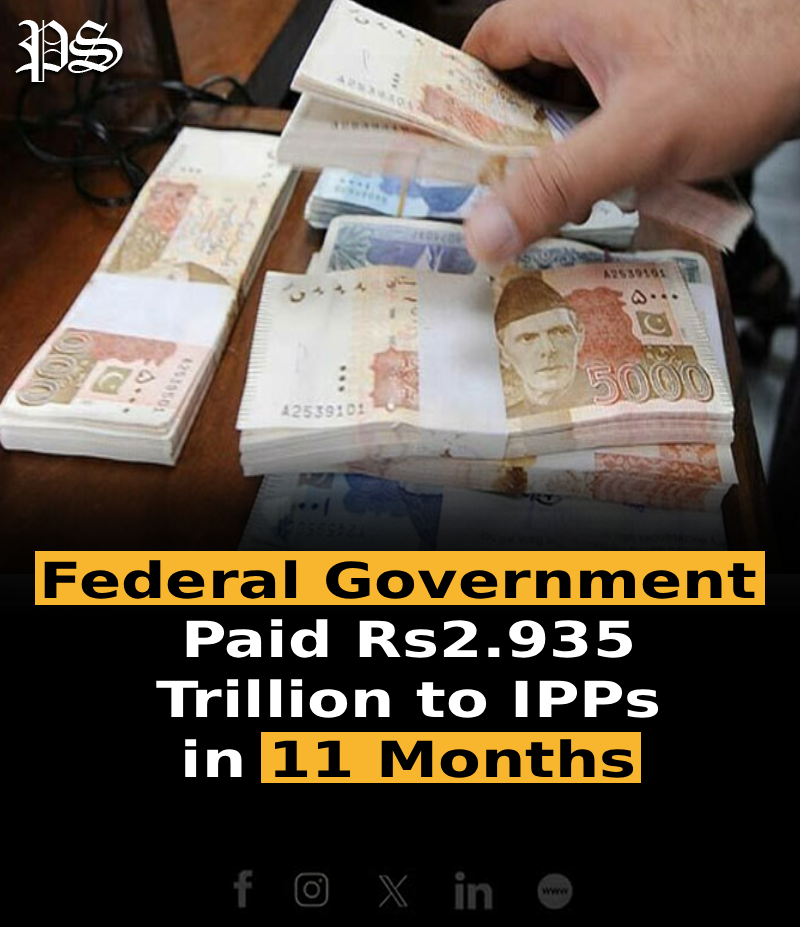
ISLAMABAD: The federal government paid a total of Rs2.935 trillion to Independent Power Producers (IPPs) during the first 11 months of the last financial year, according to details presented by the Ministry of Energy before Parliament.
The figures provide a breakdown of payments made to IPPs during the period, showing that a substantial portion of the total amount was paid under capacity payment arrangements.
According to the Ministry of Energy, the government paid Rs1.168 trillion to IPPs in energy payments during the 11-month period.
In addition, IPPs received Rs1.565 trillion in capacity payments during the same period.
Capacity payments are made to power producers for maintaining electricity generation capacity and keeping plants available to supply power, regardless of the amount of electricity actually generated. These payments have remained a major issue in Pakistan’s power sector because they contribute significantly to the overall cost of electricity.
The figures presented in Parliament highlight the scale of financial obligations associated with the country’s power generation system. The payments to IPPs form a major component of the government’s expenditure on the electricity sector.
The Ministry of Energy provided the details as part of the government’s response regarding payments made to IPPs during the previous financial year. The information is expected to contribute to parliamentary discussions on the cost of electricity generation, power-sector reforms and the financial challenges facing the energy sector.
Of the total Rs2.935 trillion paid during the 11 months, Rs1.168 trillion was classified as energy payments, while Rs1.565 trillion was paid as capacity payments.
The figures also underline the difference between the two major categories of payments. Capacity payments accounted for a considerably larger amount than payments linked directly to energy supplied during the period.
Pakistan has been attempting to address longstanding problems in the power sector, including high electricity costs, circular debt and the financial burden associated with power purchase agreements. Capacity payments have frequently been identified as an important factor behind the rising cost of electricity.
The government has also been reviewing arrangements with power producers as part of broader efforts to reduce pressure on the electricity sector and provide relief to consumers.
The data presented by the Ministry of Energy gives Parliament an overview of the payments made to IPPs during the first 11 months of the previous financial year. The figures are likely to remain relevant to discussions over future energy-sector policies and measures aimed at reducing the cost of electricity generation.
While the reported payments totalled Rs2.935 trillion, the figures cited by the ministry specifically identify Rs1.168 trillion as energy payments and Rs1.565 trillion as capacity payments. The remaining amount reflects other payments or adjustments included in the overall figure reported for the period.
The disclosure comes at a time when electricity prices and the financial sustainability of the power sector remain major economic concerns. The government faces continued pressure to reduce electricity costs while ensuring that sufficient generation capacity remains available to meet the country’s energy requirements.
Parliamentary scrutiny of IPP payments is therefore expected to continue as policymakers consider ways to reform power contracts, lower capacity-related costs and improve the overall efficiency of Pakistan’s electricity sector.
About The Author