

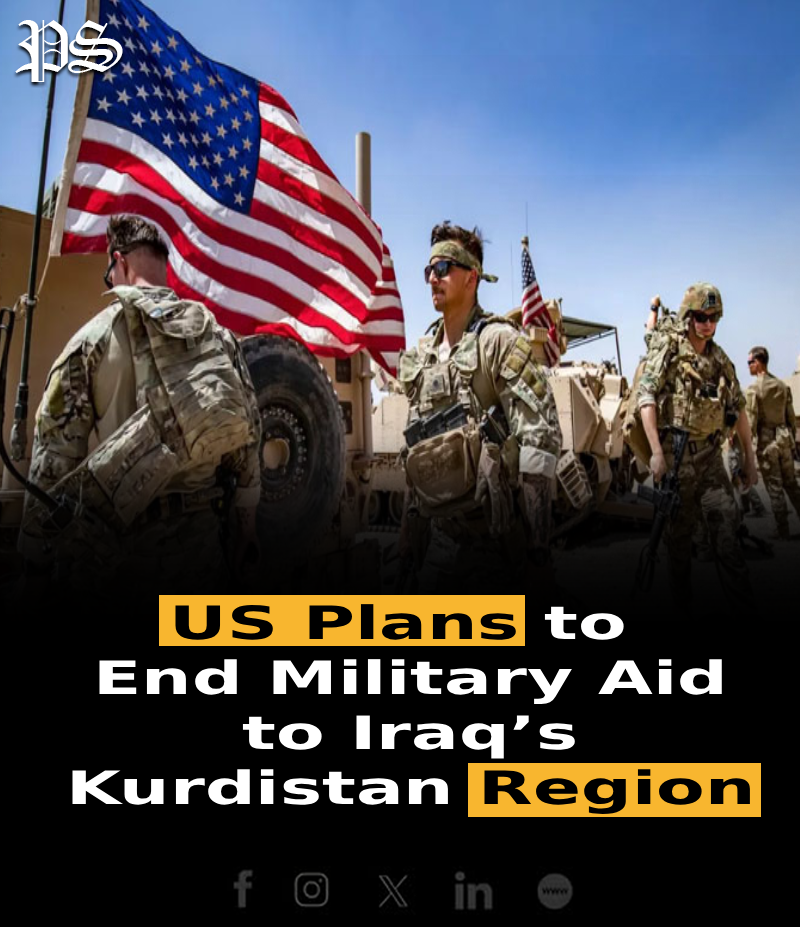
The United States is planning to end military assistance to Iraq’s Kurdistan Region as the security agreement between Washington and Kurdish authorities approaches its expiration in September.
According to British media reports, the US Department of Defense has informed Kurdish officials that the security agreement is unlikely to be renewed.
The agreement between the United States and the Kurdistan Region has provided military and security assistance to Kurdish forces, particularly the Peshmerga, which have played an important role in the fight against ISIS and in maintaining security in northern Iraq.
Reports state that Kurdish forces received approximately $61 million in US assistance this year. The planned end of direct military support could therefore have significant implications for the region’s security capabilities.
The decision comes as Washington is also reducing its broader military presence in Iraq. The United States has been working with the Iraqi government to shift from a large-scale military role toward a more limited security partnership.
The Peshmerga have been important partners of the United States since ISIS captured large areas of Iraq and Syria in 2014. American air support, training, intelligence and military equipment helped Kurdish forces confront the militant organisation and defend the Kurdistan Region.
The existing security arrangement has also focused on reforming and professionalising the Peshmerga forces. Kurdish authorities have been working to bring forces affiliated with different political parties under the unified command of the Ministry of Peshmerga Affairs.
The possible end of American assistance has raised concerns among Kurdish leaders. A Kurdish leader warned that the withdrawal of support could create a security vacuum in the region and increase Iran’s influence.
The concerns come at a sensitive time for Iraq and the wider Middle East, where regional rivalries and security challenges continue to affect political and military developments.
However, Kurdish authorities have previously rejected reports that all US assistance had already been suspended. Officials said that some forms of cooperation were continuing under the existing agreement, while certain assistance connected specifically to the campaign against ISIS had been reduced because of the decline in the group’s activities.
The planned reduction in assistance therefore appears to be part of a broader restructuring of the US military relationship with Iraq rather than an isolated decision concerning the Kurdistan Region.
For Kurdish authorities, the development could increase pressure to strengthen their own security institutions and develop alternative sources of funding and military support.
It could also accelerate efforts to unify the Peshmerga forces under a single institutional command rather than maintaining separate forces linked to different political factions.
The United States and Iraq have maintained a significant security relationship for many years, while Washington’s partnership with the Kurdistan Region became especially important during the campaign against ISIS.
With the existing agreement expected to expire in September, Kurdish officials are likely to seek continued diplomatic and security cooperation with Washington while preparing for a possible reduction in direct American military assistance.
The development could have important consequences for the Kurdistan Region’s defence capabilities and its wider political and security environment.
Kurdish authorities will now face the challenge of maintaining the effectiveness of their security forces while reducing their dependence on direct American military assistance.
About The Author