

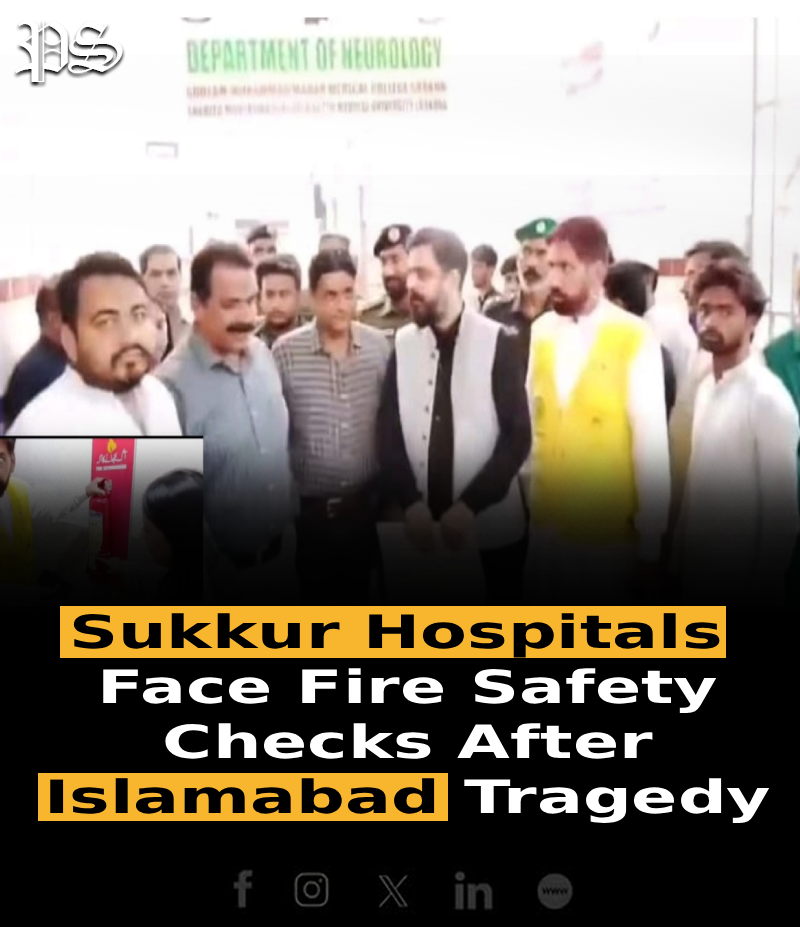
Sukkur (Report: Majid Mehmood): Following the tragic incident at PIMS Hospital in Islamabad, the Sukkur administration has launched emergency inspections of hospitals across the city to review fire safety arrangements and emergency preparedness. Officials from the Sukkur Division administration, district administration, Civil Defence and Rescue 1122 have started visiting different hospitals to inspect firefighting equipment, emergency exits, fire alarms and evacuation arrangements.
The move comes after the Islamabad hospital tragedy raised serious concerns about fire safety and emergency response systems in healthcare facilities. Hospitals are considered highly sensitive locations because many patients are unable to move independently during an emergency. Critically ill patients, elderly people, children and patients in intensive care units may require immediate assistance from medical staff and rescue personnel. For this reason, effective fire prevention and evacuation arrangements are essential in every hospital.
During the inspections, authorities are reviewing whether hospitals have adequate firefighting equipment and whether emergency exits are clearly identified and easily accessible. Officials are also checking whether hospital administrations have made proper arrangements for the safe evacuation of patients, attendants and staff members in case of fire or another emergency.
The inspection campaign has been welcomed by citizens, but it has also raised an important question regarding the timing of these measures. Residents have asked why regular fire safety inspections were not being carried out before the Islamabad incident. They argue that hospital safety should not become a priority only after a tragedy occurs.
Citizens said that fire safety inspections should be conducted on a regular basis, preferably every month, so that potential dangers can be identified and removed before an emergency occurs. According to them, waiting for a major incident before checking safety arrangements puts the lives of patients, doctors, nurses, paramedics, attendants and other hospital workers at unnecessary risk.
Hospitals require special attention because patients cannot always respond quickly to an emergency. A healthy person may be able to leave a building immediately after a fire alarm, but a patient lying on a hospital bed may depend entirely on staff members for evacuation. In intensive care units and other critical departments, moving patients safely can be particularly difficult. Therefore, hospital managements must have detailed emergency plans and trained personnel.
Citizens have demanded that the current inspection campaign should not remain limited to a few days. They want the Sukkur administration to establish a permanent monitoring system under which all government and private hospitals are inspected regularly. They believe monthly fire safety audits can help authorities identify problems related to emergency exits, firefighting equipment, electrical systems, fire alarms and evacuation routes.
Another important demand is that inspection reports should be properly maintained. Authorities should not only visit hospitals and observe their arrangements but should also record deficiencies and issue clear instructions for corrective action. Hospitals should be given a specific period to remove safety shortcomings, followed by follow-up inspections to confirm electrical wiring and emergency exits instead of waiting for government teams to identify problems. Firefighting equipment must remain functional and easily accessible. Emergency exits should never that the required improvements have actually been made.
Hospital administrations also have an important responsibility in this regard. They should regularly inspect fire extinguishers, alarms, electrical wiring and emergency exits instead of waiting for government teams to identify problems. Firefighting equipment must remain functional and easily accessible. Emergency exits should never be blocked by furniture, medical equipment or other materials.
Training hospital employees is equally important. Doctors, nurses, paramedics, security guards and other staff members should know what to do in case of fire. Regular emergency drills can help employees understand evacuation procedures and improve coordination with Rescue 1122 and other emergency services.
Rescue authorities can also play an important role by conducting practical emergency exercises at hospitals. Such drills can help identify weaknesses in evacuation plans and show officials how quickly patients can be moved to safe locations. Special arrangements should be made for patients who are unable to walk or require medical support during evacuation.
Citizens have also urged private hospitals to cooperate with the administration and treat fire safety as a basic responsibility rather than a formal requirement. Hospital owners and managements must understand that safety arrangements are directly connected with human lives. Investment in fire prevention, staff training and emergency equipment can prevent devastating losses.
The Islamabad tragedy has provided an important lesson for authorities across the country. Safety inspections should ideally be preventive rather than reactive. Government departments should identify risks during routine inspections instead of waiting for accidents to expose weaknesses.
Residents of Sukkur have therefore called for a long-term policy under which fire safety inspections are carried out throughout the year. They want the administration, Civil Defence and Rescue 1122 to continue monitoring hospitals and ensure that identified deficiencies are corrected promptly.
The public also believes that transparency is necessary. If a hospital is found to have serious safety violations, the authorities should take appropriate action according to the law. At the same time, hospitals that maintain strong safety standards should be encouraged to continue improving their systems.
The current inspection drive is a positive step, but its effectiveness will depend on whether it becomes a permanent practice. A temporary campaign may create awareness, but a regular monitoring system can provide lasting protection.
Citizens have made their position clear: hospitals should not wait for another tragedy before improving their safety arrangements. Regular inspections, functioning firefighting equipment, accessible emergency exits, trained staff and proper evacuation plans can significantly reduce risks.
The people of Sukkur are therefore asking a straightforward question: Is it really necessary to wait for a major tragedy before protecting human lives?
The answer should be no. Fire safety in hospitals must be treated as a continuous responsibility. The protection of patients and healthcare workers should remain a priority every day, not only after a tragic incident.
About The Author