


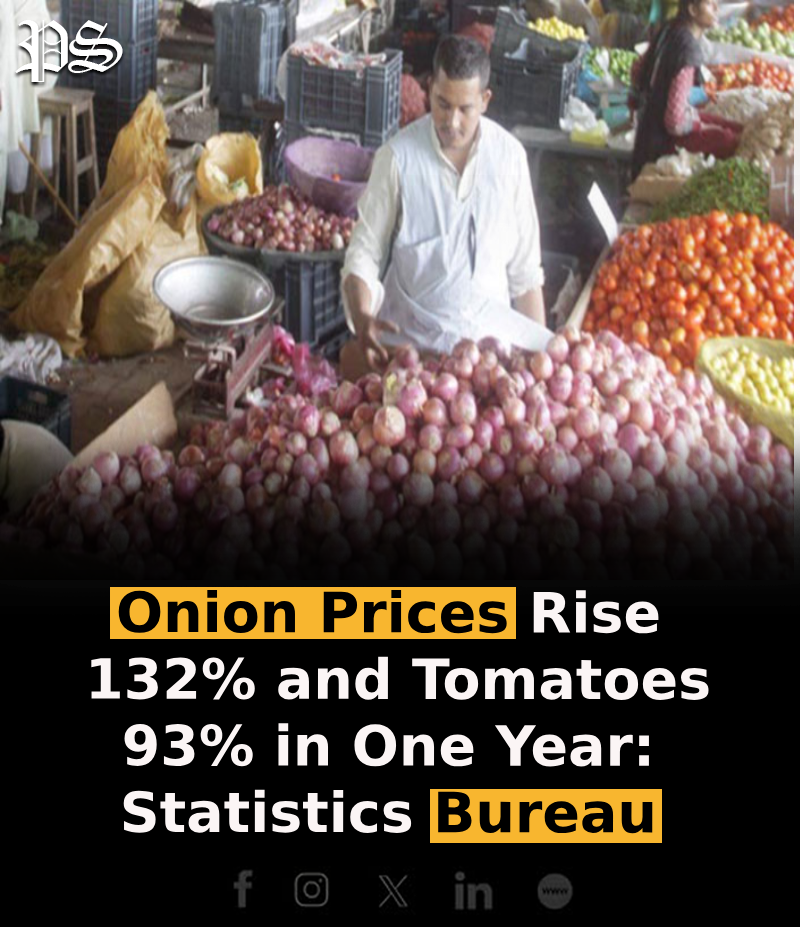
The prices of essential food items have increased significantly in Pakistan over the past year, with onions recording the highest increase among the items mentioned in the latest data released by the Pakistan Bureau of Statistics. According to the official figures, the price of onions increased by 132.52 percent during the year, while tomatoes became 93.21 percent more expensive. The sharp rise in the prices of these two commonly used vegetables has increased pressure on household budgets and made daily food expenses more difficult for consumers. Onions and tomatoes are widely used in Pakistani cooking and are important ingredients in many meals, so a major increase in their prices can have a direct impact on families, particularly those with limited incomes. The statistics also showed that the prices of several other essential items increased considerably during the same period. Flour became 62.25 percent more expensive, while the price of Liquefied Petroleum Gas, or LPG, increased by 51.69 percent. Diesel prices rose by 33.08 percent, while petrol became 27.65 percent more expensive compared with the previous year. The increase in fuel and energy prices can have an additional effect on household expenses because transportation and production costs are connected to fuel prices. When fuel becomes more expensive, the cost of transporting food and other goods can also increase, potentially putting further pressure on prices in markets. The statistics showed that the prices of some meat and fruit products also increased during the year. Bananas became 17.66 percent more expensive, while mutton prices increased by 15.98 percent. Beef prices also recorded an increase of 13.54 percent. These increases can make it more difficult for families to regularly purchase meat and other food products, particularly when several essential items become more expensive at the same time. However, the data also showed that the prices of some important commodities declined during the year. Potato prices fell by around 30 percent, providing some relief to consumers. Sugar became 19.10 percent cheaper, while chicken prices declined by 17.68 percent. The reduction in these prices indicates that not all food items experienced increases during the period. According to the statistics, egg prices declined by 17.41 percent over the year. The price of gram lentils, commonly known as daal chana, also fell by more than 13 percent. Masoor lentils became 12.29 percent cheaper, while the price of jaggery, or gur, declined by around 6 percent. The reduction in prices of these items may provide some relief to households, particularly because lentils, potatoes, eggs and chicken are widely consumed food products. However, the sharp rise in the prices of onions, tomatoes and flour remains a major concern for consumers. Food prices have a direct impact on the daily budgets of families. Low-income households are generally affected more severely because a larger portion of their income is spent on food and other basic necessities. When the prices of vegetables, flour, fuel and meat increase, families may have to reduce spending on other needs or change their consumption patterns. The increase in flour prices is particularly important because wheat flour is a basic food item in Pakistan and is consumed by households across the country. A rise of more than 62 percent can therefore have a significant effect on household expenses. Similarly, the increase in LPG prices can affect families that use gas cylinders for cooking, particularly in areas where piped gas is not easily available. The rise in fuel prices can also influence transportation costs. Higher diesel and petrol prices can increase the cost of moving agricultural products from farms to markets and transporting goods between cities. These additional costs can eventually affect retail prices. On the other hand, lower prices of potatoes, sugar, chicken, eggs and lentils may help consumers manage some of the pressure caused by rising prices of other goods. Prices of agricultural products can change because of several factors, including supply, seasonal production, transportation costs, weather conditions and market demand. Vegetables such as onions and tomatoes can experience large price changes when supply is affected. Their prices may rise sharply during periods when production is lower or transportation and storage become more expensive. The latest figures show how differently prices can move across various categories within the same year. While onions and tomatoes recorded very large increases, some other food items became significantly cheaper. This means that the overall cost faced by individual households can vary depending on the products they regularly purchase. Families that consume large amounts of onions, tomatoes and flour may feel the impact of the price increases more strongly. Meanwhile, households that consume potatoes, chicken, eggs and lentils may benefit from the lower prices of those products. The data released by the Statistics Bureau provides an indication of the changing cost of essential goods in the country. Such figures are important for policymakers because they help authorities understand price trends and identify areas where consumers are facing the greatest pressure. Rising food and fuel prices can also influence inflation and household purchasing power. When prices increase faster than incomes, consumers may find it harder to maintain their previous standard of living. The latest figures therefore highlight the importance of monitoring prices of essential food and energy products. Authorities may need to pay particular attention to the supply and distribution of vegetables such as onions and tomatoes, as their prices have increased sharply. Ensuring adequate supply and improving transportation and storage systems can help reduce sudden price fluctuations. Overall, the latest data from the Pakistan Bureau of Statistics shows a mixed trend in the prices of essential commodities. Onions became 132.52 percent more expensive and tomatoes increased by 93.21 percent in one year, while flour, LPG, diesel and petrol also recorded significant increases. At the same time, potatoes, sugar, chicken, eggs, gram lentils, masoor lentils and jaggery became cheaper. The figures show that consumers are facing both rising and falling prices across different products, but the sharp increase in several basic items remains a major challenge for households across Pakistan.
About The Author