

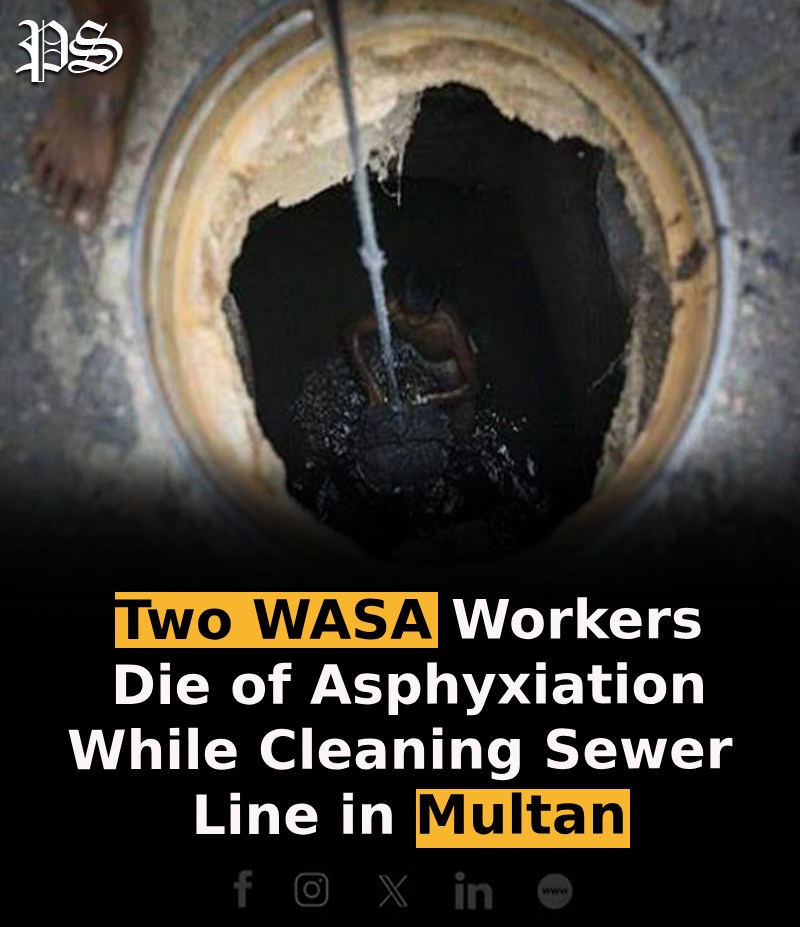
MULTAN — Two workers associated with the Water and Sanitation Agency (WASA) died of asphyxiation while allegedly working to clean a sewer line in Multan late at night, according to rescue officials.
The incident occurred while the two workers were reportedly engaged in cleaning a sewer line. Rescue authorities said both men died after apparently suffocating inside the sewerage system.
According to police, the two workers were carrying out the sewer-cleaning work without proper protective equipment. The lack of safety gear has raised concerns about compliance with workplace safety procedures during hazardous sewerage operations.
Rescue personnel responded to the incident and recovered the bodies of the two workers. The exact circumstances surrounding their deaths are expected to be determined through the relevant investigation.
The incident has once again highlighted the dangers faced by sanitation and sewerage workers who enter underground drainage systems. Such environments can contain toxic or oxygen-deficient gases, creating serious risks of unconsciousness, suffocation and death within a short period.
Police officials said the workers had allegedly entered the sewer line without safety equipment. The circumstances under which they entered the line, and whether required safety procedures were followed, are expected to be examined as part of the investigation.
WASA authorities, however, provided a different account of the workers’ involvement in the operation.
According to WASA officials, one of the deceased workers was a permanent employee of the agency, while the other was working on a contractual basis. The officials said that WASA had not instructed either worker to enter the sewer line for cleaning purposes.
The agency further stated that the two men had allegedly entered the sewerage line in their personal capacity to assist a private contractor. WASA officials maintained that the agency had not assigned them the task in question.
The clarification from WASA comes amid questions regarding responsibility for the incident and the safety arrangements in place during the sewer-cleaning operation.
WASA officials also said that safety standard operating procedures (SOPs) were strictly required to be followed during sewerage-related work. They stated that completing all necessary safety measures before commencing sewerage operations was mandatory.
The agency maintained that safety precautions were an essential part of its procedures for work involving sewerage lines and that workers were required to comply with established safety protocols before entering potentially hazardous areas.
The deaths have nevertheless renewed concerns about the occupational risks faced by sewerage workers in Pakistan. Workers involved in cleaning underground drains and sewer lines can be exposed to dangerous gases and oxygen shortages, particularly when entering confined spaces without specialized equipment.
Safety experts and labour rights advocates have frequently stressed the importance of protective equipment, gas detection devices, ventilation, harnesses, breathing equipment and trained rescue support during such operations.
The Multan incident also highlights the need for clear coordination between public agencies, employees and private contractors when hazardous work is undertaken. Establishing who authorized the work and who was responsible for ensuring safety measures could be important in determining accountability.
The families of the deceased workers are now facing the loss of their loved ones, while authorities are expected to establish the circumstances that led to the fatal incident.
Police and relevant authorities are expected to investigate the incident and determine whether any safety regulations were violated. The findings could also help clarify whether the workers were acting independently, assisting a private contractor or performing duties connected with their employment.
The incident comes amid similar reports from other cities in Pakistan in which sewerage workers have died after being exposed to toxic gases or suffering asphyxiation while cleaning drains and sewer lines.
Such incidents have repeatedly prompted calls for stronger enforcement of workplace safety standards and greater protection for sanitation workers, particularly those required to work in confined and potentially toxic environments.
The Multan deaths have therefore raised questions about whether existing safety measures are consistently implemented at ground level, despite official requirements for protective procedures.
WASA officials reiterated that safety SOPs must be followed before any sewerage work is undertaken. They also emphasized that necessary precautions are required before workers enter sewerage lines.
The bodies of the deceased were recovered following the incident, while further details regarding the investigation and any potential legal action were not immediately available.
The incident serves as another reminder of the potentially fatal risks associated with entering sewerage systems without adequate protection. Authorities are expected to determine the exact cause of death and establish responsibility, while the families of the deceased await further information about the circumstances surrounding the tragedy.
The accounts provided by police and WASA officials differ regarding the circumstances in which the workers entered the sewer line. Police said they were working without protective equipment, while WASA maintained that the agency had not directed them to undertake the cleaning operation and that they had entered the line to assist a private contractor in their personal capacity.
The final findings of the relevant investigation will be necessary to establish the facts and determine whether any individuals or organizations were responsible for violations of safety procedures.
About The Author