

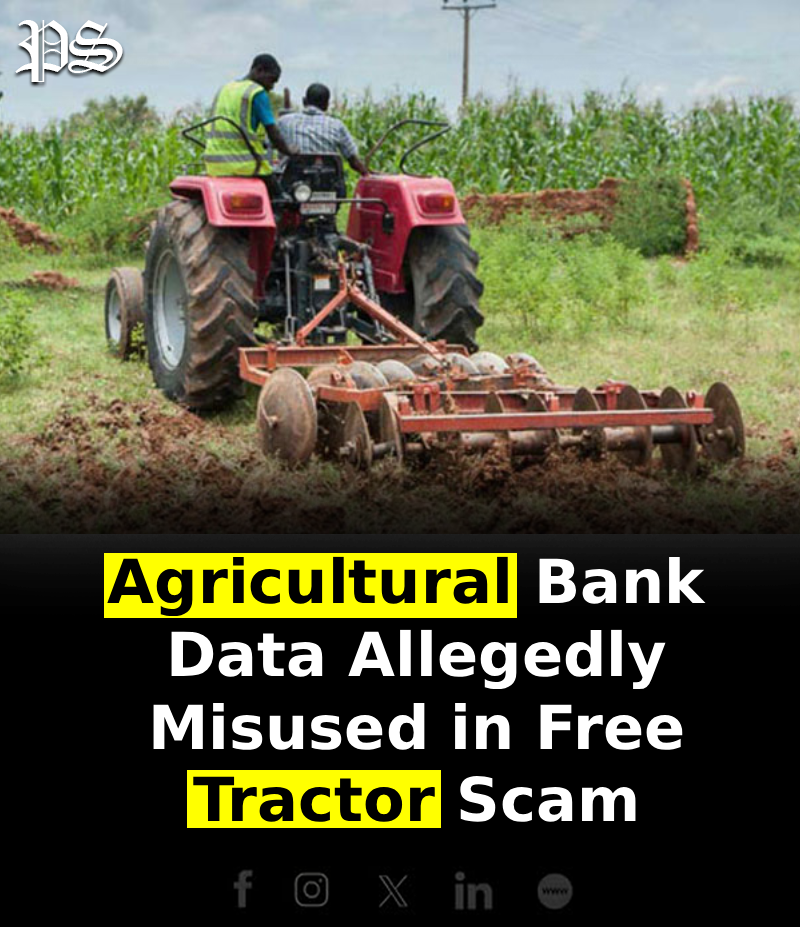
Karachi: A new fraud scheme targeting farmers and landowners has emerged, with scammers allegedly using information about people who previously obtained loans from the Agricultural Development Bank to convince them that they have been selected to receive a free tractor.
According to details, individuals are receiving calls from different mobile phone numbers from people posing as female company officers. The callers reportedly refer to the victims’ previous loans and then offer them an attractive opportunity to receive a tractor free of charge.
The scammers allegedly make the offer appear genuine by providing details about the recipient’s previous dealings with the bank. This apparent access to personal or financial information can make the victims believe that the caller is associated with an official organization.
During the call, the victim is reportedly asked to remain on hold while the caller pretends to complete an online booking process for the supposedly free tractor. The scammers then send a verification code to the victim’s mobile phone.
The victim is told that the code is required to complete the tractor booking. In reality, however, the code may be a WhatsApp verification code. Once the victim shares it, the scammers can potentially register the victim’s WhatsApp account on another device.
After gaining access to the account, the fraudsters reportedly use the victim’s contact list to send messages to friends, relatives and other contacts. They may then impersonate the account holder and ask contacts for money, allowing the scammers to collect funds from people who believe they are helping someone they know.
The scam reportedly represents a shift in the methods used by fraud networks. While similar scams were previously carried out predominantly by male callers, victims now report receiving calls from women who allegedly pose as company representatives and use convincing conversations to gain their trust.
The use of information about previous agricultural loans is particularly concerning because it can make the fraudulent offer appear highly credible. A caller who knows that an individual previously borrowed money from an agricultural bank may be able to create the impression that the call is connected to an official government or banking program.
Citizens have also raised concerns that organized fraud networks may have access to information held by government departments or financial institutions. They suspect that such information is being obtained and subsequently used to identify potential victims.
However, these allegations regarding the source of the data would require investigation by the relevant authorities. The fact that scammers possess accurate information about a person’s previous financial dealings does not, by itself, establish how the information was obtained or whether an official institution was responsible for any data leak.
The reported scam highlights the importance of treating unsolicited offers for free tractors, subsidies, loans, prizes or other government-related benefits with caution. A caller’s knowledge of personal information should not automatically be taken as proof that the caller represents a legitimate institution.
People receiving such calls should also be particularly careful with WhatsApp verification codes. These codes should never be shared with another person over the phone. If a caller asks for a code that has arrived on the user’s mobile phone, the request should be treated as a major warning sign.
Victims should immediately secure their WhatsApp account if they have accidentally disclosed a verification code and should inform their contacts that their account may have been compromised. They should also report suspected financial fraud to the relevant authorities and their bank or financial institution where appropriate.
The alleged free-tractor scheme demonstrates how scammers combine social engineering with stolen or improperly obtained personal information. By referring to a person’s genuine loan history, using a convincing caller and creating a sense of urgency around an apparently attractive offer, fraudsters can make victims less likely to question the legitimacy of the call.
Authorities and financial institutions may therefore need to investigate both the fraudulent calls and the alleged misuse of customer information. If confidential banking or government records have been unlawfully obtained, determining the source of the information could be crucial to preventing similar scams from targeting more farmers and borrowers.
For now, the most important precaution for citizens is simple: do not share WhatsApp verification codes, banking OTPs, PINs, passwords or other security information with callers, even if they claim to represent a bank, government department or tractor-distribution program.
The reported case serves as another reminder that scammers increasingly use detailed personal information and sophisticated social-engineering techniques to make fraudulent offers appear legitimate. A promise of a free tractor may sound attractive, but an unexpected phone call requesting a verification code can quickly turn into the theft of a WhatsApp account—and potentially money from the victim’s contacts.
About The Author